Category: Stories

  • Five Jaguars in One Day: Michael’s Family Pantanal Safari in Brazil

    Five Jaguars in One Day: Michael’s Family Pantanal Safari in Brazil

    A Swiss family of five, a novel read 15 years earlier, and four days on the Transpantaneira and the rivers of Porto Jofre, told in Michael’s own words

    Michael Lang, 51, is a general practitioner with a small private clinic in northwestern Switzerland, 10 kilometers from the German and French borders. While organizing the vacation alongside his family and some friends, the trip’s destination shifted from Sri Lanka to Africa and Costa Rica before ultimately settling on Brazil.

    Michael had three goals: Rio de Janeiro, Iguazu Falls, and a safari in the Amazon or the Pantanal. Ultimately, the Pantanal came out on top, especially because, about 15 years ago, he read The Testament, John Grisham’s novel about a lawyer sent into Brazil’s wetlands to find a missionary.

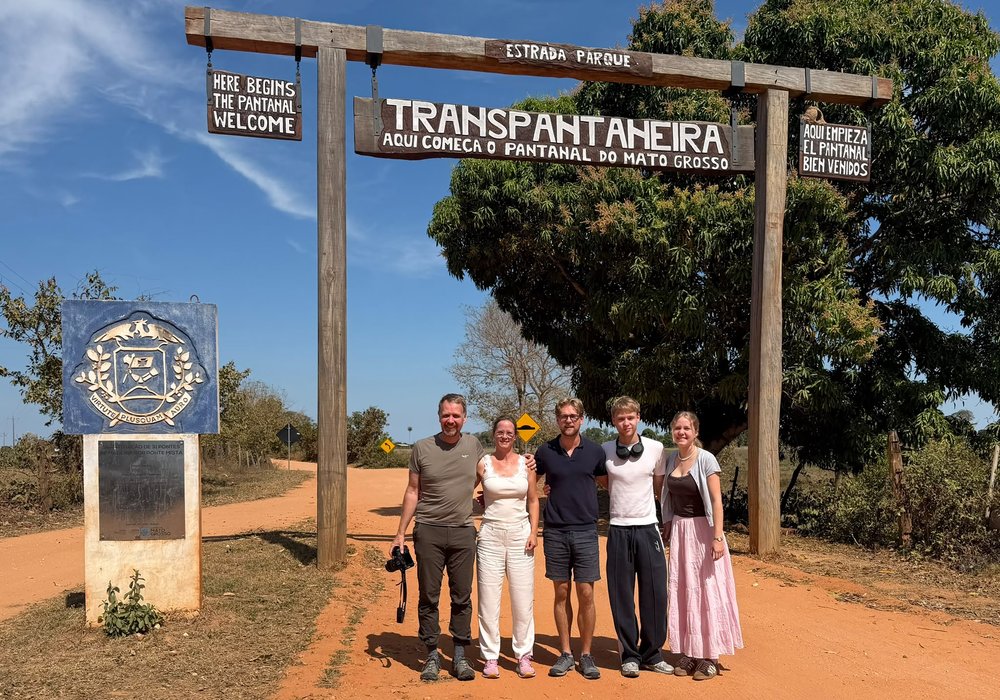
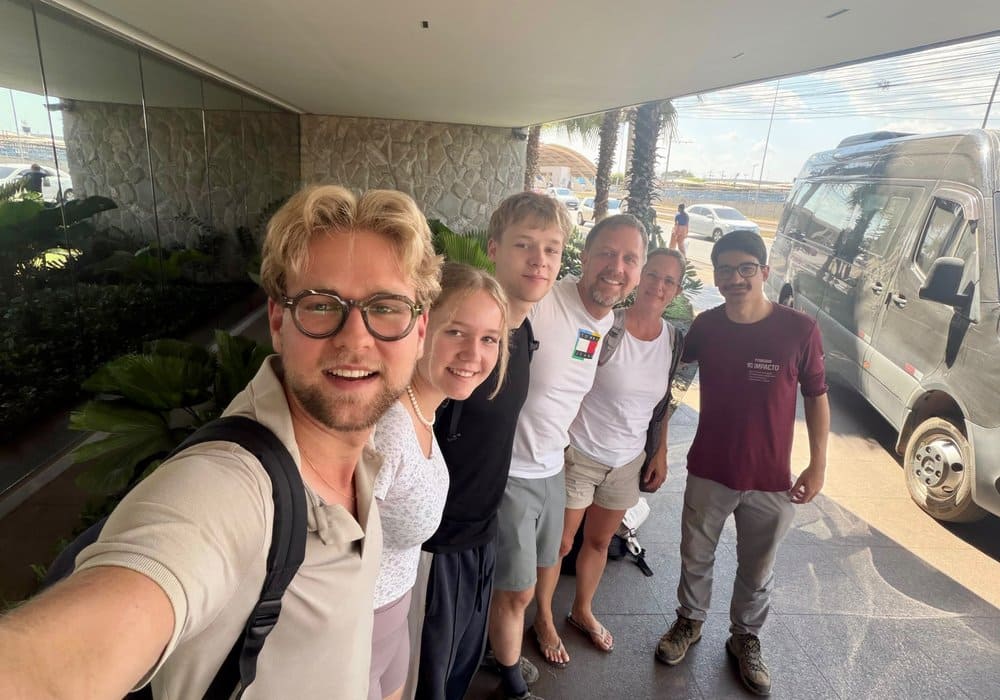
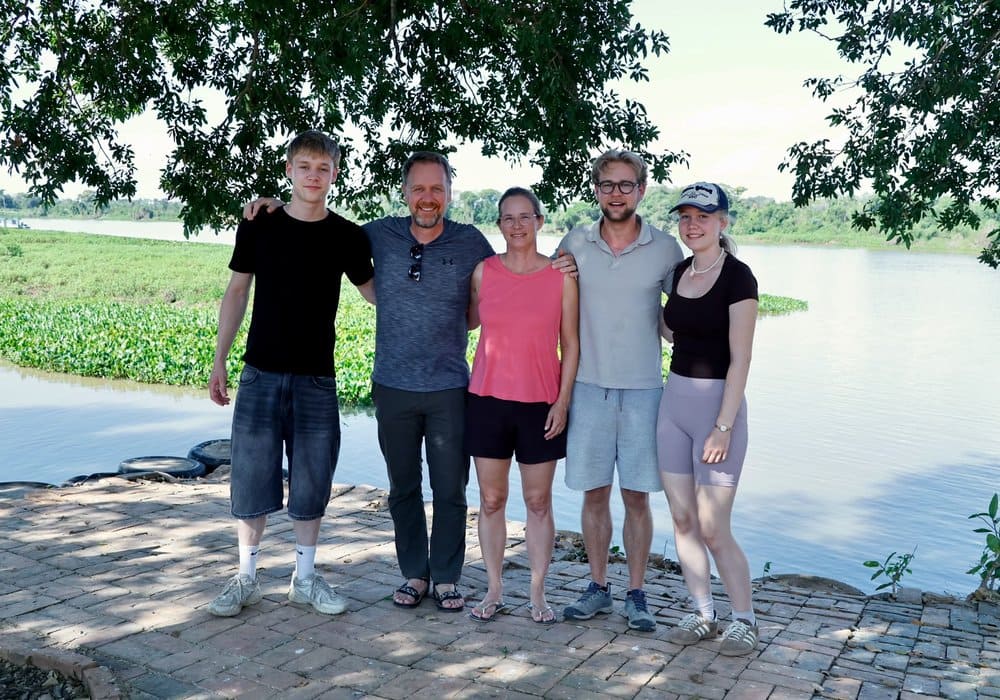
    Michael, his wife, and their three children, aged 17 to 21, spent four days of July 2026 on a Pantanal Jaguar Budget Safari, organized by PlanetaEXO and led by a local guide. This is his story. Check it out below!

    Four days on the Transpantaneira (and never bored)

    While The Testament is set on the Southern Pantanal, Michael and his family traveled to the Northern Pantanal. To get there, they flew to Cuiabá and drove into the wetland. The trip moved between two places: a first lodge farther north, then the river country around Porto Jofre, where the Transpantaneira road ends.

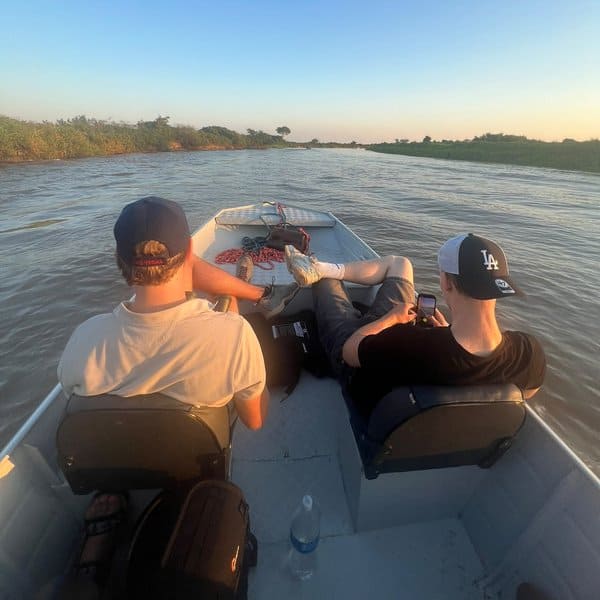
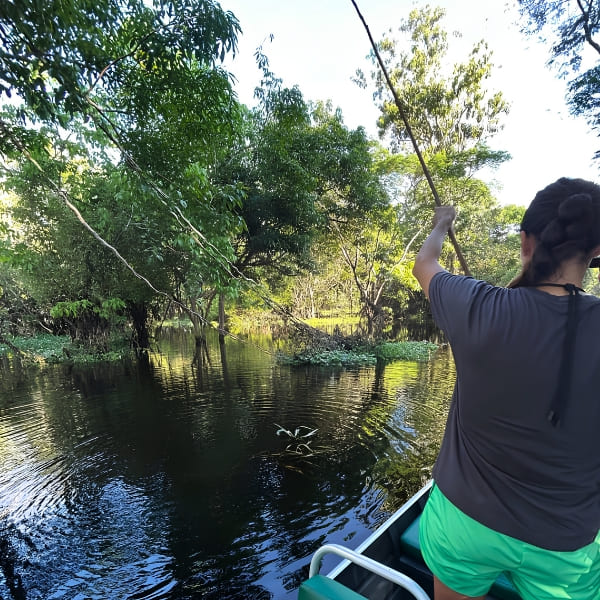
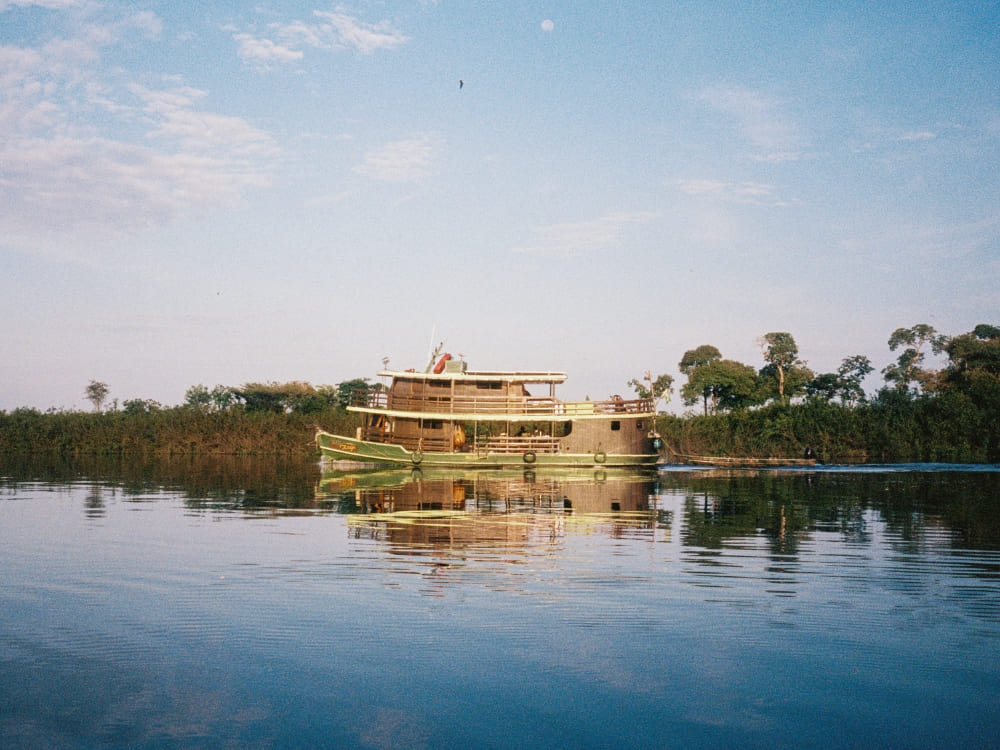
    Michael liked the change of scenery. “It was so interesting to see these different places, and I was never bored,” he said. The pace suited him too: “It was quite relaxing, sitting on a boat and gliding across the river.”

    Asked for the hardest moment, he came up empty: no tough trail, no bad weather, no boat ride that went on too long. “Actually, there’s nothing I can say was challenging to me,” he replied. He knows four days is short by Pantanal standards and that longer trips exist, but he could not name a single negative point.
    👉 Read more:

    Five jaguars in one day

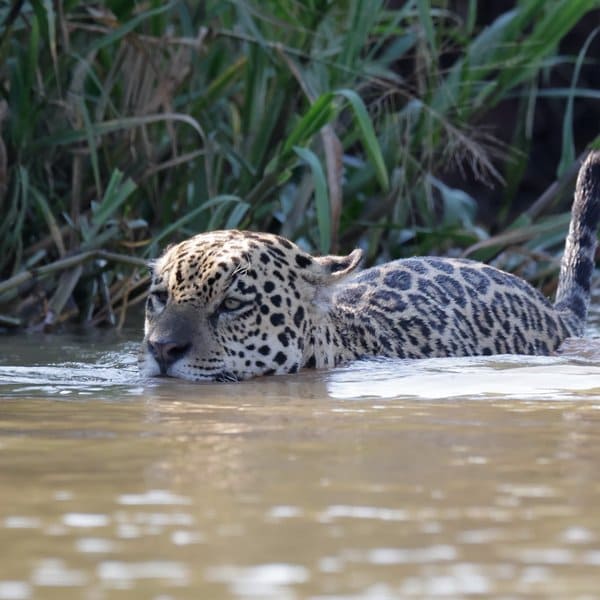
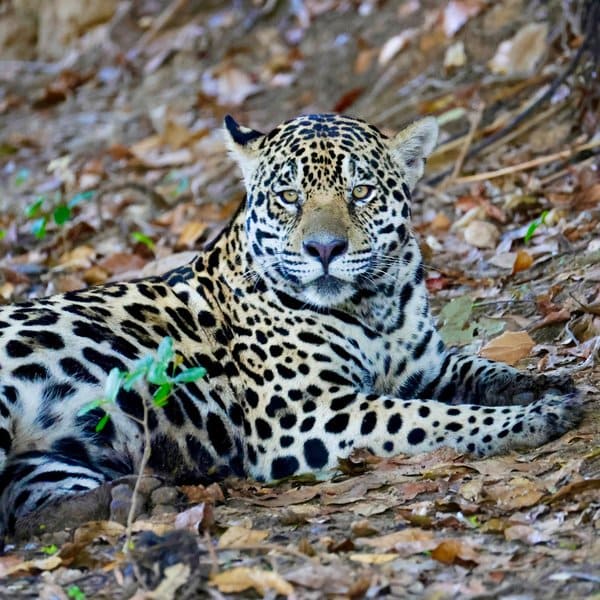
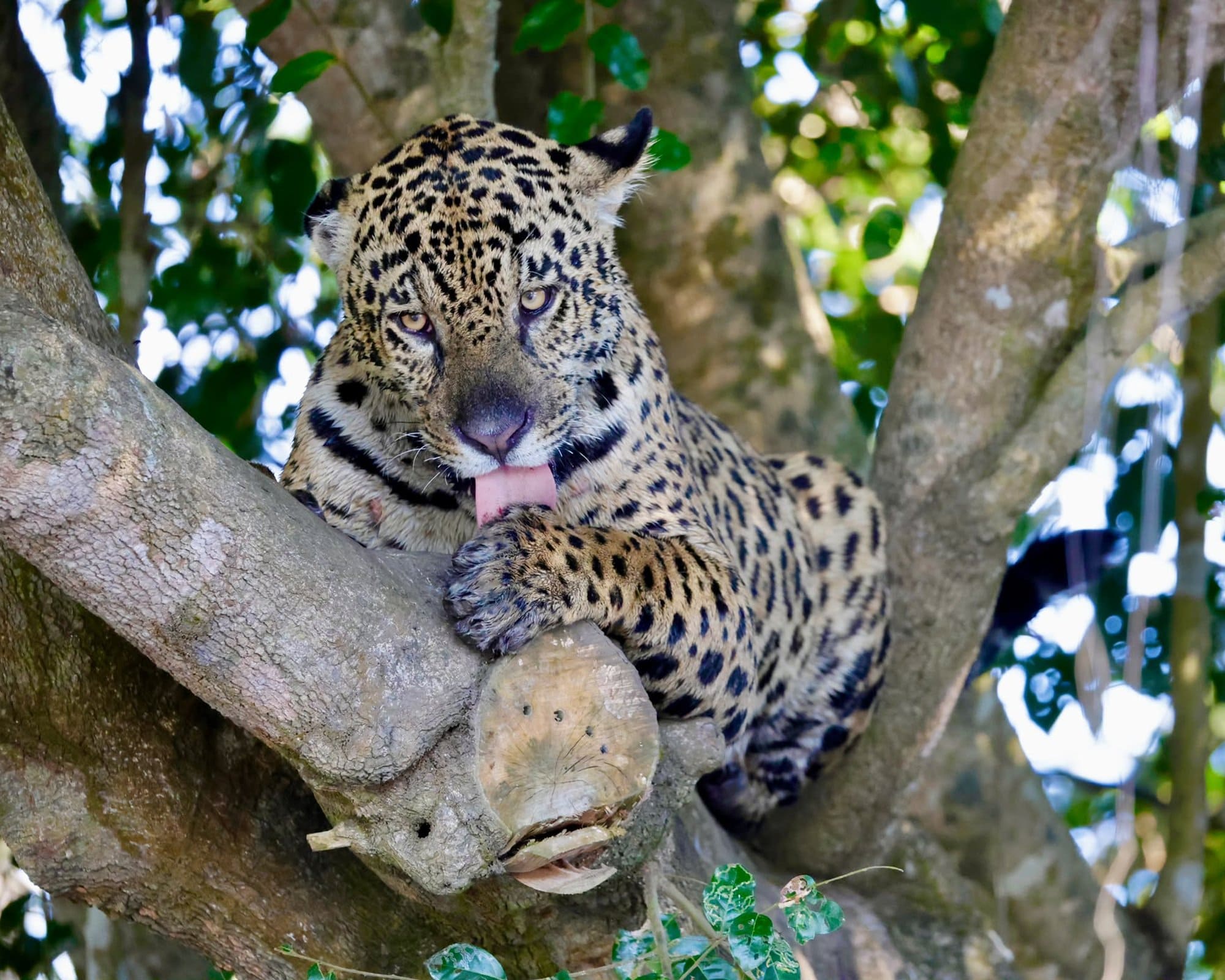
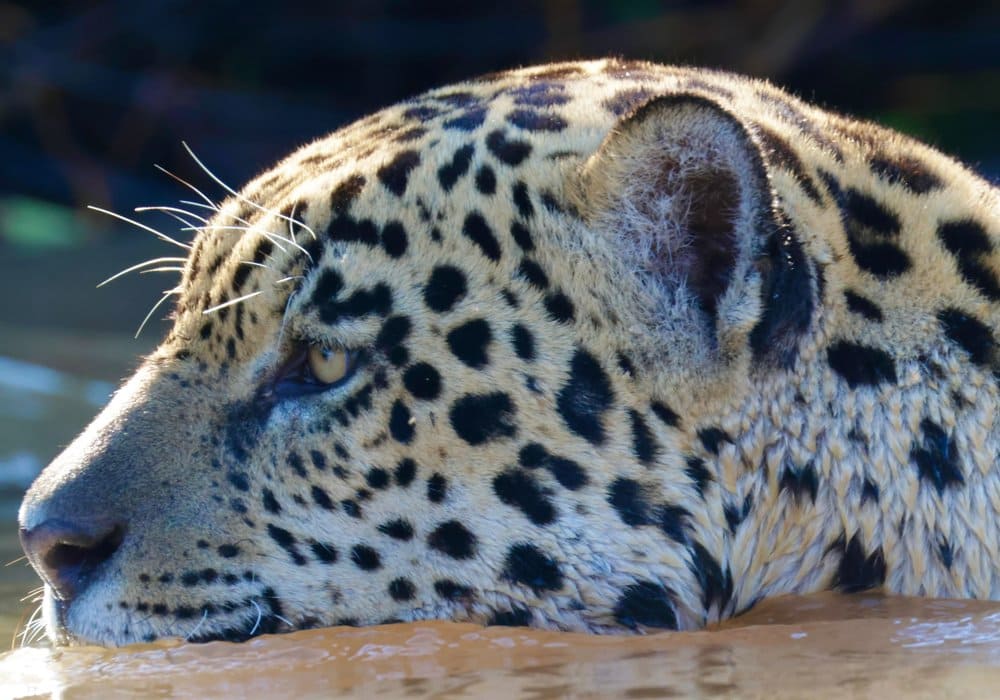
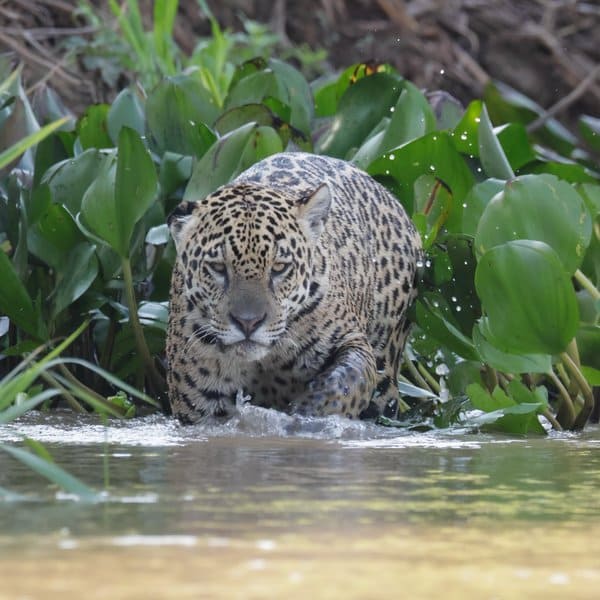
    Michael loves animals, and he is a keen amateur photographer, though not a wildlife specialist. His Pantanal wish list came down to one animal. “I really want to see some jaguars. And we saw a lot of them.” On one day alone, the group found about five jaguars in five different spots.

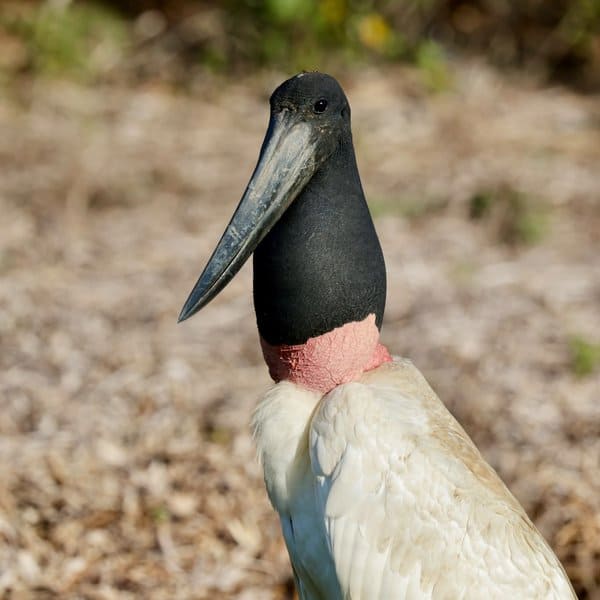
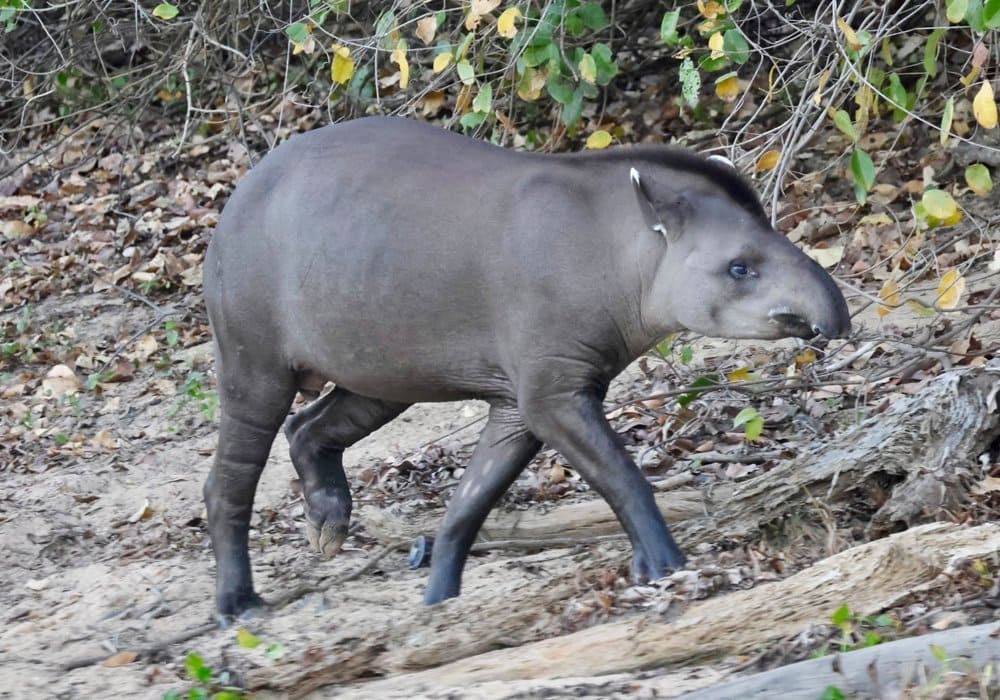
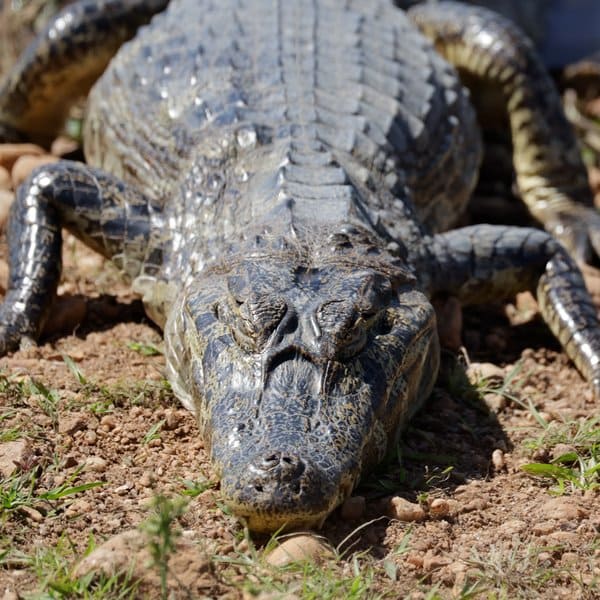
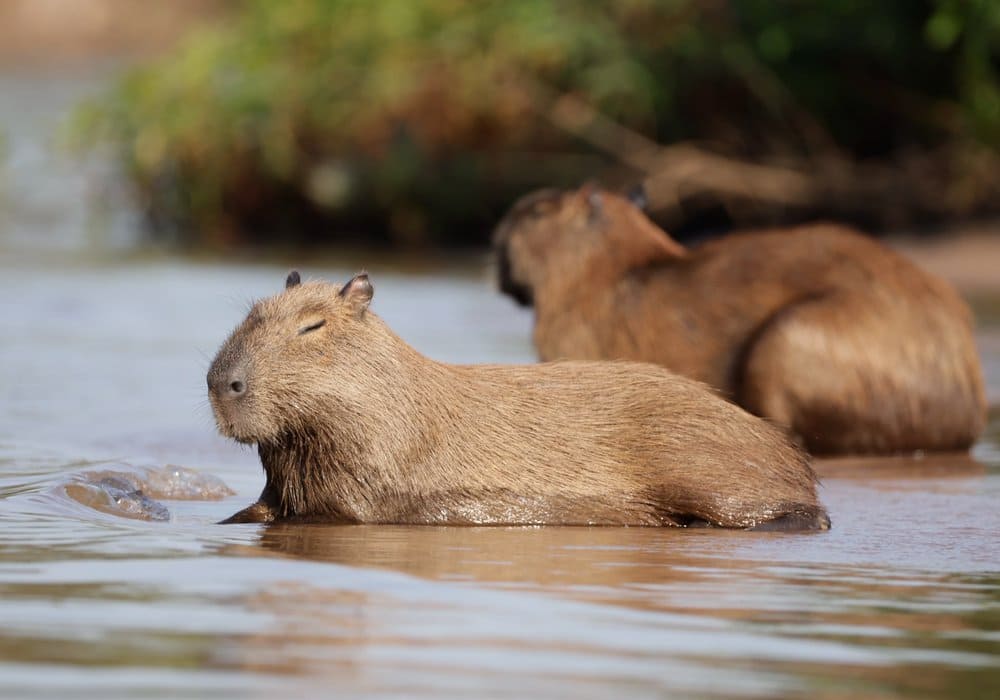
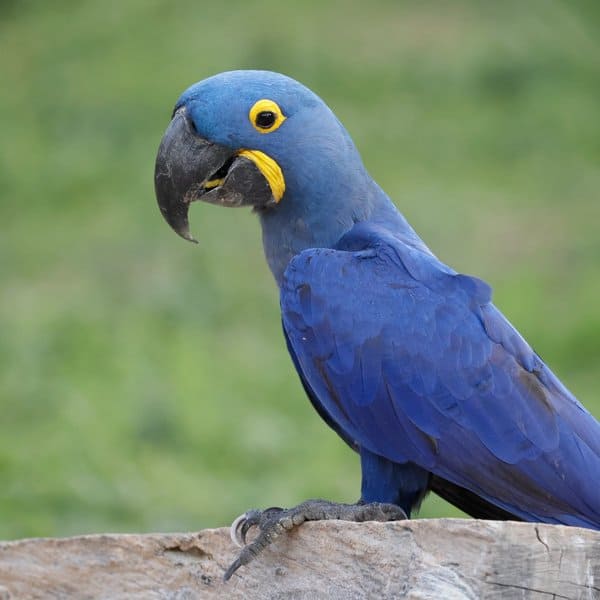
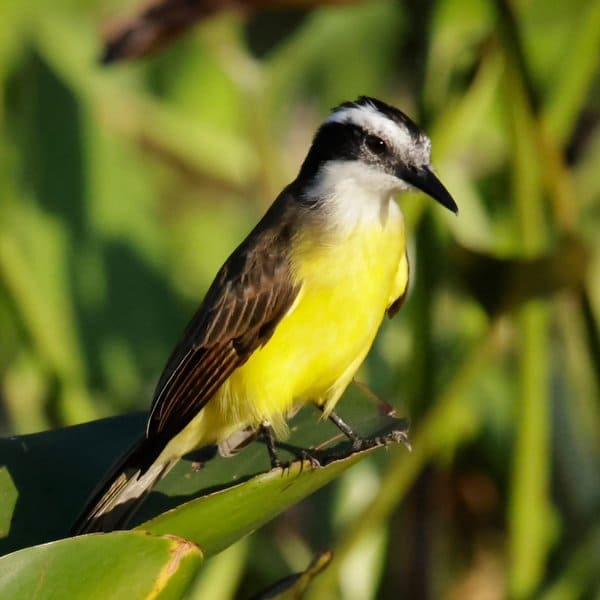
    The rest of the list filled up fast: birds everywhere, a tapir, deer, otters, and plenty of caimans. Naturally, this made his animal enthusiast heart very happy.

    That is why travelers come this far. The rivers around Porto Jofre (the Cuiabá, Piquiri and Três Irmãos) run through Encontro das Águas State Park, the part of the Pantanal with the best odds of seeing a jaguar. Sightings peak in the intermediate and dry seasons, from May to October.

    What struck him was how few people were watching. At Iguazu Falls, he said, “there are hundreds of people on a platform and on the sidewalks.” The Pantanal river was different: “There are maybe one dozen or 10 boats. There’s no over-tourism, I would say.”
    👉 Read more:

    A private, personalized tour

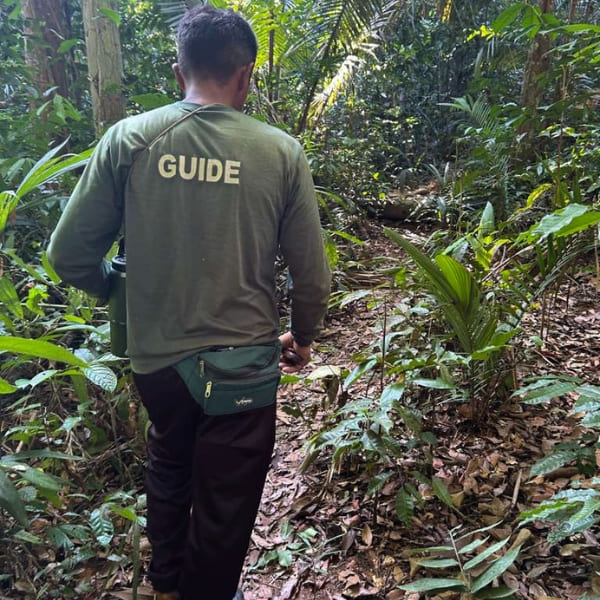
    Michael expected to share his guide, Fábio. He pictured him leading 10 or 12 people. Instead, the guide was theirs alone. “He was like a private tour guide for us. That was not my expectation,” he said. “That was a big surprise for me. But for us it was excellent, because we could ask everything.”

    It also meant the family set the rhythm. “We can go our own pace. We said, okay, we want to do that or that, or we want to leave then or then. So it was so individual,” he praised. Along with the jaguars, it is the part of the trip he rates highest. “The personal contact to the guide was excellent.”

    Fábio’s English mattered beyond the wildlife. Elsewhere in Brazil, the family struggled to talk to locals, but with their guide, conversations went deep. “We always talk about culture, religion, finance themes, politics, and whatever,” he said. “I think that was the closest contact we had during this trip.”\
    👉 Read more: Where to Stay in the Pantanal?

    Frogs in the bathroom and an otter named Cheetah

    Michael glanced at his daughter when he was about to tell a funny moment from the trip. Small frogs had found their way into the family’s rooms, and she was afraid to go to the bathroom. His answer to her sums up the Pantanal in one line: “We are not in a city. We are in the wilderness.

    Then there was Cheetah, an otter well used to people. The family met her twice on the river, and both times she tried to get on board. “She always wanted to jump in the boat. It was so funny,” he chuckled.

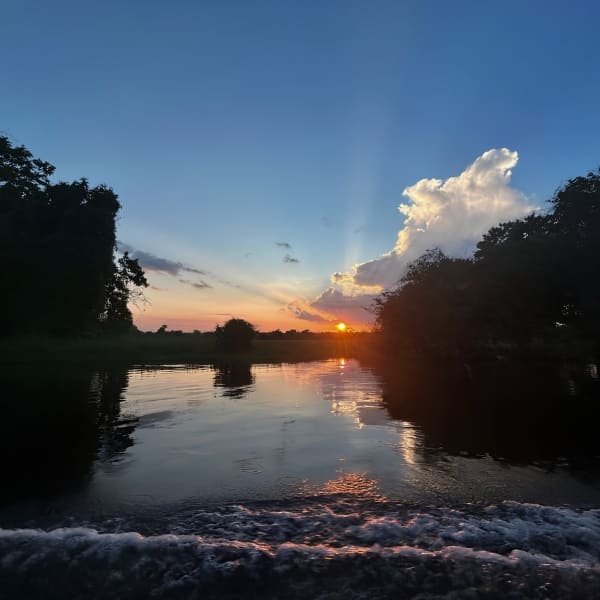
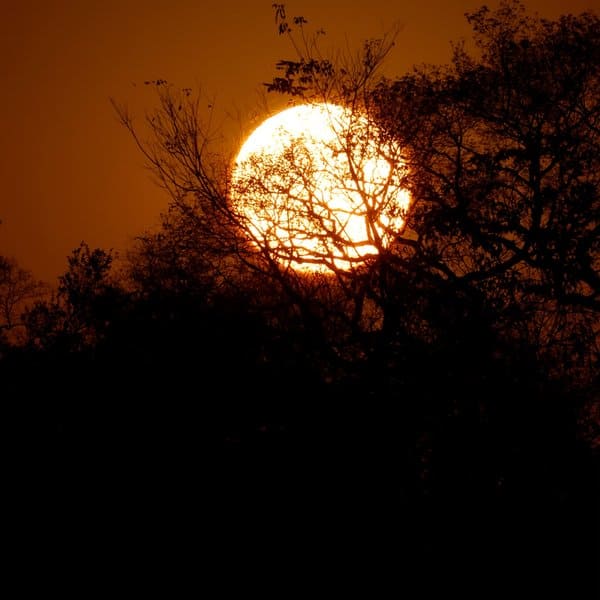
    His other favorite moments were quieter ones on the water, contemplating the beautiful natural view during boat rides on the sunrise and sunset.
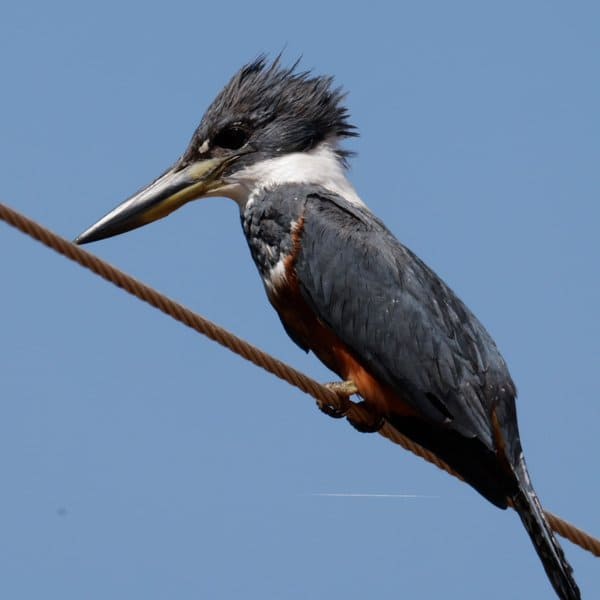
    👉 Read more: 15 Amazing Pantanal Animals and Wildlife

    Was Brazil safe? Michael’s honest answer

    Michael never felt unsafe in Brazil, and he explains why without drama. The family stayed out of the sketchier parts of Rio and São Paulo, used ride-sharing apps to get from place to place, and moved as a group of two families.

    He told his main rule to smoothly navigate unfamiliar places. “If you have a certain alertness about what can happen, you don’t have to go through unpleasant situations.”

    He thought Avenida Paulista, the city’s most iconic avenue, looked like Paris, with clean and wide streets. Around landmarks like Sé Cathedral and Mercadão, a 93-year-old public market, urbanity was rougher. Having seen similar places before, he wasn’t shocked, but the gap between the two stayed with him.

    A slower pace and better food than expected

    For many Europeans, Michael says, Brazil means football and little else, but for him and his family, reality is richer and much more diverse. While the language barrier was a bit challenging, what won them over was the people and the pace.

    His wife fell in love with the country, which surprised him. “She said the people are so nice and they are so relaxed compared to Switzerland, he shared, adding how even a trip to the supermarket is a rush back at home. “In Brazil, it was all slow down. And I like that.”

    The food was another surprise. Michael expected it to be very simple but found a real feast. “Brazilian food was much better than we anticipated and cheaper than in other countries. I was really surprised about that.”

    His summary of Brazil is a list: warm, sunny beaches, relaxed people, big cities, waterfalls, and wildlife. The one catch is scale, because “the distances are huge,” so plan on internal flights. “I recommend Brazil to everyone who asks where they should go for a holiday. It has everything,” he stated.
    Michael’s tips for a first trip to Brazil

    Asked what he would tell a friend planning a first trip, Michael kept it practical:

    • Mix cities, nature, and wildlife: his family combined São Paulo, Rio de Janeiro, Iguazu Falls, Ilha Grande, and the Pantanal.
    • Give Ilha Grande, in Rio, a few more days: the family spent three days on the island, and his children count it among their top experiences of the trip, for “just beach and a lovely village.”
    • Budget for the safari from the start: a Pantanal safari is not exactly cheap, even on a budget. In the end, Michael found the private guide and the organization worth the cost.
    • Choose an English-speaking guide: outside the hotels, English can be scarce, so a fluent guide is your best window into the country.
     

    👉 Read more: 10 Pantanal Travel Tips for an Unforgettable Trip

    Next: Salvador or Lençóis Maranhenses

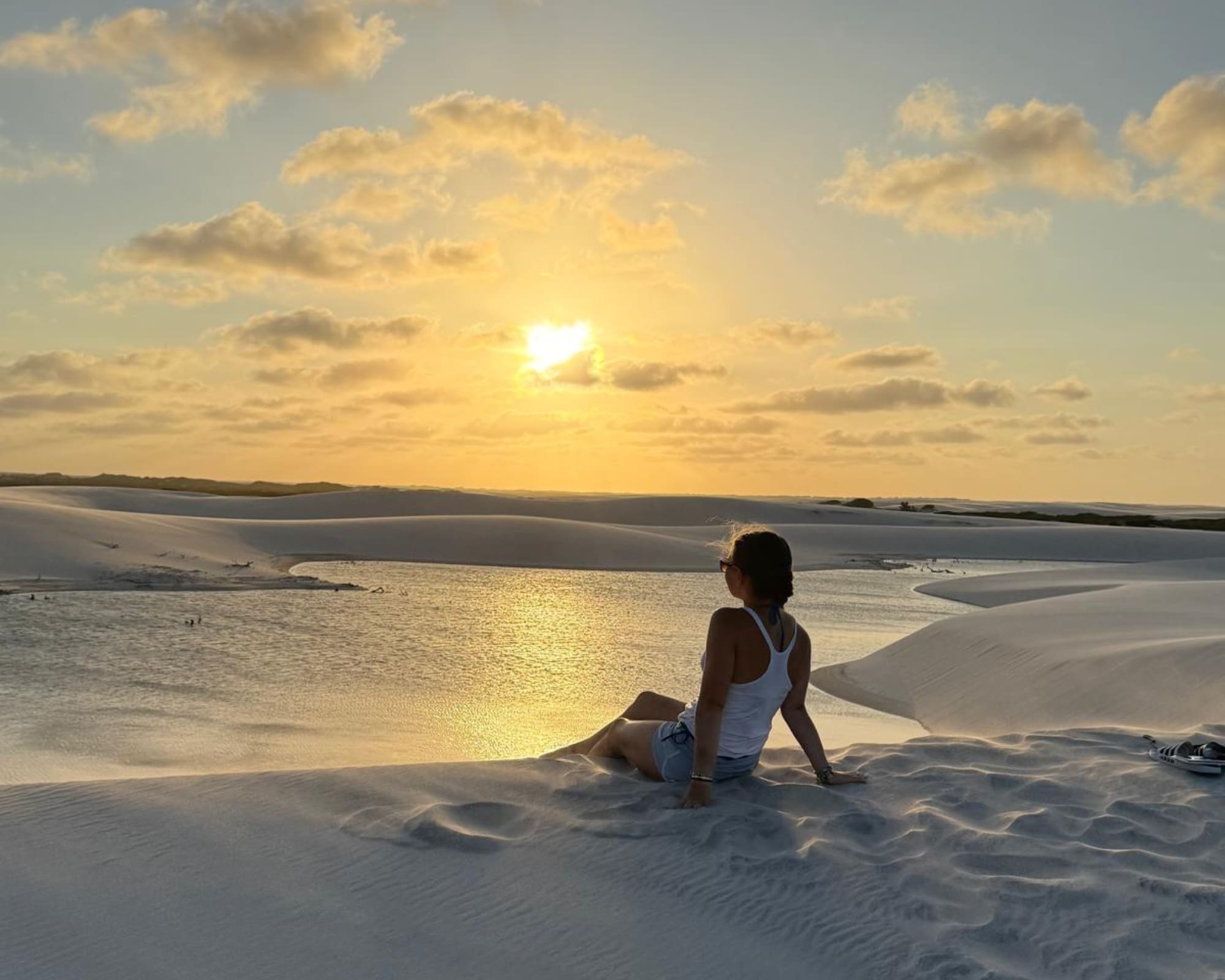
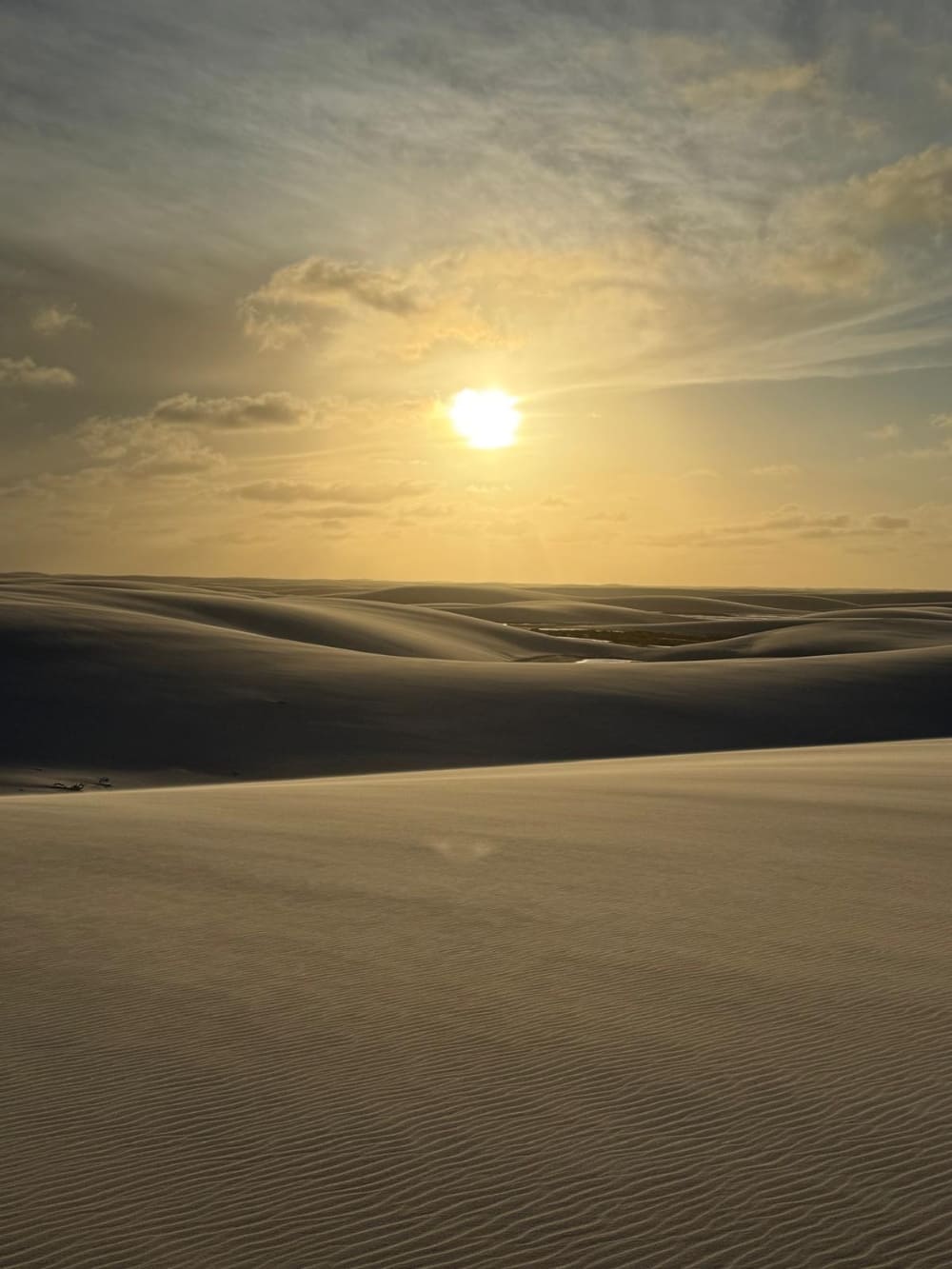
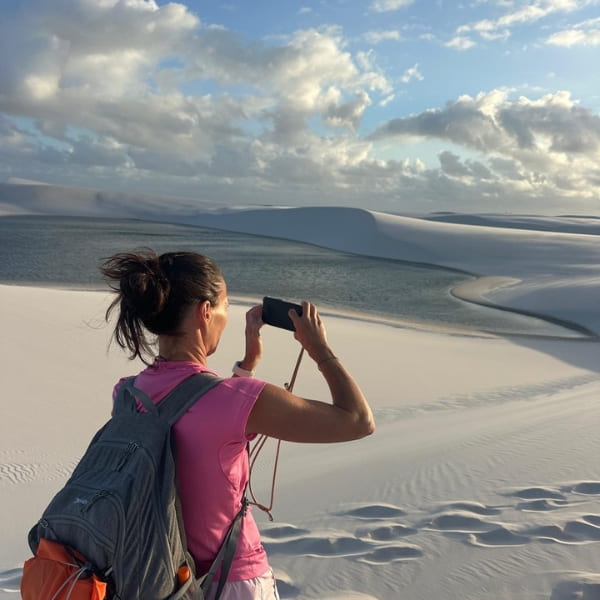
    Michael wants to return. Salvador is on his list, as are the gorgeous white sand dunes and crystal-clear lagoons of Lençóis Maranhenses.

    After his trip to Iguazu Falls, he would also like to explore more of southern Brazil, although he doesn’t yet have a specific destination in mind. The possibilities are endless!

    👉 Read more: 10 facts about Lençóis Maranhenses National Park, Brazil

    Visiting the Pantanal with PlanetaEXO

    Now that you have seen the Pantanal through Michael’s eyes, you know what this fascinating place has in store for you. It’s time to see it up close!

    PlanetaEXO is an ecotourism platform specializing in Pantanal tours. Working alongside experienced local guides and operators, we handle the logistics (transfers, lodges, meals, and boat safaris) so your family can focus on the experience itself. Contact us now!
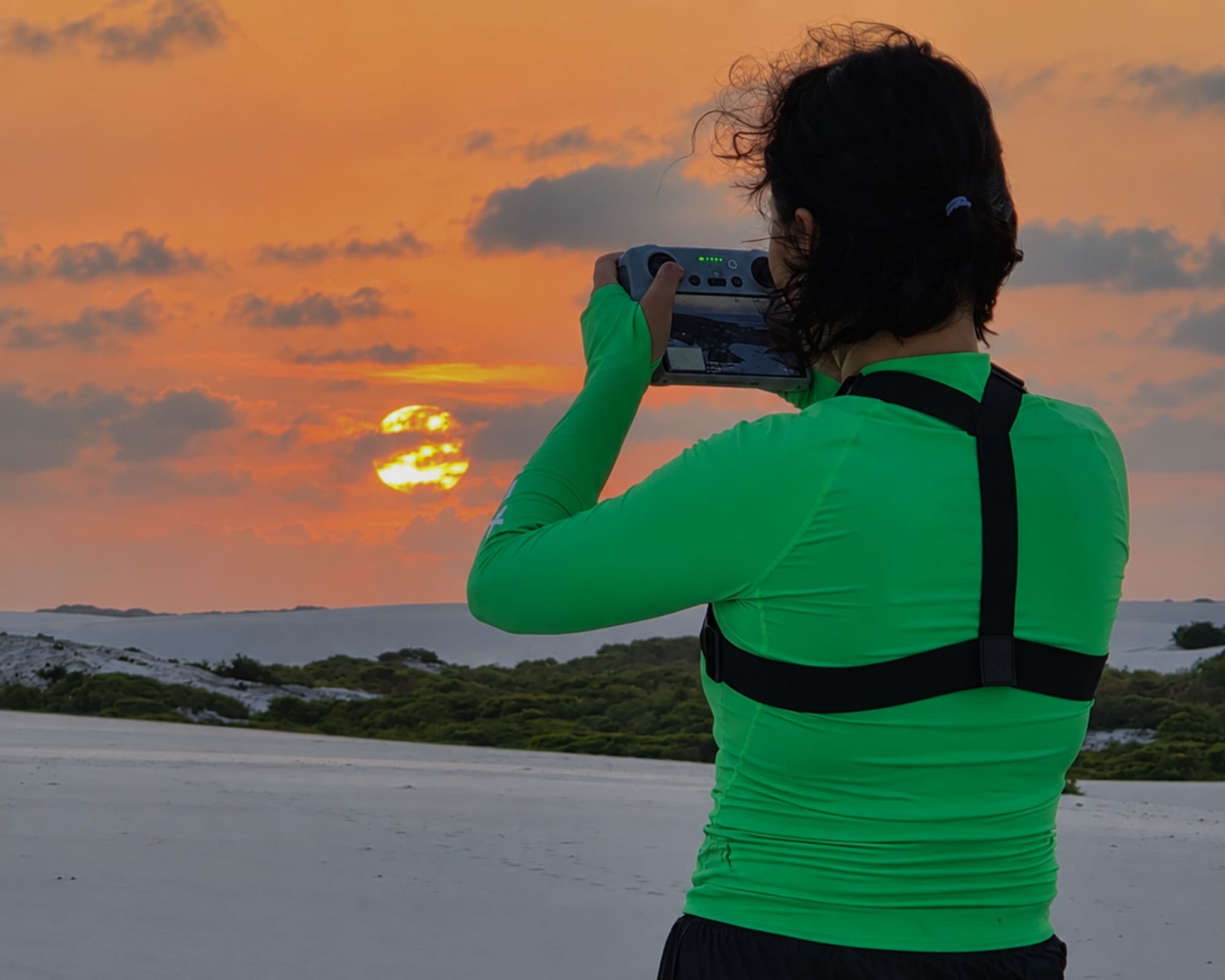
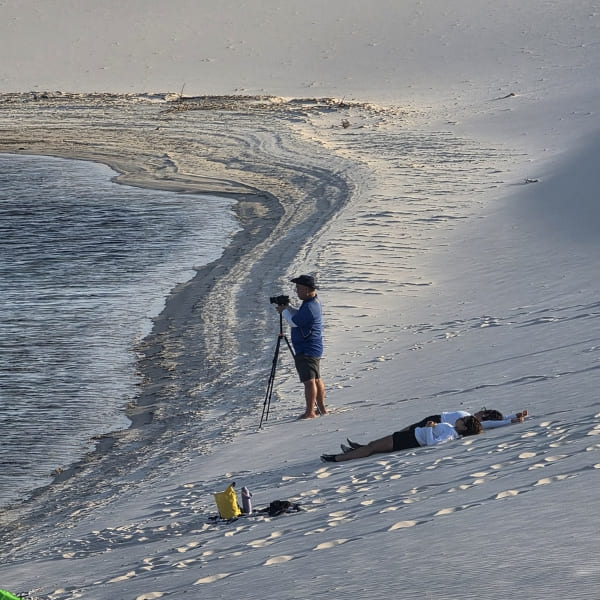
  • Producer Jihee Yeon filming the Lençóis Maranhenses dunes under an orange sky with a drone controller

    Filming Lençóis Maranhenses for Korean TV: Jihee Yeon’s Brazil Story

    A Korean producer came to Lençóis Maranhenses to film a KBS segment, walked three days across the dunes, and left impressed by the beauty and warmth of Brazil

    Jihee Yeon, 34, is a producer for KBS, South Korea’s main public radio and television broadcaster. She traveled to Lençóis Maranhenses in search of the most beautiful shots she could film for a special segment.

    “Several people recommended Lençóis Maranhenses, explaining that the lagoons would be full and that it was the ideal time to visit,” she said. “As soon as I saw the photos and videos, I was captivated by the landscape.” She began planning the shoot immediately.

    Together with São Paulo-based cinematographer Soo Han Kim, who documents South Korean stories throughout South America, Jihee navigated Lençóis Maranhenses National Park with heavy broadcast equipment in tow. Spanning 155,000 hectares in Maranhão state, the park features vast white sand dunes soaring up to 40 meters alongside freshwater lagoons. This leg of her journey was part of a broader itinerary encompassing Belém, Marajó Island, São Luís, and Salvador.

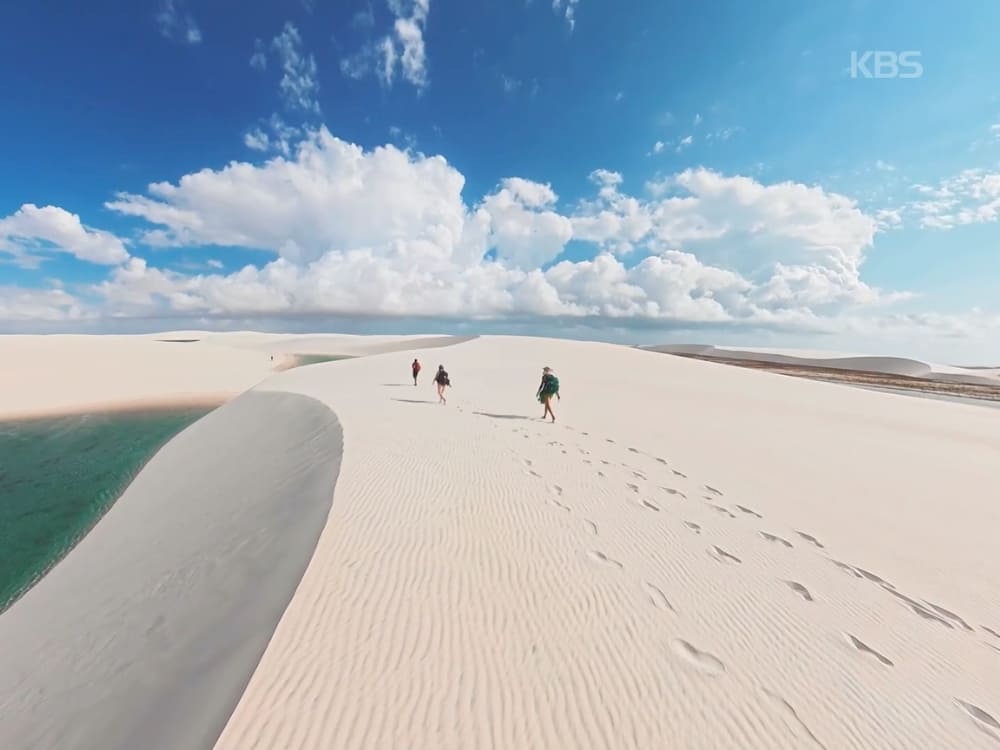
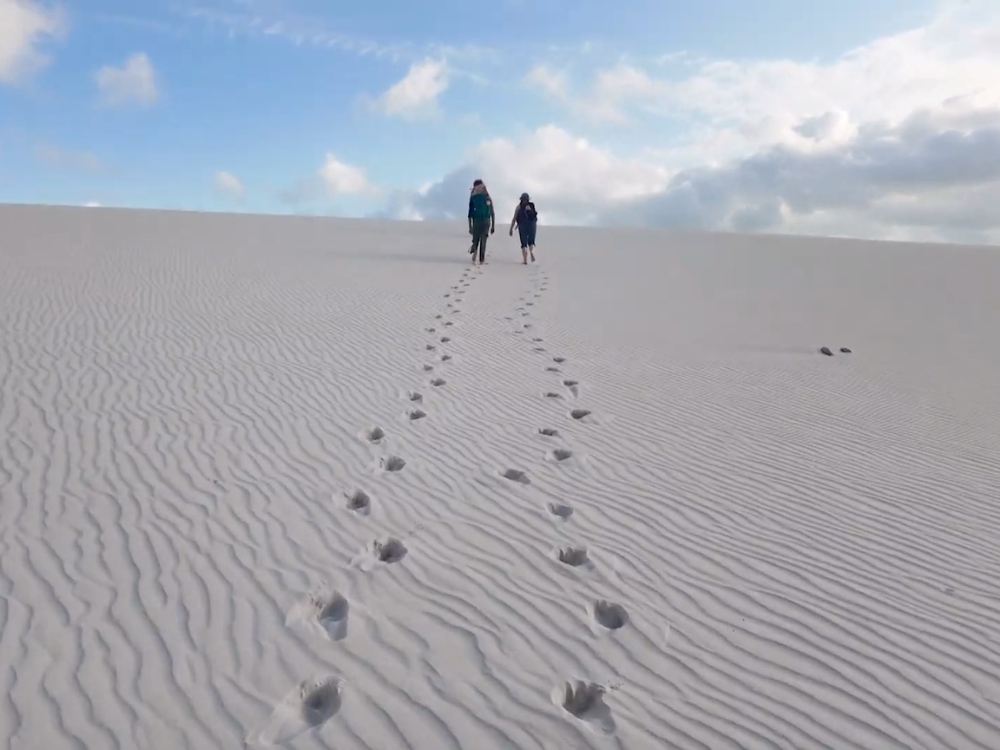
    Two trekkers crossing a rippled white dune in Lençóis Maranhenses, footprints trailing behind them


    Jihee crossed the dunes and lagoons on a 3-day Lençóis Maranhenses trek, organized and led by PlanetaEXO’s team and local guides. This is her story. Check it out below!

    What she came to film

    Jihee had a specific shot in her head before she landed. “I wanted to film blue lagoons appearing beyond one sand dune after another, with water in the middle of what seemed like an endless desert,” she said.

    The second half of her brief was about people. She wanted to meet the travelers who cross the park on foot instead of by 4×4, because she suspected the choice meant something. “I imagined that those who chose to walk rather than travel by car might each have a special reason for doing so and might experience the landscape in a more meaningful way.”

    The park delivered the first part exactly as promised. What she had underestimated was the scale. “I had assumed they would be concentrated in certain areas, but they continued endlessly throughout our entire three-day trek,” she said of the dunes. “I had not realized just how vast the landscape was.”

    One thing caught her off guard in the other direction: she had not planned on swimming. “I had not imagined that I would enjoy swimming there so much, but the lagoons were simply irresistible.”

    Trekkers walking along a white sand dune next to a turquoise lagoon in Lençóis Maranhenses
    Photo: KBS

    👉 Read more: Best Lagoons in Lençóis Maranhenses: Brazil’s Desert With a Thousand Lakes

    A landscape she had no reference for

    Jihee has visited deserts in several countries, which is exactly why the comparison failed. “I had never seen anything like this: countless lagoons scattered across an immense expanse of dunes, with small villages situated within that landscape,” she marveled.

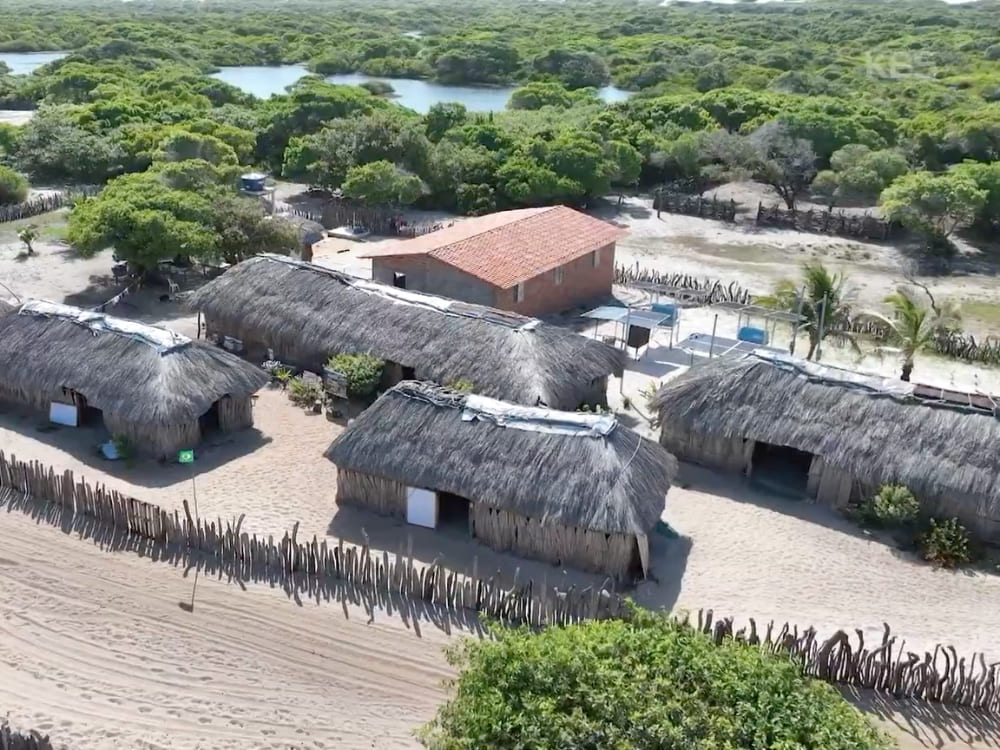
    That last detail is the part travelers rarely anticipate. Lençóis Maranhenses is not empty. Small communities live inside and around the park, with trekking routes running between them, which is what makes the crossing possible at all, as the villages are where you eat and sleep.

    Asked whether anywhere in Korea, or anywhere else she had worked, came close, her answer was short. “I have traveled to many places, but Lençóis Maranhenses was truly unique and unlike anywhere else I had ever seen.”

    👉 Read more: 10 facts about Lençóis Maranhenses National Park, Brazil

    The children, the flowers, and a different clock

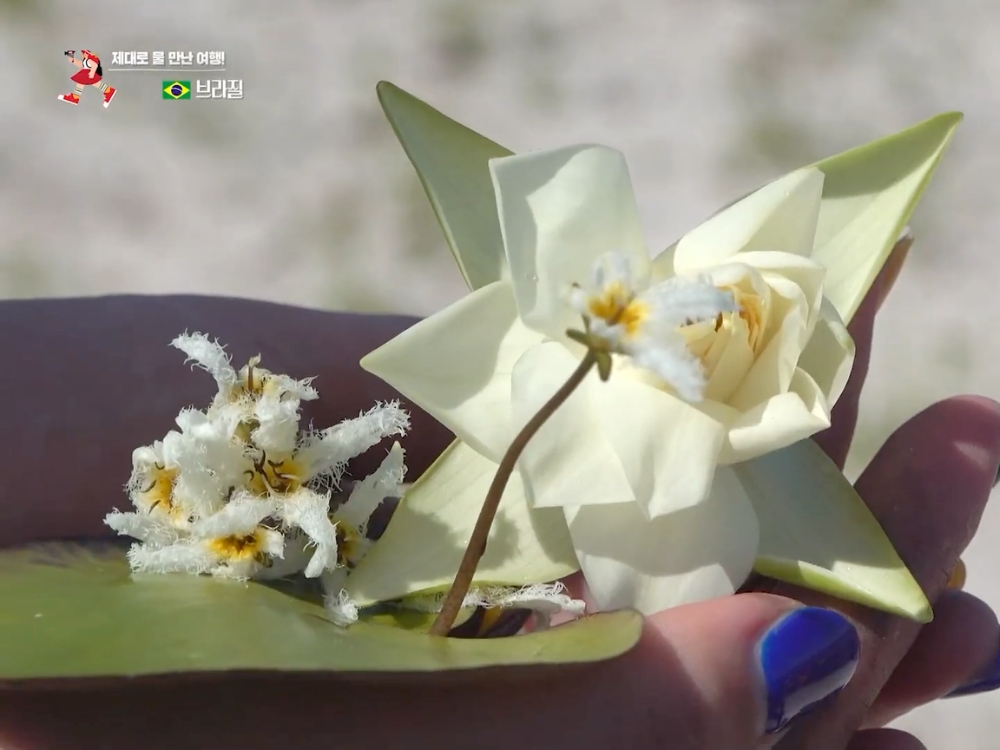
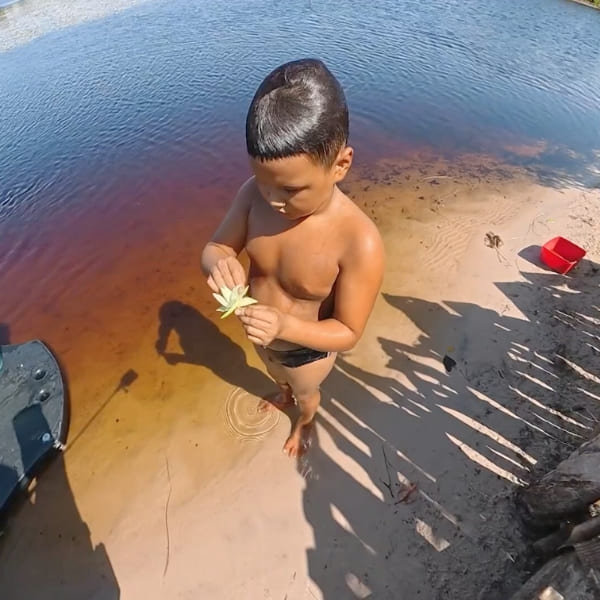
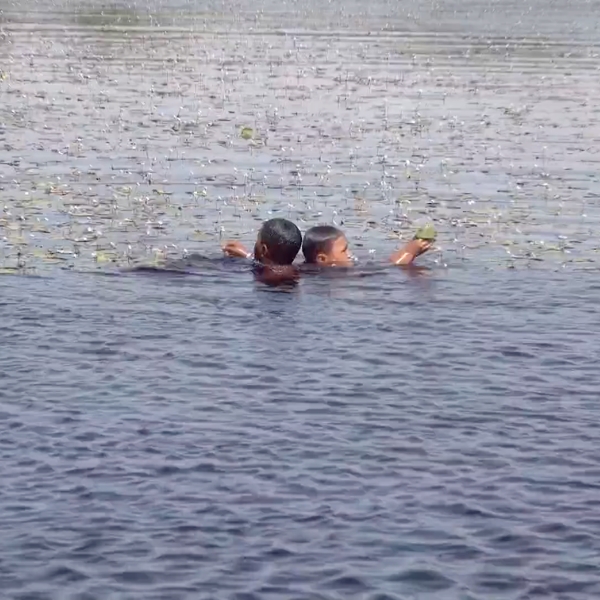
    Ask Jihee about the locals, and she starts with the kids. “Rather than simply treating us as tourists, they seemed genuinely happy to welcome us and spend time with us,” she remembered. Her group swam with them in the lagoons, “and they even gave us flowers they had picked nearby. It was an incredibly warm experience and one I do not think I will ever forget.”

    The cultural difference she noticed most was not food or language, but time. “In Korea, we are accustomed to moving quickly and following structured schedules,” she explained. “In Lençóis, however, each day seemed to flow more naturally according to the weather, the surrounding environment, and people’s relationships with one another.”

    She was careful not to flatten that into a cliché. “I would not describe it simply as a slower way of life, but rather as one that seemed more closely connected to the rhythms of nature.”

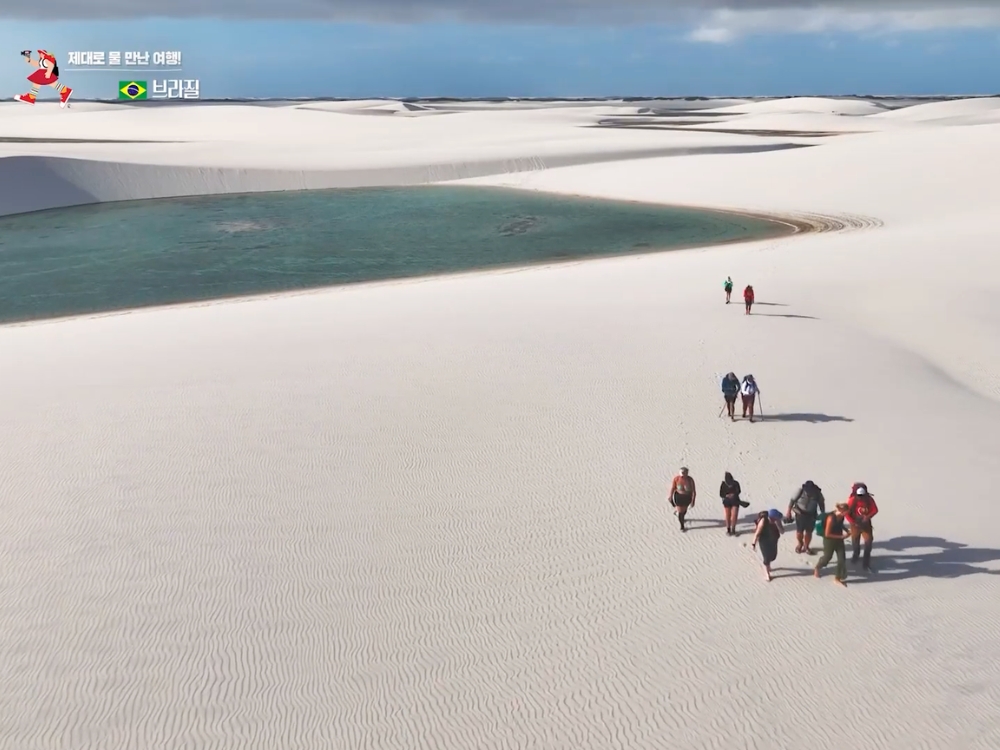
    Aerial view of a trekking group walking in single file across the dunes beside a turquoise lagoon in Lençóis Maranhenses
    Photo: KBS

    👉 Read more: How was Lençóis Maranhenses formed: understanding Brazil’s sand dunes and lagoons

    Jihee’s first night in a hammock

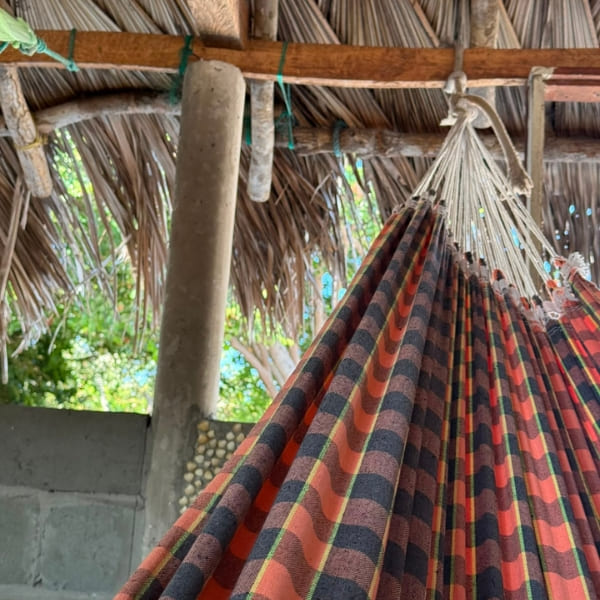
    The camps and village guesthouses along the trekking route sleep travelers in hammocks, not beds. For Jihee it was a first, and it became one of her favorite parts of the trip.

    “I especially enjoyed spending the night alongside the other travelers, lying in our hammocks and talking together,” she said. “It was much more comfortable than I had expected, and I began to understand why the people living in the villages prefer hammocks to beds.”

    The guides had a second job on this trip that they do not have on most. Jihee was moving heavy broadcast equipment across soft sand for three days. “The guide helped carry my gear and constantly checked whether I needed any assistance while shooting,” she praised. From the second day, the group merged with a larger one and the schedule tightened, but “even then, the guide did everything possible to support my filming.”

    “I was very satisfied with the entire experience,” was Jihee’s verdict on the accommodations, guides, and the overall organization of the trip.

    Aerial view of thatched-roof houses in a village surrounded by greenery and lagoons in Lençóis Maranhenses
    Photo: KBS


    👉 Read more: Where to stay in Lençóis Maranhenses?

    Before sunrise, lying on the sand

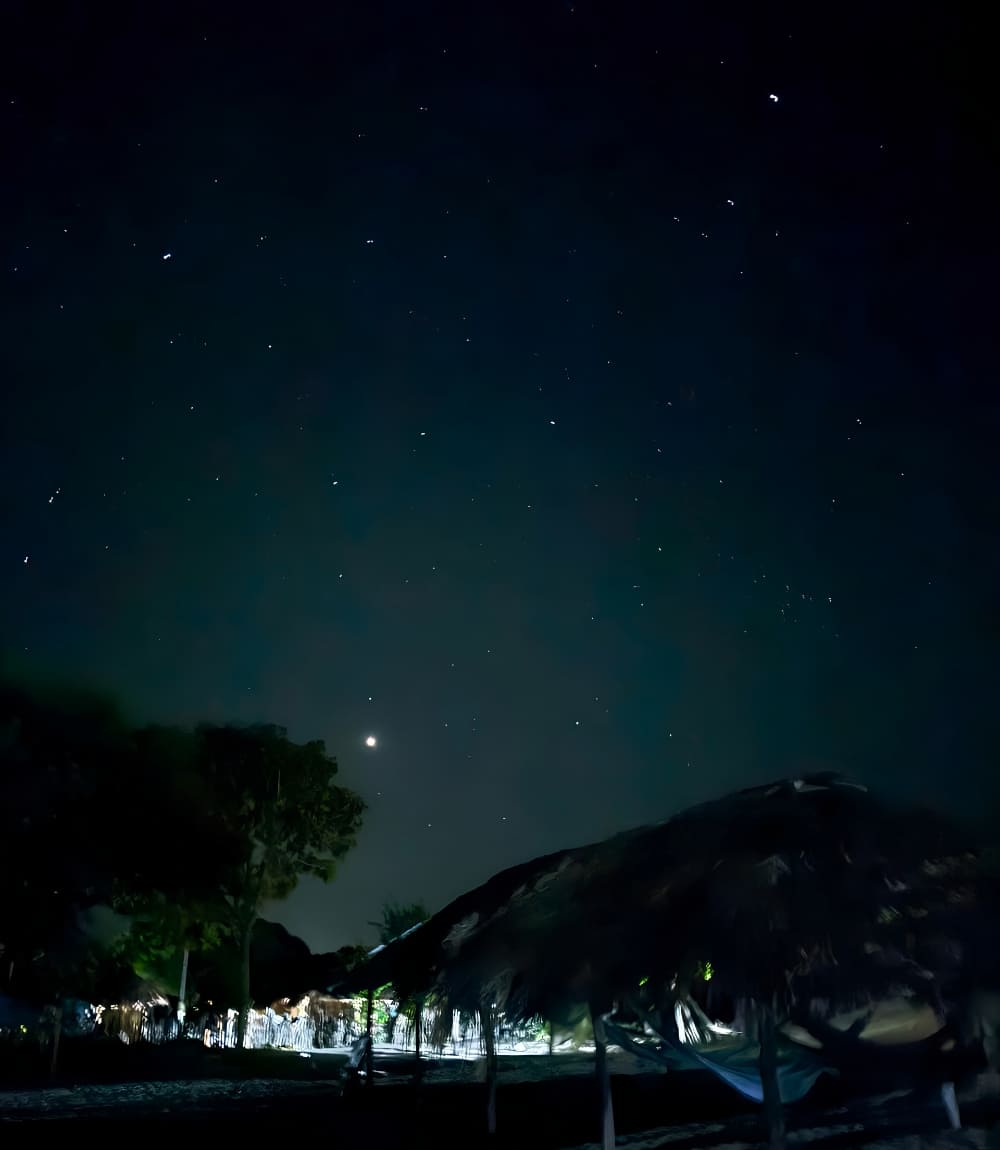
    Jihee’s single favorite moment of the trek had no filming in it at all. “My favorite moment was setting out before sunrise and lying together on the sand to look up at the stars.”

    Beyond the scenery, what struck Jihee most was observing her fellow trekkers. While she remained focused on filming, others engaged with the journey at a completely different pace. “They took their time and enjoyed the endless landscape without rushing,” she recalled. “They felt the sand beneath their feet, swam in the lagoons, and even sat beside the water to read.”

    “They were not simply looking at Lençóis Maranhenses; they were experiencing it fully, with their whole bodies,” she reflected. “That left a deep impression on me.”

    Starry night sky over thatched shelters and hammocks on the Lençóis Maranhenses trek

    👉 Read more: How many days should you spend in Lençóis Maranhenses?

    Jihee’s tips for first-time visitors to Lençóis Maranhenses

    Her advice comes with an unusual credential: she is the one person on the trek who could not follow it. Working with a camera meant moving constantly with a lot of equipment, and it cost her something. “I was so busy that I sometimes lacked the time and mental space to immerse myself fully in the scenery before me, which I regret,” she admitted.

    Even so, navigating the dunes taught Jihee some valuable lessons.

    Hand holding a white water lily and small wild flowers picked beside a lagoon in Lençóis Maranhenses
    Photo: KBS

    Pack as lightly as possible

    Jihee had to learn it the hard way. On a trek made entirely on foot across soft sand, every extra kilo is keenly felt along the way. With heavy filming equipment on her back, this was certainly a challenge for her.

    Don’t run the days on a schedule

    Anyone visiting purely for travel should “take their time and allow themselves to fully enjoy the landscape.”

    In Jihee’s opinion, letting the park set the pace instead of the clock is the best way to experience Lençóis Maranhenses.

    Come ready to commit to it

    “I would encourage visitors to arrive ready to embrace the landscape and the entire experience wholeheartedly, just as the people traveling with me did.” That means getting into the lagoons, sleeping in the hammock, and sitting still long enough for the place to register.

    👉 Read more: 10 Travel Tips for Lençóis Maranhenses to Make the Most of Your Trip

    Was Brazil safe? Jihee’s honest answer

    Jihee traveled through five destinations with expensive camera gear, often working on the street. Across Pará’s Belém and Marajó Island and Maranhão’s São Luís and Lençóis Maranhenses, she was unequivocal: “I felt extremely safe and at ease. I was able to walk around freely at night and film on the streets with my equipment set down nearby without feeling threatened.”

    Salvador, in Bahia, was the one place she had been warned about beforehand, but what happened there was not what she expected. “Once I arrived, the people around me went out of their way to help,” she said. Local residents and Uber drivers “carefully explained what precautions I should take and which places I should avoid. Because they continually looked out for me, I never felt that I was in danger while traveling there.”

    “Based on my own experience, Brazil did not remain in my memory as a dangerous place,” she added. “I remember it as a place where I was able to travel safely and where the people around me looked after me with great warmth.”

    Trekking group posing with a PlanetaEXO flag in Lençóis Maranhenses

    👉 Read more: How to get to Lençóis Maranhenses?

    Could Brazil become the next big thing in Korea?

    Brazil’s appreciation for South Korean culture is no secret. We asked Jihee whether it could run the other way and whether the “Brazilcore” trend circulating on social media had reached Korea yet.

    “Koreans have long associated Brazil with passion and vibrant energy. Samba music is very familiar in Korea and is frequently used as background music on TV programs,” she replied.

    The obstacle she points to is not interest but calendar. “Most Koreans do not have very long vacations.” Jihee explained that reaching South America eats a large share of whatever time they have, so many travelers build multi-country itineraries to make the flight worth it.

    To bring Koreans to Brazilian nature destinations like Lençóis Maranhenses, the Amazon, or the Pantanal, Jihee thinks offering clear routes that fit the time they actually have is a good approach. “Providing information and itineraries that allow visitors to experience Brazil’s diversity effectively within a limited period could encourage more Koreans to choose Brazil as a destination.”

    For travelers with more room to move, she has no such worries, highlighting the country’s sheer size and richness. “An independent traveler with more time could easily spend a month in Brazil and continue discovering new places.”

    👉 Read more: When is the Best Time to Visit Brazil?

    Where Jihee wants to film next

    One assignment was not enough. Jihee wants to come back for the side of Brazil she did not see: the cities. “I would love to experience major cities such as São Paulo and Rio de Janeiro. I am very curious about what urban life in Brazil is like.”

    She also wants to visit Campos do Jordão, São Paulo’s mountain town known as the “Switzerland of Brazil” for its European architecture and cool weather. Visiting during winter, she was fascinated that the season varied so sharply from the north and northeast regions she explored.

    “On this trip, I experienced rainforest, islands, dunes, lagoons, and cities along the Atlantic coast,” she noted. “Next time, I would love to film a completely different side of Brazil.”


    👉 Read more: 15 ecotourism destinations in Brazil to explore in 2026

    Trekking in Lençóis Maranhenses with PlanetaEXO

    Now that you’ve crossed the park through Jihee’s eyes, you know what Lençóis Maranhenses can offer: dunes that keep going long after you expect them to stop, lagoons nobody manages to stay out of, nights in a hammock among fellow adventurers, and villages where the locals are warm and welcoming.

    PlanetaEXO is an ecotourism platform specializing in Lençóis Maranhenses tours. Working alongside experienced local guides and operators, we handle all the logistics so you can focus on the actual experience, from your first booking to the last dip in a lagoon. Contact us now!

  • Three Nights in the South Pantanal: Sandy’s Wildlife Story in Brazil

    Three Nights in the South Pantanal: Sandy’s Wildlife Story in Brazil

    A traveler who already knew Brazil, her son’s first trip to the country, and three nights on the Miranda River, told in her own words

    Sandy McKelvey, 63, has been going to Brazil for most of her adult life. She teaches ESL at a community college in New York and speaks Portuguese, since she ran a business in Brazil when she was younger and traveled the country for 12 years.

    Besides living in Bahia and Pernambuco, she also has been to Ceará, Belém do Pará, Manaus, Minas Gerais, Natal, São Luís do Maranhão, Santarém, Rondônia, and Acre. What Sandy had never done, in all of that, was set foot in the Pantanal, which was recommended by her biologist friend based in Corumbá, a city close to the wetlands.

    Her son, Robert, provided the perfect opportunity during his two-week break. As it was his first visit to Brazil, exploring Rio de Janeiro and São Paulo was an easy choice for the beginning of their itinerary. However, Sandy sought a contrasting experience to round out the trip. She selected the vast wetland spanning 210,000 km² across Mato Grosso and Mato Grosso do Sul.

    Sandy and Robert spent three nights of August 2026 at a jungle lodge on the banks of the Miranda River on a Budget Pantanal Tour organized by PlanetaEXO and led by a local guide. Now we share her story—check it out below!

    What she expected and what the Pantanal actually is

    Sandy arrived with an image built from nature documentaries, but she found an impressively working landscape, as cattle ranching runs across a good chunk of the Southern Pantanal.

    “I realized that so much of the Pantanal is farmland, fazendas, and raising cattle,” she said. “And that made sense. It wasn’t exactly like I had envisioned, but it was still very interesting. I still really enjoyed it.”

    She also knew how unpredictable a wild environment can be, especially when it comes to animals, but that didn’t stop Robert from hoping to see an anteater. That unfortunately didn’t happen, but mother and son were graced by capybaras, caimans, buffaloes, howler monkeys, and many beautiful birds.

    In the Pantanal, it is worth knowing: the dry season, roughly July to October, concentrates the animals around the water that is left and gives you the best odds. Even though this is the best destination for wildlife viewing in Brazil, nature follows its own rhythm—and it is precisely this organic unpredictability that makes ecotourism so authentic.

    👉 Read more:

    In the Pantanal, your guide is your best friend

    Ask Sandy what made the trip, and she talks about Bobby, her guide. “What made the trip most special was our guide. He was just so wonderful.”

    His job, as she describes it, never stopped. “He was scanning the environment for animals constantly. And honestly, if he had not been with us, we would have seen nothing, because they’re hiding. The example she keeps coming back to is a troop of howler monkeys, high up and far away. “He just noticed some of the tree branches moving and was like, ‘Look, howler monkeys!’ It was amazing,” she marveled.

    In a fun twist of fate, Bobby turned out to be close to that same friend from Corumbá, which made the experience even richer and more personal.

    The conversations with him were the other half of it. Sandy asked questions the whole time, and what came back was a part of Brazil she had never met in Bahia or Pernambuco. “I liked meeting people who are different from people I’ve met in other parts of Brazil,” she said.

    Sandy’s conclusion is the simplest but most valuable piece of advice. Never go to the Pantanal without a guide. It would be a complete waste of time.”

    Up a narrower river, where the wildlife came close

    Of everything on the program, one outing stood out: the second river excursion, the one that went upstream into a smaller water channel where Sandy saw more wildlife.

    The moment she describes best happened in a marshy stretch thick with plants, where the boat simply stopped. “We just stayed there for a moment, and then we realized that we were completely surrounded,” she recalled. Dozens of caimans on every side.

    And walking across the vegetation among them, there was a jaçanã, the species locals call the Jesus Christ Bird due to their unique ability of “walking on water”—their enormous feet, with slender toes and long nails, allow for weight distribution across aquatic plants, enabling a fluid and surprising glide across the water.

    “It was just right there, among all the jacarés, and nobody bothered each other,” she added. “They were just hanging out together. I thought that was very beautiful.”

    👉 Read more: 15 Amazing Pantanal Animals and Wildlife

    A surprisingly memorable fishing day

    Piranha fishing is a standard activity at the lodge where Sandy and Robert stayed, but she was not excited about it. Her group’s slot had to move because another group took it, so it landed on the last day. “I thought it was going to be rushed and just not so great,” she admitted.

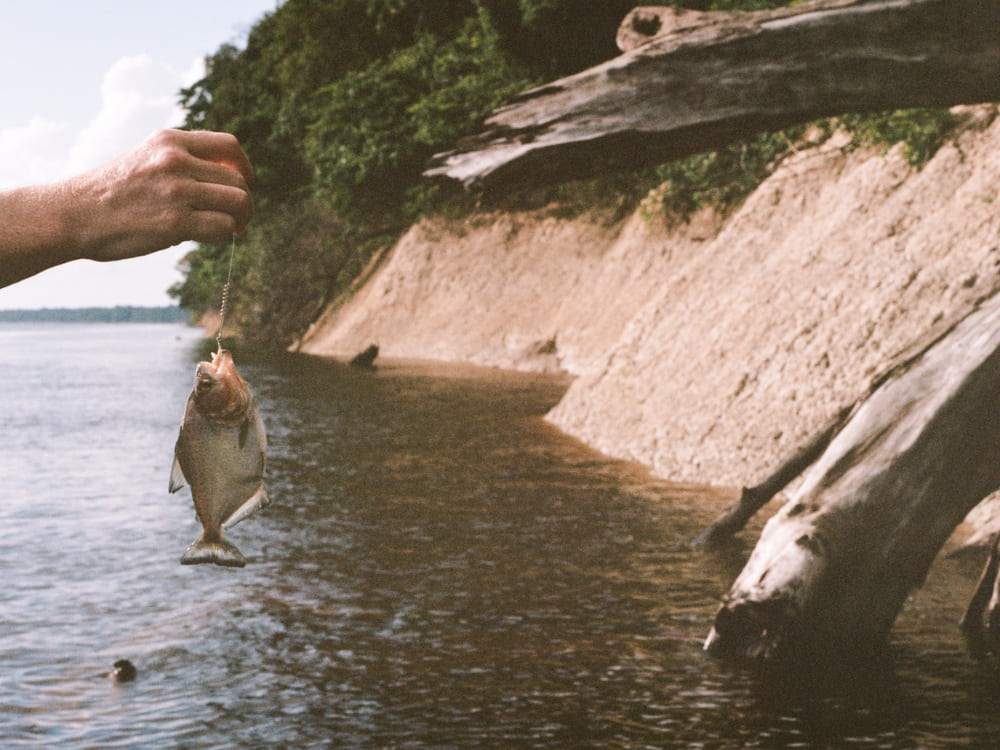
    Shockingly, it became one of the best things about the trip. The difference, again, was the guide. “It was actually super fun. If it had not been for Bobby, it would not have been fun.” Sandy had heard about other groups who caught nothing and gave up. Bobby set a rule instead: nobody stops until everybody catches a fish.

    “Every one of us caught a fish. He kept giving us more meat and explaining everything. We didn’t stop until we all caught one,” she said with a smile.

    A necklace, a machete, and half an hour of braiding

    The last activity of the stay was a short trail walk. Again, being guided by a professional was crucial. “We wouldn’t notice anything unless he had pointed out certain things, like specific trees,” Sandy noted.

    At one point, Bobby stopped at a succulent plant, showed the group how to strip the fibers out of a leaf with a machete, and started braiding, making it strong enough to hold. He was making a bracelet for Robert but misjudged the length and gave it to someone else. It was no problem; he would make Robert another one.

    He cut a second leaf and then carried it back. The next day, right before the fishing, Bobby and Robert sat down and worked on it together. It came out as a necklace instead of a bracelet: a caiman tooth he had with him, a second fiber braided in for a contrasting color, and about half an hour of work.

    “It was so unbelievably beautiful, because this guy is clearly an artist as well as a guide,” she said. “Completely out of your expectations. [Bobby] just wanted [Robert] to have a nice little souvenir.”

    Great hospitality and one very hot day

    Sandy and Robert were aware that their accommodation of choice, the Pantanal Jungle Lodge, was comfortably rustic. “It’s kind of rugged, but we expected that, and we like that,” she stated. They took one of the bunk beds and shared the room with two other travelers. “It was totally fine. Everyone was super polite.

    The rest of her verdict is short and consistent: “The food was really nice and all the guests were super friendly.” The lodge sits right on the Miranda River, which does half the work—she photographed birds without leaving the property.

    Sandy was pleased with her stay, but the heat was difficult. The Pantanal is naturally hot and, depending on the time of year, dry, but one particular morning, during a horseback ride, was especially demanding. “It must have been about 100 °F (38 °C). It was really hot and we were out in the sun.”

    That afternoon, the group went kayaking against the current. “I actually like kayaking a lot, but it was just so hot. At that point I was like, I have heat exhaustion.” While that was a challenge, she clarified no one else had the same problem. “That was just me. I was having a hard time with the heat.”

    Something worth mentioning is that the weather plays a huge part in the itinerary and in people’s experiences—not only in the Pantanal, but in any nature destination. Knowing your limits, like Sandy did, is the wisest thing to do!

    👉 Read more:

    Was the Pantanal safe? Sandy’s honest answer

    Sandy does not answer this question naively. She has lived in Brazil, has had various experiences in Brazilian cities (both good and bad), and is deliberate about how she moves around big cities.

    Her answer about her experience in the Pantanal came immediately. “I felt 100% safe. You don’t have to even worry about where you leave your wallet or your purse,” she affirmed.

    The animals never worried her either. “I never felt any fear of the animals. It never really occurred to me,” she said. “We’re in a big boat. It’s safe.” She noticed the operating side of it too. “[The staff] was very responsible about everyone wearing a life jacket.”


    Next stop: the Amazon (with her daughter this time)

    The Pantanal trip is already producing the next one. Sandy’s daughter is arriving in Brazil for the first time, and the two of them are going to Manaus and into the Amazon—a place Sandy knows from years ago and has not seen since.

    It is a fair pair to have in one lifetime. The Amazon is a forest: dense, vertical, and mysterious. The Pantanal is an open wetland, where the water pulls the animals into view.

    As someone who knows Brazil intimately, Sandy recommends the place that won her heart: Salvador, in Bahia, one of the cities where she has lived. “It’s so unique, so historical—the culture, the music. If you’re going to go to Brazil, you have to visit Salvador.”

    👉 Read more: Pantanal or the Amazon: Which One Should You Choose?

    Visiting the South Pantanal with PlanetaEXO

    Now that you have seen Sandy’s incredible travel story, you know what the South Pantanal really offers: a working wetland where animals are found rather than displayed, and where a guide who reads the riverbank makes the whole trip.

    PlanetaEXO is an ecotourism platform specializing in Southern Pantanal tours. Working alongside experienced local guides and operators, we handle the logistics (transfer from Campo Grande, lodge, meals, and activity program), so you can focus on the nature from your first booking to your last boat ride. Contact us now!

  • Amazon eco floating lodge on the Rio Negro seen from the boat at sunrise

    Exploring the Amazon: Erica’s Adventure in a Floating Lodge in Brazil

    One traveler, two friends, and a surprising immersion into the world’s largest tropical rainforest

    Some trips start with a place, but this one started with an event. Erica L., 41, works as a research analyst in the United States. When a friend scheduled her wedding in Rio de Janeiro, Erica decided it was the perfect opportunity to extend her trip. After all, if she was going all the way to Brazil, she needed to explore more.

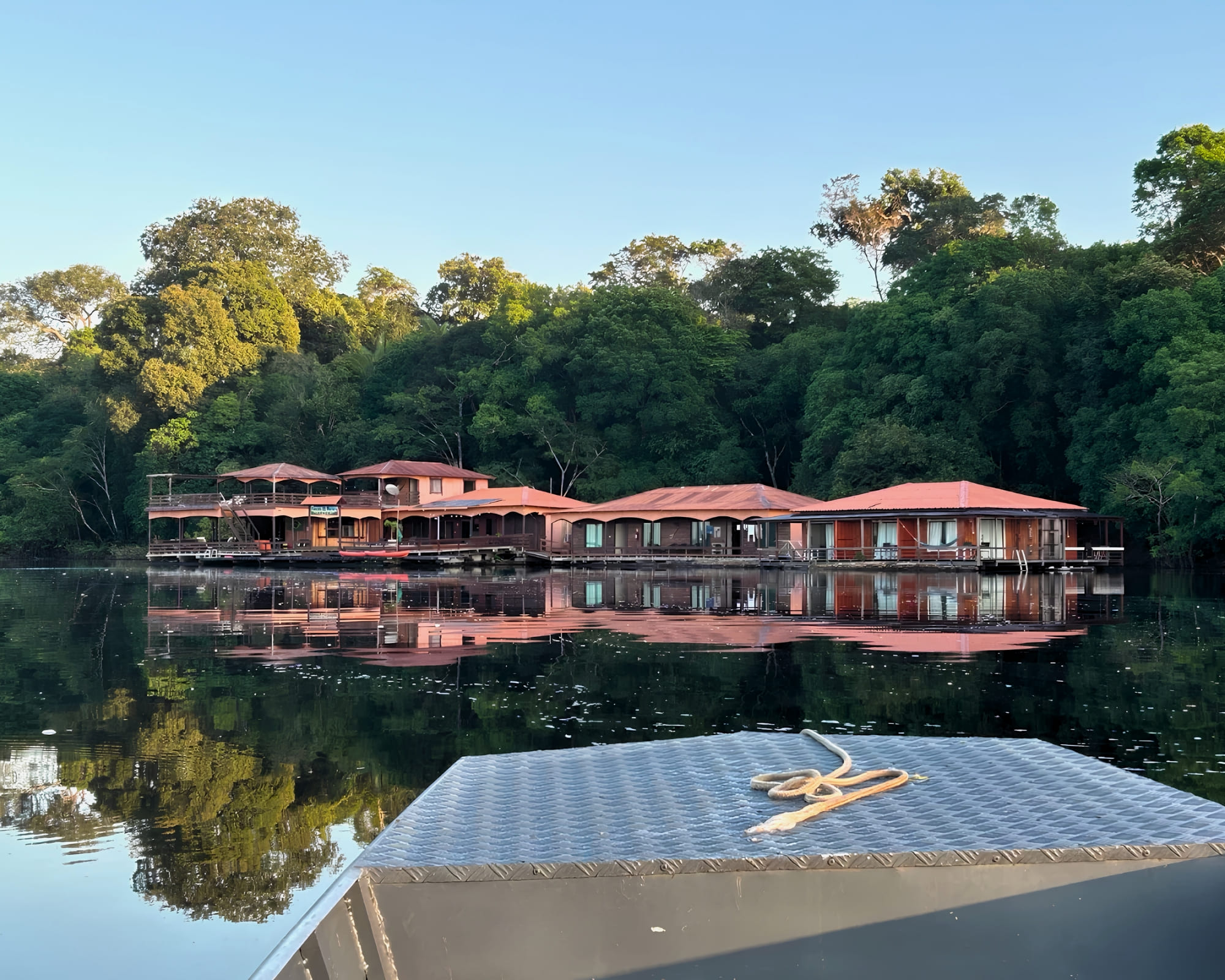
    Together with two friends, she set off for an unforgettable journey in the Amazon, staying in a self-sufficient hotel with 6 suites that floats on the river, rises and falls with the water level, and runs on clean energy year-round.

    Erica and her friends traveled into the rainforest on a 3-day Amazon jungle tour from Manaus, organized and led by PlanetaEXO’s team and local guides. Here, we share her story to show what experiencing nature is really like, featuring remarkable wildlife encounters, local connections, and much more comfort than she expected. Check it out below!

    A trip extension that exceeded expectations

    When Erica booked the tour, her expectations were already high. She had read the PlanetaEXO itinerary and seen photos, but reality managed to surpass it all. The lodge staff went so far above and beyond. They were so wonderful and kind to us,” she recalled.

    What surprised her most was the level of comfort. Expecting a rugged expedition and potential issues with mosquitoes (she even gave her friends a “stern talking to” about bug spray), the experience was exactly the opposite.

    The floating lodge featured a beautiful rooftop stargazing area and a lovely pool. “It was very manageable and comfortable. The boat rides were smooth, lasting at most 3 hours, and the staff was always attentive to the group’s needs.”

    Travellers on a boat ride along the Rio Negro during a 3-day Amazon tour from Manaus

    👉 Read more: Best Amazon Jungle Lodges in Brazil

    Amazonian hospitality and attention to detail

    Traveling with dietary restrictions can be a challenge, especially in remote areas. Erica is vegetarian, and her two friends are vegan. “Honestly, I was a little bit worried that they were going to starve to death because it’s not a very common diet.”

    However, the lodge staff shined. At every single meal, individualized vegan entrees and desserts were specially prepared for them using local vegetables and ingredients, reinforcing the lodge’s commitment to sustainability and eco-friendly practices.

    Suite at the Amazon floating lodge with a river view, a hammock on the deck and binoculars on the bed

    👉 Read more: Amazonian Food: 7 Typical Dishes to Try in the Brazilian Amazon

    The guide who reads the forest

    In a forest with no signs and rivers that shift with the season, guiding is everything. Erica’s guides, Tyson and Josephine, left a profound mark.

    Tyson knew the region so well that during one of the tours, he warned the boat driver it would be the last time they could take a specific route because the river level had dropped and it would soon be unsafe. “It was really crazy for me to think of how well you have to know a terrain to understand that. My brain doesn’t have that knowledge of anything,” Erica joked, impressed by such a level of skill.

    The hospitality was just as stellar. Knowing that a French family would be arriving the next day, Tyson stayed up until 3 AM trying to learn basic French to welcome them in the best possible way.

    Another surprise was discovering the team’s background. “I didn’t realize that all of the staff were going to be from the local indigenous communities,” she admitted. “That in and of itself is one of the coolest parts of the trip. [The team] was so warm and kind. It was the most hospitable accommodations I’ve experienced in any type of tourism.”

    Group hiking a rainforest trail with a local guide on an Amazon jungle tour

    👉 Read more:

    Unforgettable wildlife encounters

    Although the group fished for piranhas and spotted sloths, caimans, various birds, and two species of monkeys, it was the interaction with the Amazon river dolphins that stole the show.

    “Tyson told us: ‘I think you guys are not only gonna see dolphins; I think you’re gonna see schools of dolphins.’ And we went and we did! It was amazing. They were fishing, jumping out, and got very close to the boat,” Erica remembered excitedly, noting that the sightings were frequent enough for everyone to capture on video.

    Amazon pink river dolphin swimming just below the surface of the Rio Negro

    👉 Read more: 15 Amazon Animals – Unravel the Wildlife in Brazil

    Is it safe to travel to the Amazon? Erica’s honest answer

    Safety is a common concern for first-time visitors to Brazil. Erica, however, felt 100% safe. Before the trip, she read the PlanetaEXO blog about safety in Manaus and took sensible precautions.

    “I knew to respect what I was reading. We always used Uber Black, and I was very conservative with how late we were out. I don’t want to be more adventurous than I might have been in a place where I knew the city better, so I had no problems [anywhere in Brazil],” she stated.

    Language wasn’t a barrier either. Erica’s basic Spanish was enough, since it’s somewhat similar to Portuguese. At the lodge, she held full conversations in Spanish with the chef and bartender. “Everyone was very patient and kind.”

    Erica’s tips for first-time travelers

    Following her experience, Erica shared three practical tips for anyone planning to visit the Amazon:

    Bring small bills for tipping

    Erica wished she had brought more reais (the local currency) in cash to individually tip the various staff members (guides, boat drivers, and lodge staff) who provided such exceptional assistance. “I didn’t understand how gracious and intensive the service would be.” There were at least five people she wanted to tip individually.

    Worth knowing: the tipping culture in Brazil is different from the US, since service is often built into the bill and staff doesn’t count on it. It is appreciated, never obligatory. If you do want to tip, bring small notes in reais.

    Prepare for local donations

    During the trip, the group visited an impressive local school where children are taught multiple languages. Had she known beforehand that some communities welcome donations, she would have loved to bring school supplies.

    “I would never presume to do something like that, because it can be weird when you’re offering gifts that people haven’t said are okay to give,” she said. Erica recommends asking in advance if there is any way to support the local communities visited along the itinerary.

    Pack some casual resort wear

    Erica over-prepared for an “extreme” jungle expedition, but the lodge had a very pleasant atmosphere. “Travelers might want to include more resort-style or casual clothing for time spent at the lodge,” she advises.

    Eco floating lodge with red roofs reflected on the Rio Negro in the Brazilian Amazon

    👉 Read more: When is the Best Time to Visit the Amazon Rainforest in Brazil

    Next plans: The Pantanal

    One trip simply wasn’t enough. Brazil won Erica over, and she is already thinking about coming back. The next destination? The Pantanal.

    As a huge wildlife fan (who missed seeing capybaras in Rio de Janeiro!), she is already dreaming of visiting the region to spot the iconic jaguars.

    Jaguar mother grooming her cub in Brazil

    👉 Read more: Where is the Best Place to See Jaguars in the Pantanal?

    Discover the Amazon with PlanetaEXO

    Now that you’ve seen the Amazon through Erica’s eyes, you know what this trip actually asks of you (very little) and what it gives back: spontaneous wildlife encounters, attentive guides who read the river like a map, high-end hospitality, and breathtaking natural landscapes.

    PlanetaEXO is an ecotourism platform specializing in Amazon Rainforest tours in Brazil. Working alongside the best operators, we handle the logistics (transfers, lodges, meals, and routes) so all you have to do is enjoy yourself. Contact us now!
  • A Family’s 3-Day Lençóis Maranhenses Trek: Olivia’s Brazil Story

    A Family’s 3-Day Lençóis Maranhenses Trek: Olivia’s Brazil Story

    One Austrian family, three and a half weeks in Brazil, and three days on foot across a desert of white dunes and freshwater lagoons, told in Olivia’s own words

    Some trips start with a place, but this one started with a season. Olivia Rossignol, 48, works at the United Nations and lives in Austria. When she plans a trip for her family, she starts by ruling things out. She wanted somewhere warm to travel during the European summer, without landing in someone else’s rainy season, which pointed her toward Brazil. While July is winter in the south, the north of the country sits squarely in its dry season.

    The exact destination came from her 15-year-old daughter. Googling Brazil one evening, she found the surreal images of Lençóis Maranhenses trending on Instagram and asked the obvious question: Can we go there? They built the entire three-and-a-half-week trip around it, adding Rio de Janeiro, Pipa, Salvador, Chapada Diamantina, and Morro de São Paulo along the way.

    But Lençóis Maranhenses National Park, a 155,000-hectare sweep of white sand dunes and rainwater lagoons in the state of Maranhão, was always the anchor. It marked the family’s first time in Brazil, and, without a doubt, it stood out as the absolute highlight of their entire journey.

    Olivia, her husband, and their daughter crossed the dunes and lagoons on a 3-day Lençóis Maranhenses trek, organized and led by PlanetaEXO’s team and local guides. Now we share her story to show you what this experience really feels like: for a family, for first-timers in Brazil, and for anyone weighing the same questions she had. Check it out below!

    A destination her daughter found online

    A year ago, Lençóis Maranhenses wasn’t even on Olivia’s radar, as she readily admits. “No matter who I tell that I was there, nobody knows it. And honestly, a year ago, I didn’t know it either,” she confessed.

    The idea only survived because it solved her real problem (a dry-season destination in July) and because her daughter kept pushing for the images she had seen online.

    So they reversed the usual logic. Instead of fitting Lençóis into a Brazil itinerary, they built it around Lençóis and filled in the rest afterward. For a first family trip to South America, letting a 15-year-old’s screenshot set the direction turned out to be a good call.

    👉 Read more: Best time to visit Lençóis Maranhenses

    Three days off the grid and an otherworldly landscape

    The camps in the park offered Wi-Fi, but Olivia deliberately didnt use it. “It was clear to me I wouldn’t have it for three days,” she said. “I was even a bit disappointed they offered it. We don’t get this anymore, being several days offline.”

    That choice is a big part of why the trekking in Lençóis Maranhenses landed the way it did. “I had the feeling I was somewhere completely different, not on Earth,” she marveled, saying how she had been to the Moroccan desert in February and expected something similar, just in white. It is not. It is much more spectacular.”

    What surprised Olivia most was that the national park kept raising its own bar. “You do a full day hiking, you see the white sand, the dunes, the lagoons, you have a nice overnight… And then the next day is even more beautiful than the day before,” she remembered. “You don’t expect it, because you think you’ve already seen everything. But it gets better.

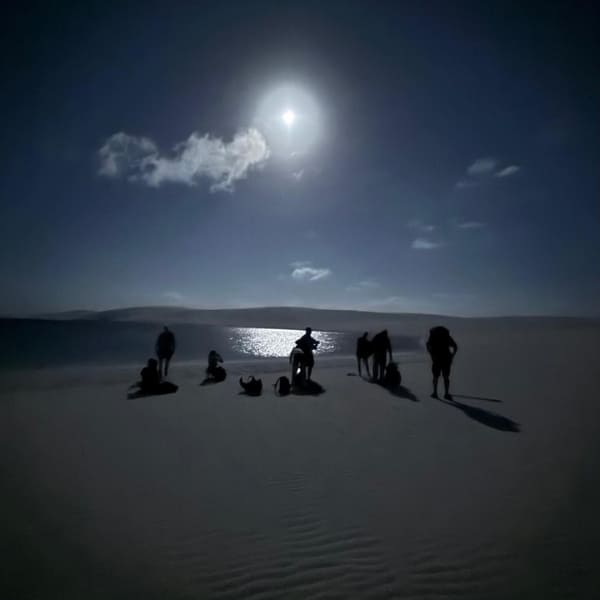
    The third and final day was the best of all, and the group got lucky with the timing. “We had a full moon, so we started walking at night and swam under it. That was really amazing.” Weather helped too: across three days, they had blue sky and, by her count, only about five minutes of rain.

    👉 Read more: How many days should you spend in Lençóis Maranhenses?

    The guides who stayed until the end

    In a park with no roads, no signs, and no signal, the guides carry the trip. Olivia’s two, Patricio and Cristiano, left the strongest impression of anyone she met in Brazil. “I have never in my life met people as kind as those two guides.”

    The moment that stuck with her came at the very end, in Santo Amaro, when the trip was technically over. The family had a transfer booked for noon and, in Olivia’s words, “in my European way, I started to get nervous” when lunch hadn’t arrived by then. The guide simply handled it: he stayed and ate with them, went into the kitchen to check on the food himself, carried it out, and made sure the transfer worked.

    “When someone is supposed to take care of you, he takes care of you totally. And you feel it, because for them, this isn’t just a job,she reflected.

    👉 Read more: How to get to Lençóis Maranhenses?

    Language barrier overcame by Brazilian friendliness

    Olivia was satisfied with the whole trip, but when pressed for something that didn’t work, she said it was difficult to find anybody speaking English, and not only in a small village, which she expected, but in Rio too, which was a surprise.

    While the family’s knowledge in Italian and Spanish helped, the communication was a bit of a struggle with some locals. Still, it was nothing that could sour the experience. “Everyone was still friendly, and I’d come back. I will sure come back. There’s so much more to see in this country.”

    Was Brazil safe? Olivia’s honest answer

    Before the trip, Olivia was a bit worried. “Not scared, but worried,” she clarified. The first thing friends asked when she got home was whether Brazil was dangerous. Her conclusion after three and a half weeks was practical.

    “You just need to put some common sense into what you’re doing, and there’s no need to be afraid.” In practice, that meant a simple t-shirt, no jewelry, and not walking alone at night.

    She doesn’t pretend nothing happened. In Salvador, a city she genuinely liked, a 20-minute walk to a supermarket took the family out of the center, and the mood shifted from the lively places they’d been before. “The streets got darker, and we suddenly felt alone, so we just stopped and took an Uber.”

    Although a few moments brought brief unease, her anxiety stemmed mostly from facing the unknown rather than any actual trouble. In the end, the whole journey went smoothly.

    The surprises Brazil had in store

    Olivia is candid about arriving with a bias. “We have this stupid arrogance in Europe,” she acknowledged: the assumption that things outside it will be less punctual, less organized. Brazil dismantled it.

    The family took three domestic flights. After a slow check-in, she braced for delays that never came. “Everything was punctual, everything worked out well. Even better, in some instances.”

    The food was another quiet, delicious surprise. The briefing beforehand played it down, almost an apology that meals on the trek would be very simple. But in the end, Olivia and her family thoroughly enjoyed all the home-cooked meals the hosts prepared for them.

    She rated the rest of Brazil highly too, but she insists nothing compares to Lençóis Maranhenses.

    Olivia’s tips for first-time travelers to Brazil

    Asked what she’d tell a friend going to Brazil for the first time, Olivia had three travel tips, based on her own experience:

    • Learn a little Portuguese: Even a handful of common words goes a long way, especially outside the big hotels where English is scarce.
    • Dont let fear plan your trip: It’s not as dangerous as people think. Common sense does most of the work.
    • Plan properly: Brazil is too big to just book a flight and see what happens. Decide where you want to go and what you want to do before you leave.

    👉 Read more: 10 Travel Tips for Lençóis Maranhenses to Make the Most of Your Trip

    Where Olivia wants to go next and her final thoughts on Lençóis Maranhenses

    One trip clearly wasn’t enough. Olivia’s sure she will travel to Brazil again.

    Top of her list is the Pantanal, followed by the Amazon Rainforest and the coast around Paraty, south of Rio de Janeiro. For a family that came for one desert and left planning a wetland and a jungle, that’s the strongest review of all.

    Asked to sum the trip up, Olivia doesn’t reach for the landscape or the logistics but for the feeling. “Best time of our lives,” she said of the 3-day trek in Lençóis Maranhenses. “The communication and organization through PlanetaEXO were perfect, prompt, and trustworthy. The trekking itself was one of our best times ever. We can highly recommend it!

    Trekking in Lençóis Maranhenses with PlanetaEXO

    Now that you’ve seen the park through Olivia’s eyes, you know what a trip to Lençóis Maranhenses here really gives back.

    PlanetaEXO is an ecotourism platform specializing in the Lençóis Maranhenses tours and other adventures across Brazil. Working alongside experienced local guides, we handle the logistics (transfers, camps, meals, and the route) so you and your family can focus on the dunes, from your first booking to the last full-moon lagoon. Contact us now!
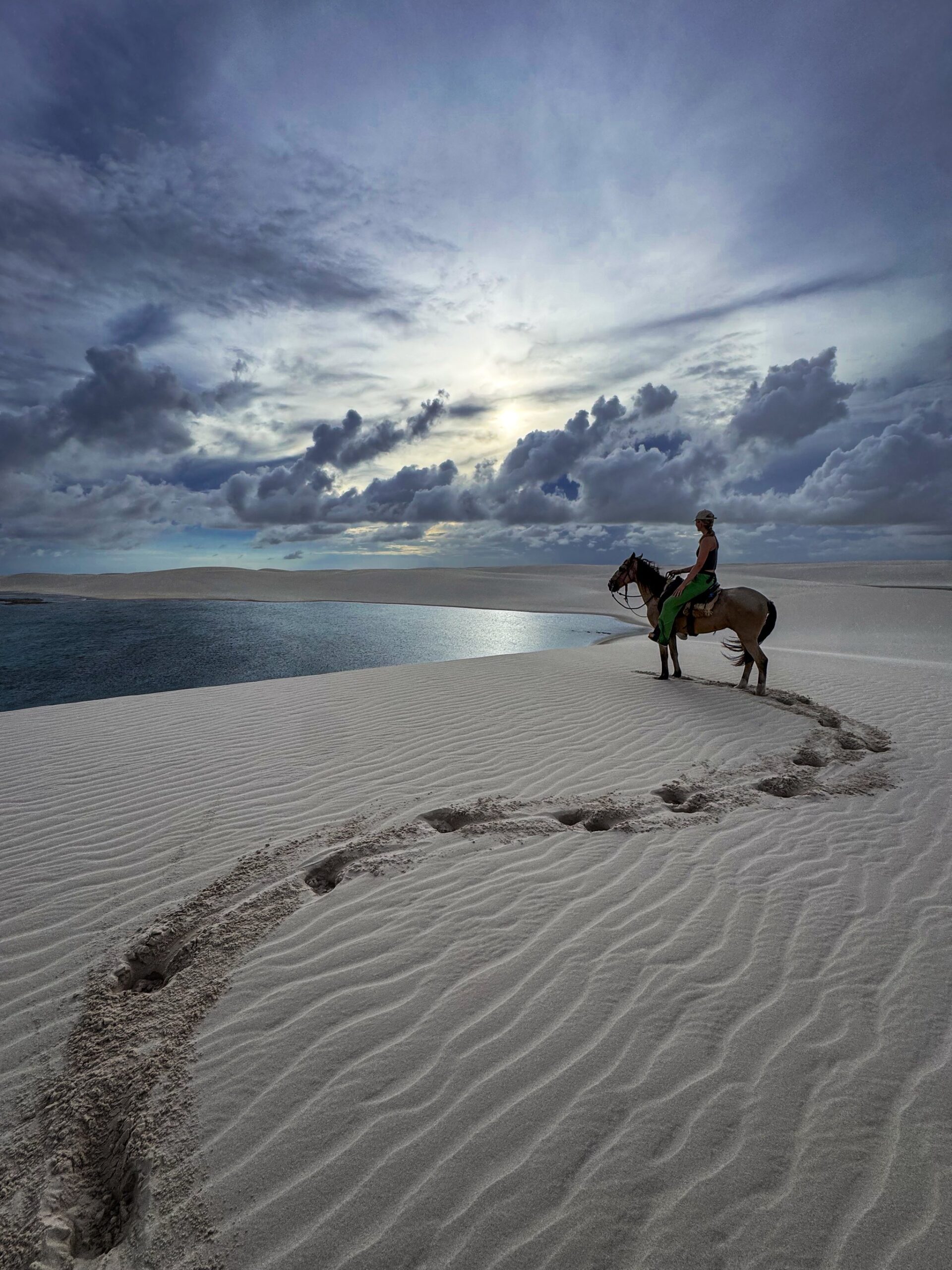
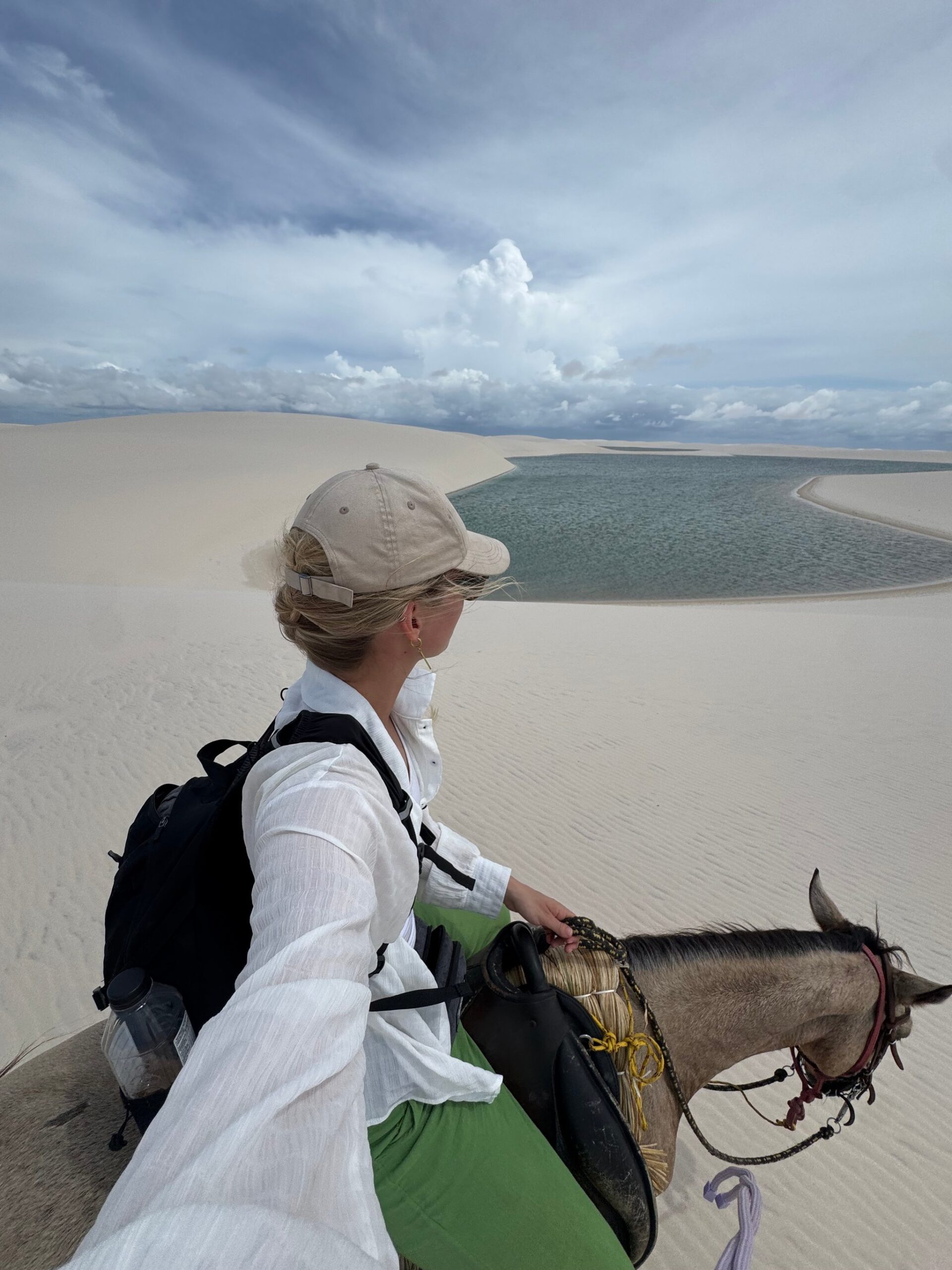
  • A solo rider crosses the white sand dunes of Lençóis Maranhenses National Park on horseback, with a rainwater lagoon stretching behind her.

    Crossing Lençóis Maranhenses on Horseback: Patricia’s Solo Adventure in Brazil

    One traveler, four weeks, and a horseback crossing of Brazil’s most surreal desert—told in her own words

    Some of the best trips are the ones you never planned. Patricia George, 31, a physiotherapist from Germany, was supposed to be surfing in Bali. A week before departure, her flights—routed over Abu Dhabi—were canceled because of the war. She wanted somewhere warm with good waves; a friend from São Paulo told her to go to Brazil, and that was that. It was her first time in the country and her first time in South America—solo for four weeks.

    She started in São Paulo, surfed for 5 days in Ubatuba, then worked her way through Paraty, Rio de Janeiro, and Ilha Grande before flying north to Lençóis Maranhenses National Park—a 155,000-hectare stretch of white dunes and rainwater lagoons in the state of Maranhão, recognized as a national park by ICMBio. Of every place she saw in Brazil, this was her favorite. “It was really, really impressive,” she said. “Nothing like I've ever seen before.”

    Patricia ventured through the dunes and lagoons on horseback, an experience organized and led by PlanetaEXO’s team and local partners. Now, we share her story to show you what a horseback crossing of Lençóis Maranhenses really feels like. Check it out below!

    A rider since age 10 (but never on sand)

    Patricia didn’t pick the horseback crossing as a novelty. She’s been riding since she was a child, so the saddle was familiar territory. The terrain was not. “I've been riding since I was 10,” she shared, “but riding on the sand is very different.”

    Crossing the dunes is nothing like circling a field at home: the ground shifts, the horse works harder, and the route runs for hours between lagoons rather than around a fenced ring.

    For an experienced rider, that contrast is exactly the point; the skill carries over, but the setting turns a familiar activity into something new.

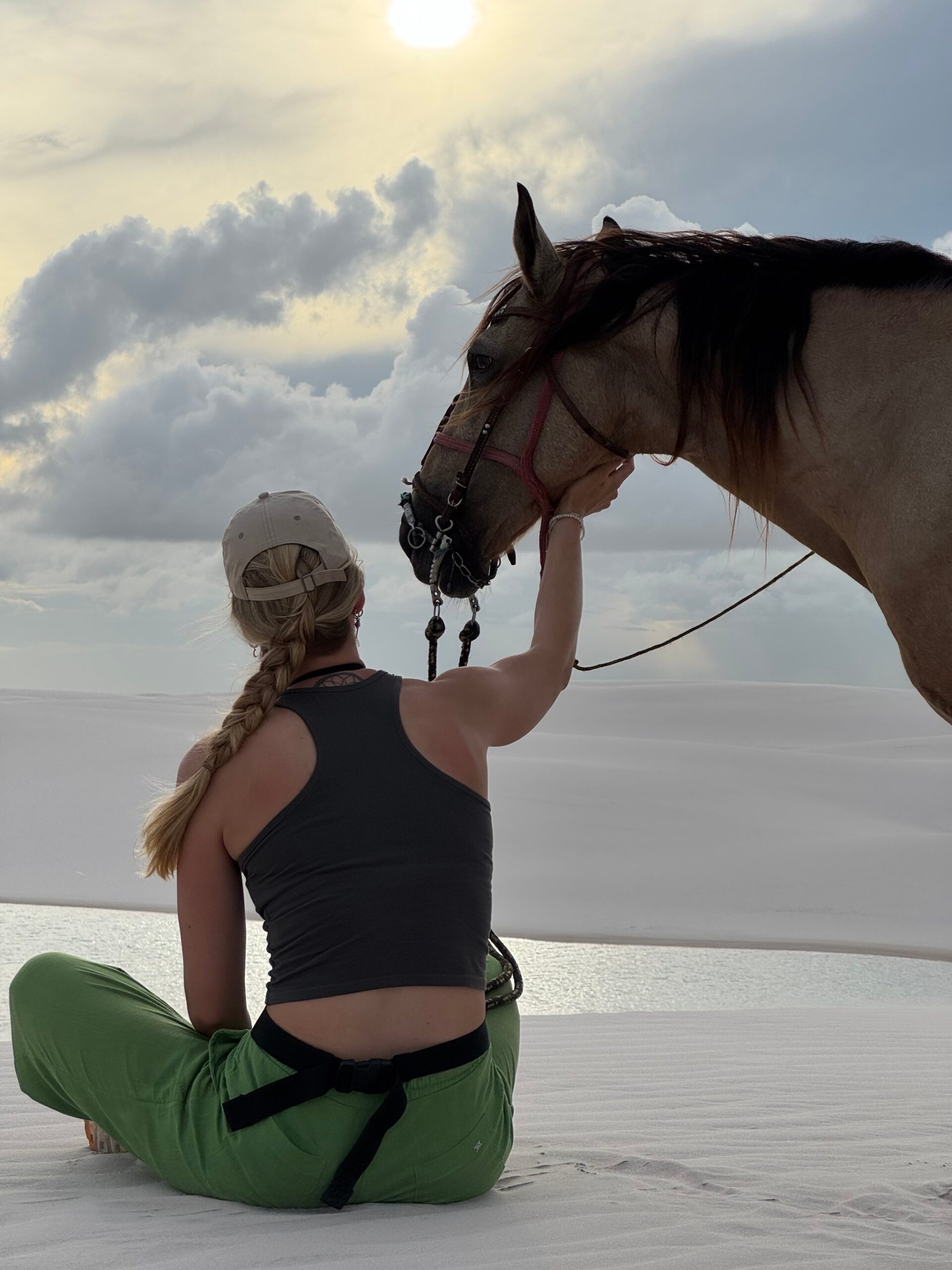
    A rider in a cap pauses to stroke her horse's nose on the white dunes of Lençóis Maranhenses at sunset.
    Riding on sand is very different — but the bond is the same.

    👉 Read more: Best time to visit Lençóis Maranhenses

    Days in the saddle, with no signal and no rush

    What stayed with Patricia most was the remoteness. The group was out on the horses all day, far from cell phone reception, with nothing pulling at her attention.

    “We were out on the horses all day long, and you just had the time to think,” she reflected. “You don’t have that a lot in your normal day.” In a park where the rainwater lagoons sit between dunes that reach as high as 40 meters, the landscape does the talking. There’s no playlist, no notifications—just sand, water, and the pace of the horse.

    That kind of disconnection is part of why the horseback riding in Lençóis Maranhenses lands so differently from a typical day trip. You don’t just visit the dunes, but you connect with nature and live inside them for a few days.

    A turquoise rainwater lagoon nestled between white sand dunes under a bright blue sky in Lençóis Maranhenses.
    Rainwater lagoons sit between dunes up to 40 meters high.

    👉 Read more: How was Lençóis Maranhenses formed: understanding Brazil’s sand dunes and lagoons

    The guide who reads the landscape

    In a place with no roads, no signs, and no signal, the guide is everything. Patricia’s left a strong impression.

    “I was very impressed by my guide, by how he could read the landscape and knew exactly where to go,” she remembered. “Without my phone or Google Maps, I would have been totally lost.”

    He had been doing the route for years and knew everyone along the way, which gave the whole trip the feel of a small, working community rather than a tourist circuit. As we told Patricia, a guide can make or break a trip, and in a place like Lençóis, they’re truly essential.

    A rider stands beside her horse on the dunes, looking out over a lagoon in the roadless interior of Lençóis Maranhenses.
    With no roads or signposts, the guide reads the landscape.

    Traveling solo as a woman

    Before leaving, Patricia heard the usual concern. “People said, ‘Are you sure you want to go? Brazil isn’t the safest place, especially for a woman.’” Despite the warnings, her experience ran the other way.

    “I honestly always felt safe in those four weeks,” she said. Because the trip was so spontaneous, she arrived without rigid expectations and stayed open to whatever came. That mindset paid off, especially when considering how every booking was last-minute—she made the best of all of it.

    That’s not to say every night was easy. On the first one, she stayed in a large open-area lodge and noticed she was the only woman there apart from the host. Patricia felt a bit scared, but since no one bothered her, she felt comfortable fast.

    The second night was less unnerving and more absurd: her house sat elevated off the ground behind a fence meant to keep animals out, but the pigs were too strong, broke through, and held a noisy turf war underneath the floorboards all night. The situation was definitely a rush, though everything turned out fine in the end.

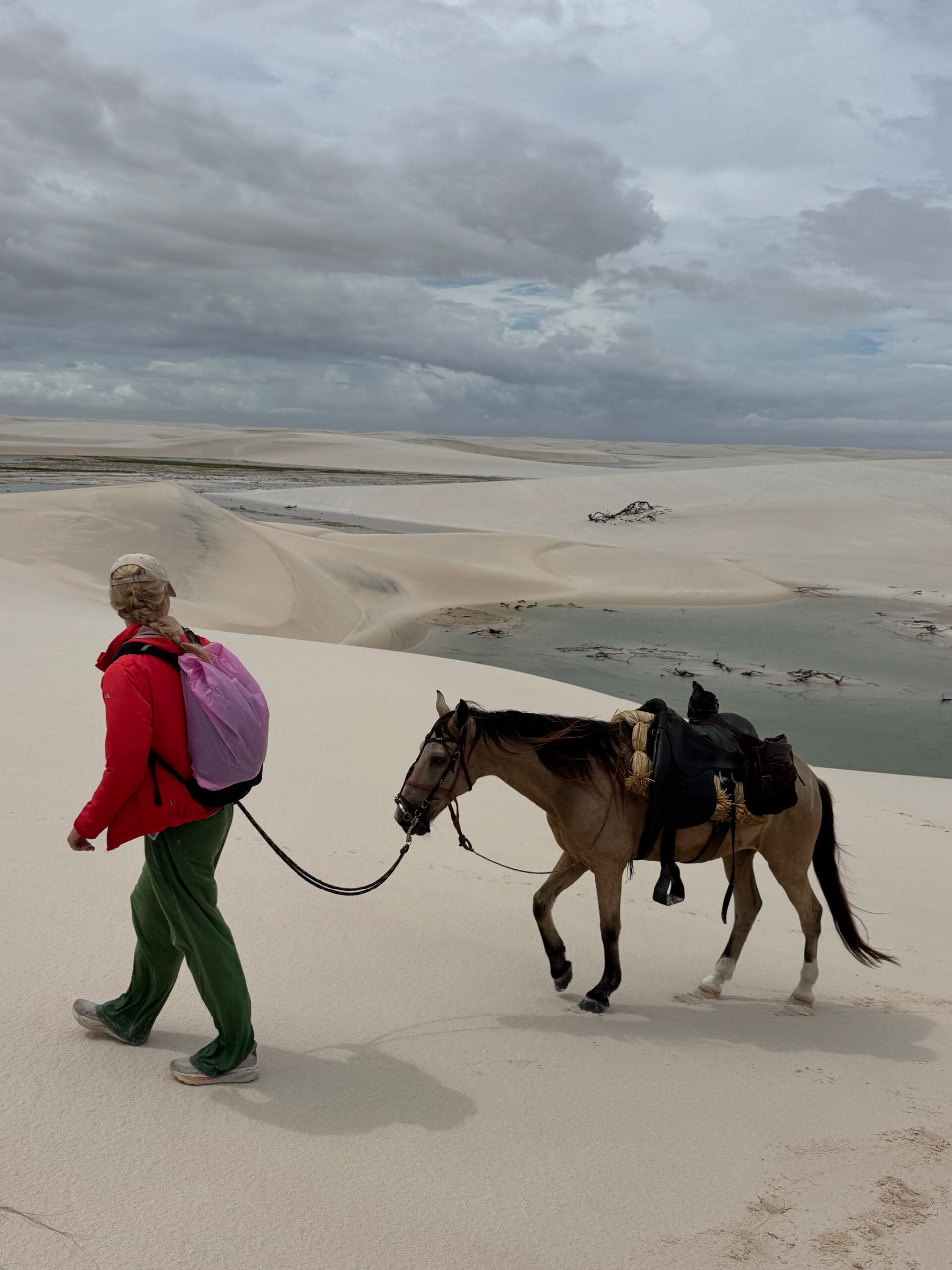
    A traveler leads a horse on foot across the vast white dunes of Lençóis Maranhenses under a cloudy sky.
    Days in the saddle across a roadless desert of sand and water.

    👉 Read more: Ecotourism in Brazil boosts solo travel for women through planning and support networks

    Friendly, distant, and fully present

    Traveling without Portuguese had a cost. Locals were warm, but the language gap kept conversations short. “It was friendly but distant,” Patricia confessed, and if she comes back, learning some Portuguese is at the top of her list so she can actually ask questions and connect.

    Even at a distance, one thing landed clearly. “The people seem like they’re actually living life,” she told us, describing how the locals were always present in what they were doing, far less hectic than the countries she’d visited before.

    Low season meant her crossing was just her and the guide, but the lodges still brought company: she met two French travelers doing the same route on foot and played cards with them in the evenings.

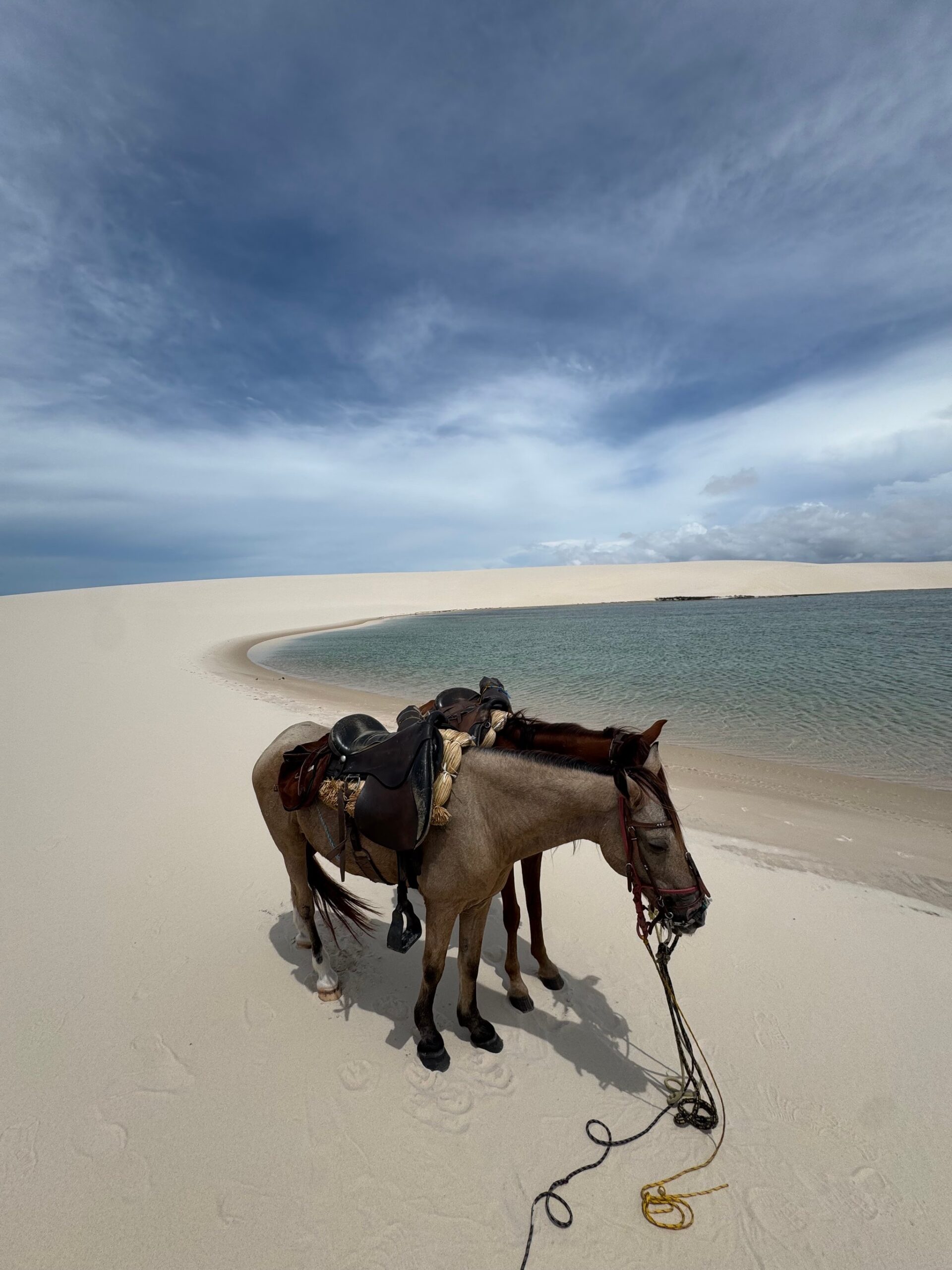
    Two saddled horses rest on the sand beside a dune lagoon during a low-season crossing of Lençóis Maranhenses.
    Low season: just one rider, a guide, and the horses.

    👉 Read more: How to get to Lençóis Maranhenses?

    Why simple was the right call

    Patricia knew going in that the accommodation would be basic. She wouldn’t have it any other way. “I knew it would be simple, but I think that’s what makes the trip authentic. Any kind of luxury would just feel out of place.”

    In a setting this raw, comfort isn’t the selling point, but honesty surely is. The reward was personal: the trip, she said, “made me more confident,” which is no small thing for a first long solo journey across an unfamiliar continent.

    She’s already eyeing a return, this time to the Amazon, drawn to the jungle lodges and river cruises deep in the rainforest.

    An aerial view of a riverboat winding through the flooded forest and river channels of the Brazilian Amazon.
    Patricia's next dream: jungle lodges and river cruises in the Amazon.

    Ride Lençóis Maranhenses with PlanetaEXO

    Now that you’ve seen Patricia’s crossing through her own eyes, you know what the dunes ask of you—and what they give back: days in the saddle, total disconnection, and a guide who knows the sand by heart.

    PlanetaEXO is an ecotourism platform specializing in Lençóis Maranhenses tours. Working alongside experienced local guides and operators, we handle the logistics so you can focus on the ride, from your first booking to an unforgettable crossing of one of Brazil’s most surreal landscapes. Contact us now!
  • Beyond the Mountains of Nepal: A Journey of Connection with Mother and Son

    Beyond the Mountains of Nepal: A Journey of Connection with Mother and Son

    How an expedition to the Himalayas strengthened the bond between Mila and Lorenzo Ricetti

    Motherhood is often described as a journey, but for Mila Ricetti (56) and her son Lorenzo (24), it materialized into a literal expedition across the rustic landscapes of Nepal with the Mardi Himal trek in the Annapurna region—a route that invites a profound introspection in the face of the Himalayas’ grandeur.

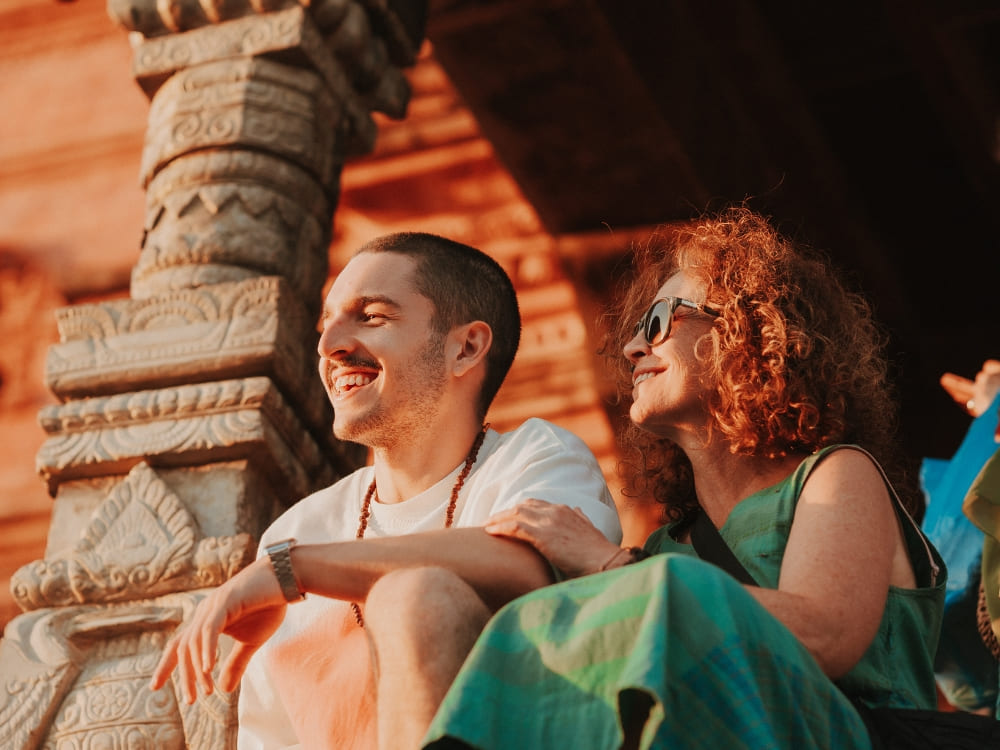
    Mila Ricetti and her son Lorenzo smiling and sitting together at a historic brick temple during their ecotourism expedition in Nepal.
    Photo: CJ

    Mila already had a yoga retreat planned. To celebrate Lorenzo’s graduation from law school and the new chapter in his life, they altered the schedule to include trekking. With the support of PlanetaEXO in organizing the logistics, mother and son traded traditional graduation parties for the silence of high altitudes.

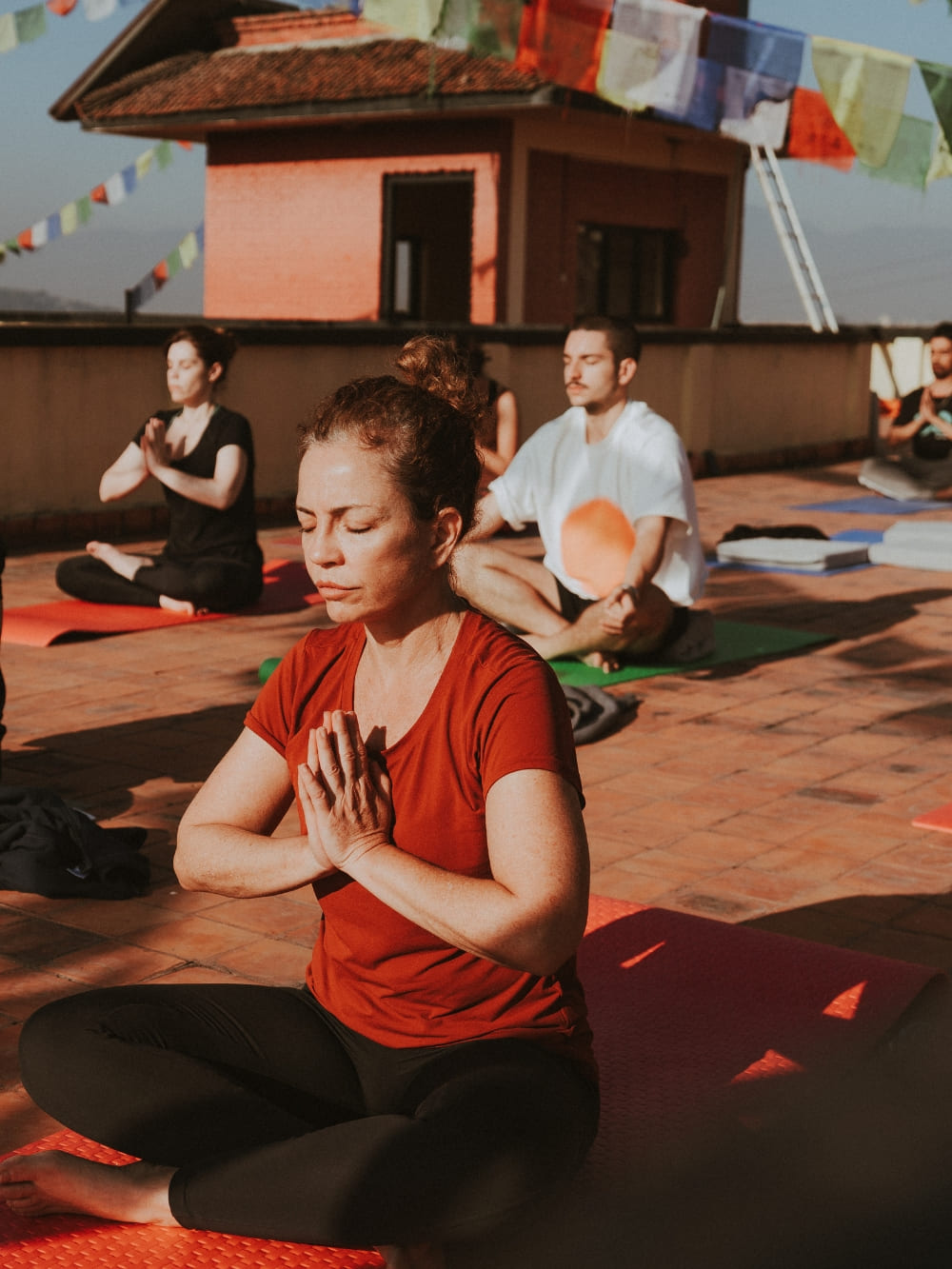
    Mila Ricetti and Lorenzo practicing yoga and meditating with a group on a sunlit rooftop decorated with prayer flags during a retreat in Nepal.
    Photo: CJ

    Together, they were able to connect even more in one of the most beautiful and enigmatic settings in the world.

    The Beauty of the Path

    In Nepal, spirituality isn’t found only in temples but in the very rhythm of the walk and the spectacular views from the mountaintops after a long trek.

    “We woke up at 3 a.m. to climb the mountains and watch the sunrise,” Mila recalls.  I didn’t think I’d make it in time, but I went at my own pace, and it worked out. It was beautiful and very emotional.”

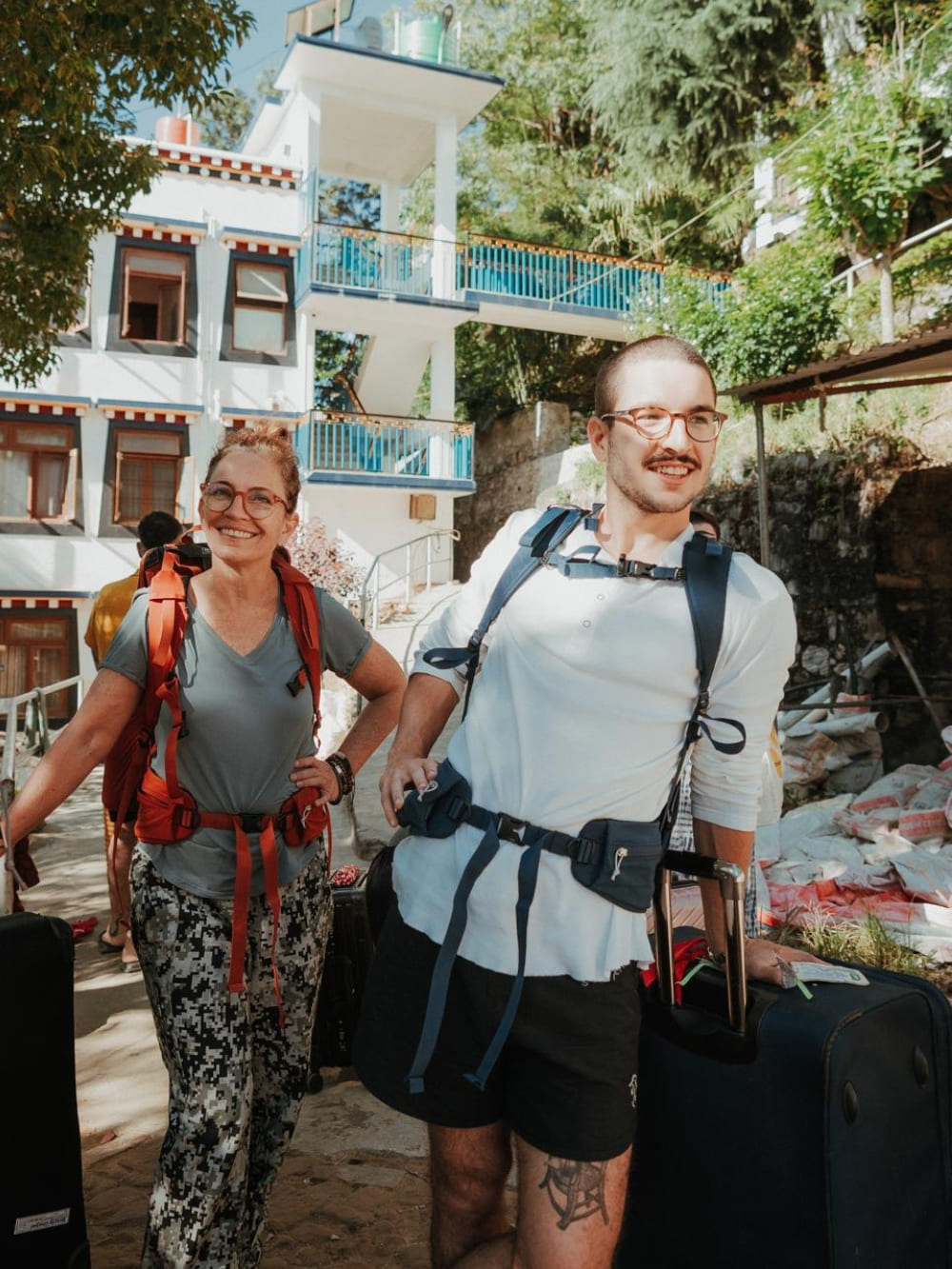
    Mila and Lorenzo wearing trekking backpacks and smiling as they prepare for physical endurance on the Mardi Himal trek in Nepal.
    .

    The starlit sky that seemed low enough to touch, the frozen darkness, and the snowy peaks covered with golden sunlight made that moment a rich, unforgettable exchange where the silence between one step and the next spoke louder than a thousand words—especially in such good company.

    👉 Read more: Women over 50 Shatter Stereotypes and Prove that Adventure Has No Age Limit

    A New Dynamic on the Trail

    Traveling to Nepal demands physical endurance and mental preparation. For Mila and Lorenzo, the challenges of the harsh terrain acted as a catalyst.

    The trip marked a clear transition from traditional “family vacations” to a shared experience between two adults. The simple act of walking side by side for hours on end created a safe space for dialogue and mutual observation.

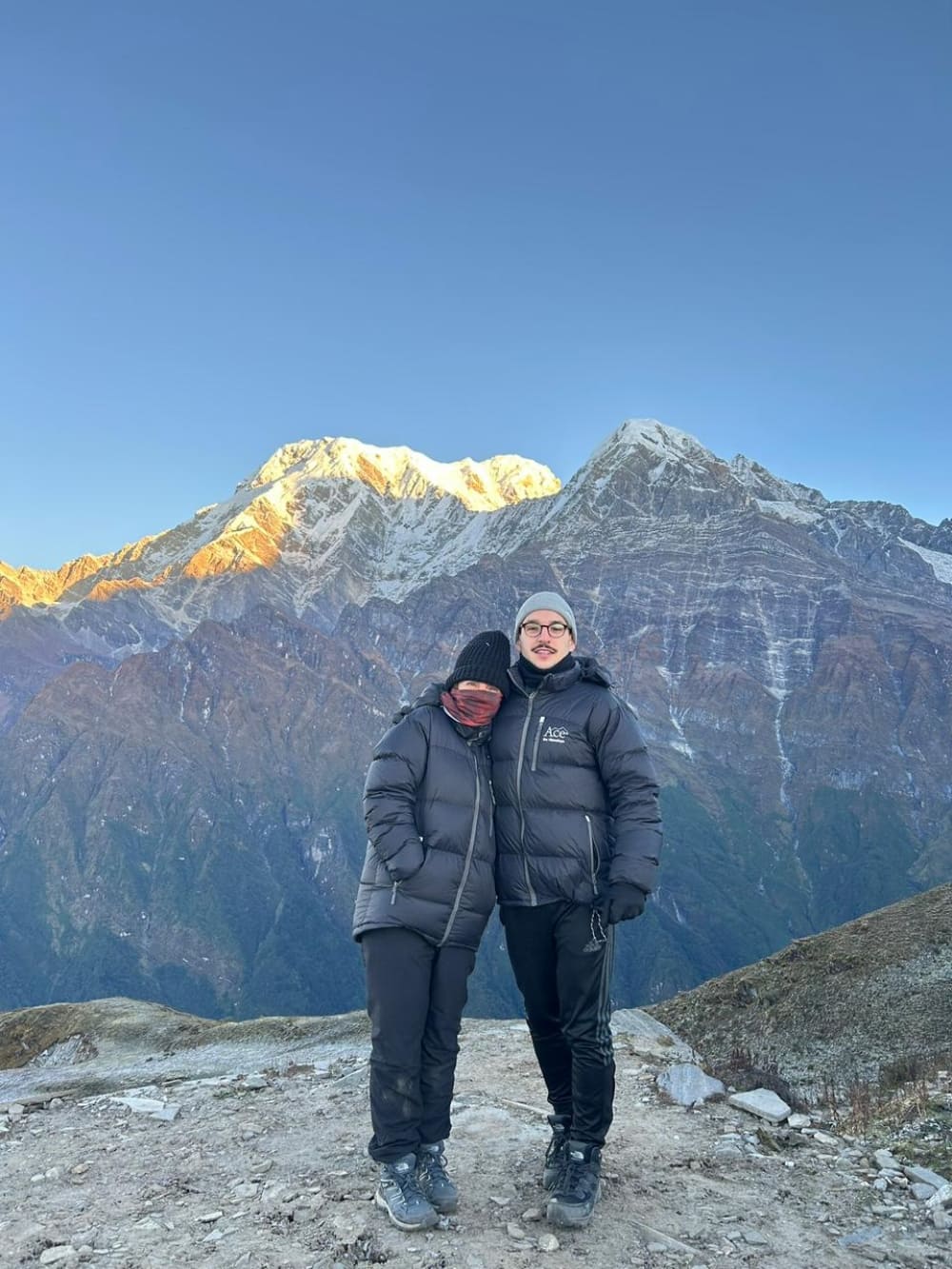
    Mother and son Mila and Lorenzo wearing heavy winter gear and embracing in front of the snowy Himalayan peaks after an early morning climb.
    .

    “It was wonderful to have this companionship above all else, helping each other out and solving problems together. It was a great experience of maturation for our relationship,” Lorenzo shares. 

    For Mila, the immersive environment provided an uninterrupted space to appreciate the present moment and, most importantly, the presence of Lorenzo in a new light. “It was an intimacy with the surroundings, with myself, and with my son by my side. Everything felt so perfect; I was worry-free and incredibly happy.”

    Strength in Vulnerability and Mutual Inspiration

    Facing the altitude, the cold, and the physical exhaustion required a level of trust that is only forged in adversity. Mutual support became vital as they found strength in giving each other space to deal with their own limits: Mila’s cardio limitation and Lorenzo’s fear of heights during the steep descents.

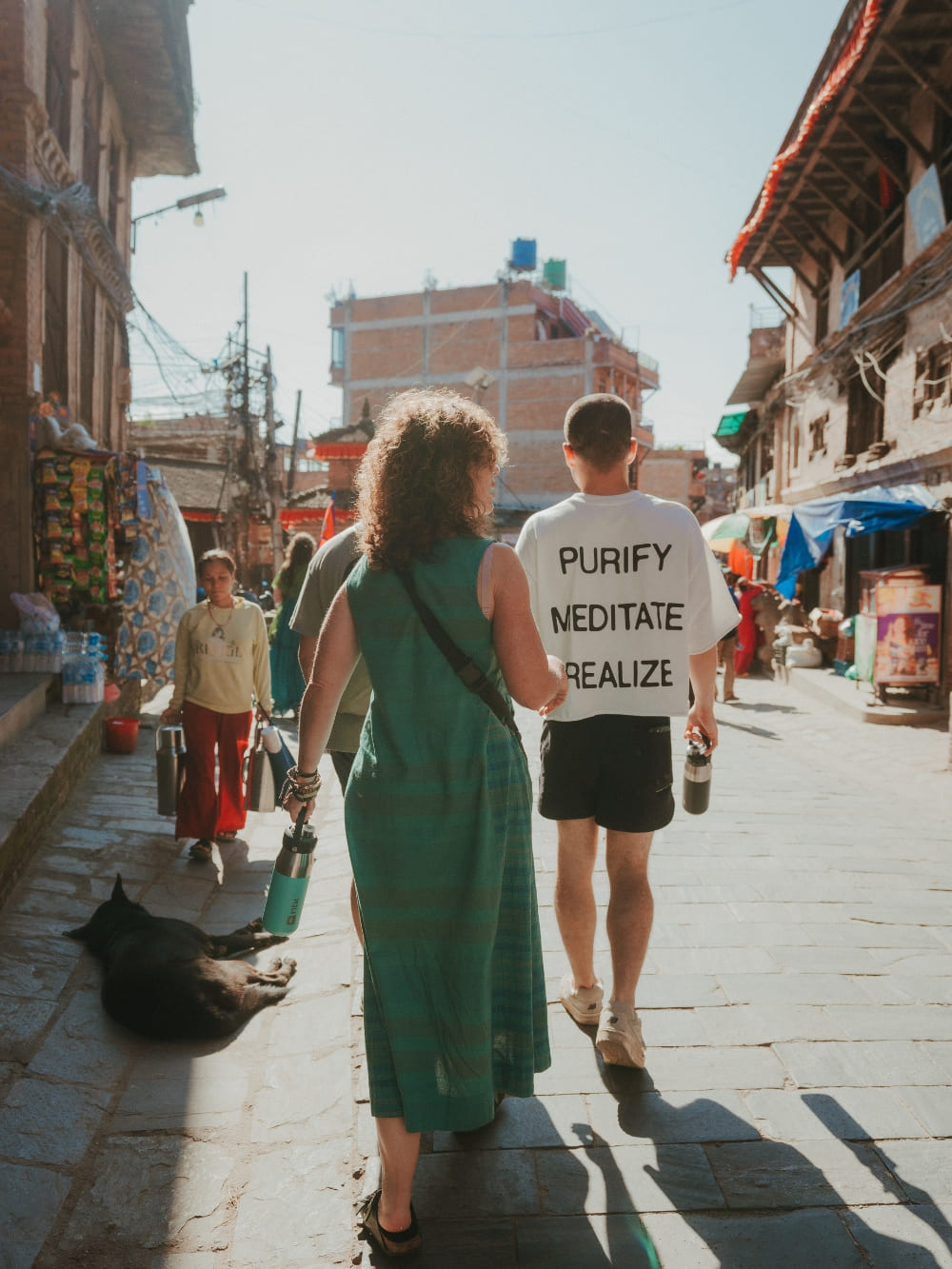
    Mila and Lorenzo walking side by side down a sunny street in Nepal, with Lorenzo wearing a t-shirt that says purify, meditate, realize.
    Photo: CJ

    “I realized there was nothing I could do to change the situation, so I just focused on doing what I could to get through it. And then, she followed right after,” he says, recalling that both had their individual experiences and how they met halfway.

    Seeing her son navigate these obstacles changed Mila’s perspective. It was no longer about protecting him from every danger, but about respecting each other’s space and acting as true partners.

    👉 Read more: 10 must-visit global destinations for sustainable travel in 2026

    A Legacy of Admiration

    Reflecting on Mother’s Day and the meaning of sharing this path, Mila and Lorenzo’s story serves as a reminder that the greatest gift one can give a child is presence and example. The trip to Nepal anchored even more their already-loving relationship.

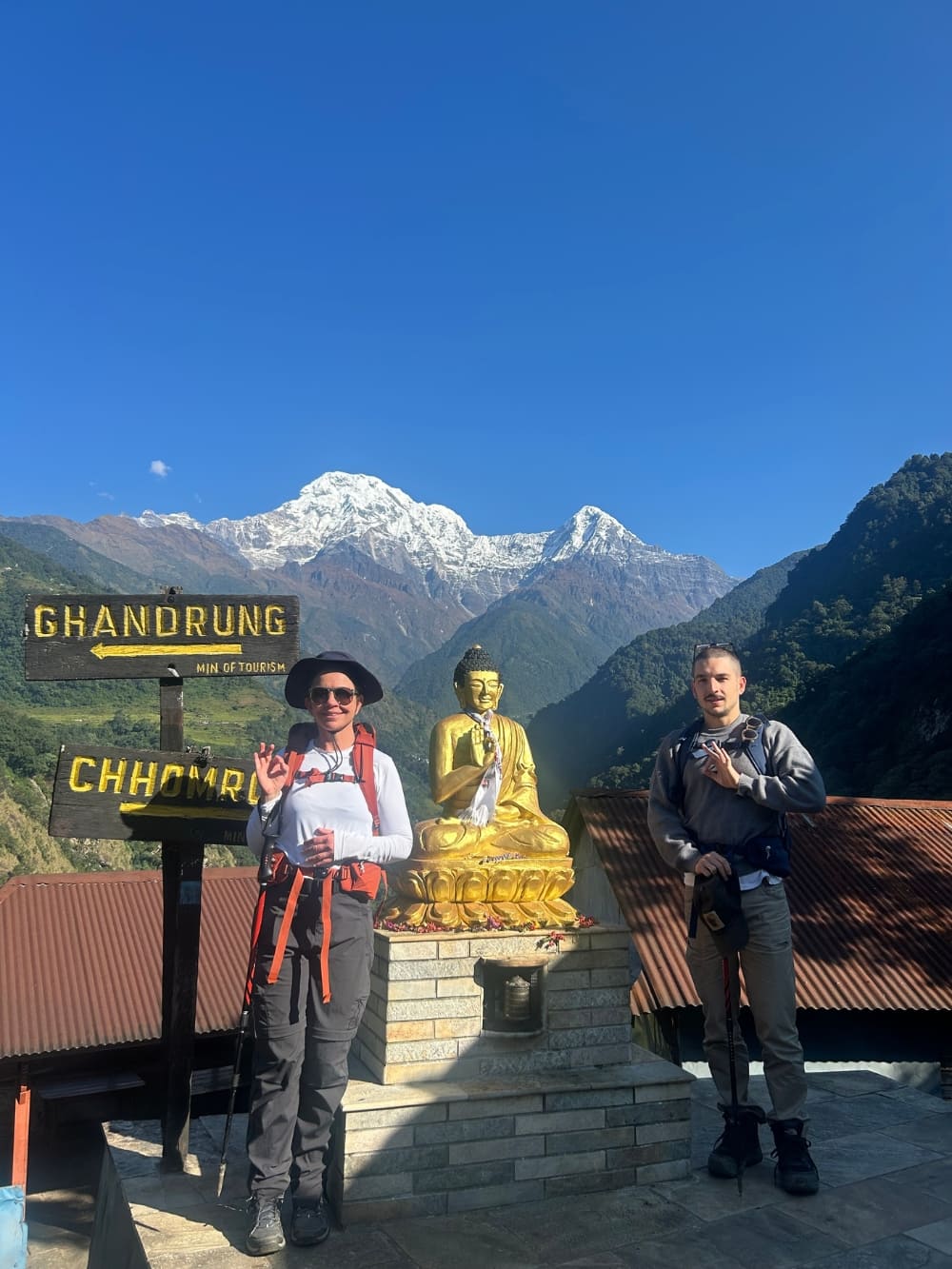
    Mila and Lorenzo beside a Buddha statue and trail signs during their sustainable trek in Nepal.
    .

    For Lorenzo, the journey was also a moment to acknowledge the foundation his mother built over the years, allowing him to become the man he currently is. “What I admire most is the way she raised me. Her believing in herself was essential. If she hadn’t made the choices she made the way she did, we probably wouldn’t be where we are today.” 

    In the end, Nepal was just the setting, but the true destination was the deep and mature connection between mother and son.

  • A Father and Daughter Expedition Through the Waters of Fernando de Noronha

    A Father and Daughter Expedition Through the Waters of Fernando de Noronha

    Meet Jean and Mailys, a French father and daughter who dove into the beauty of the crystal-clear seas of Fernando de Noronha.

    Some trips are taken to see the world, while others are meant to reconnect with those we love. For Jean Laprevotte (60), a Frenchman who has called São Paulo home for just over two years, the journey to Fernando de Noronha was the perfect chance to cross an iconic destination off his Brazil bucket list.

    But his motivation went beyond simple tourism. In early 2026, he and his daughter, Mailys (26), embarked on this adventure to celebrate a major milestone: her completion of a master’s degree in Marine Biology.

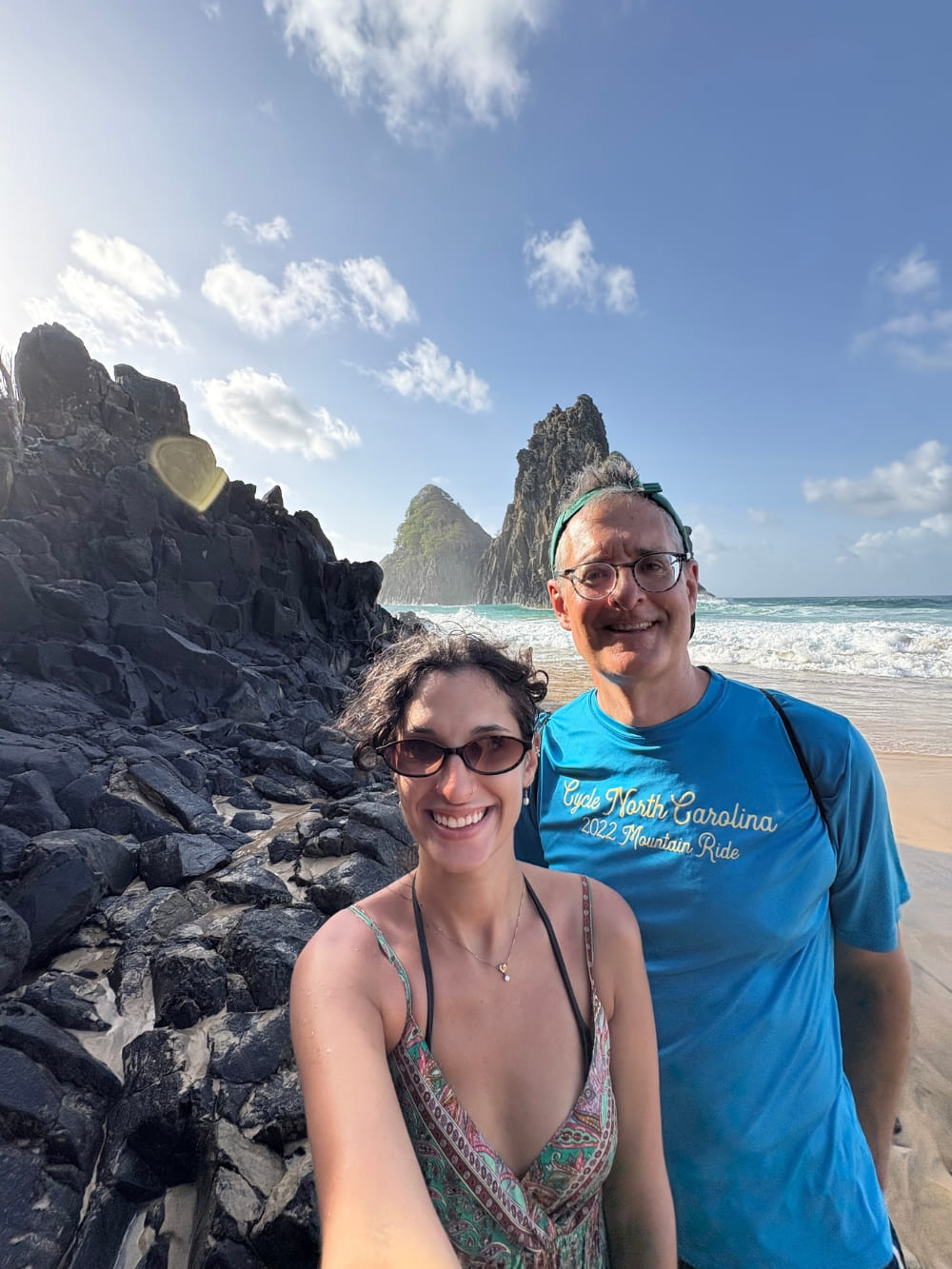
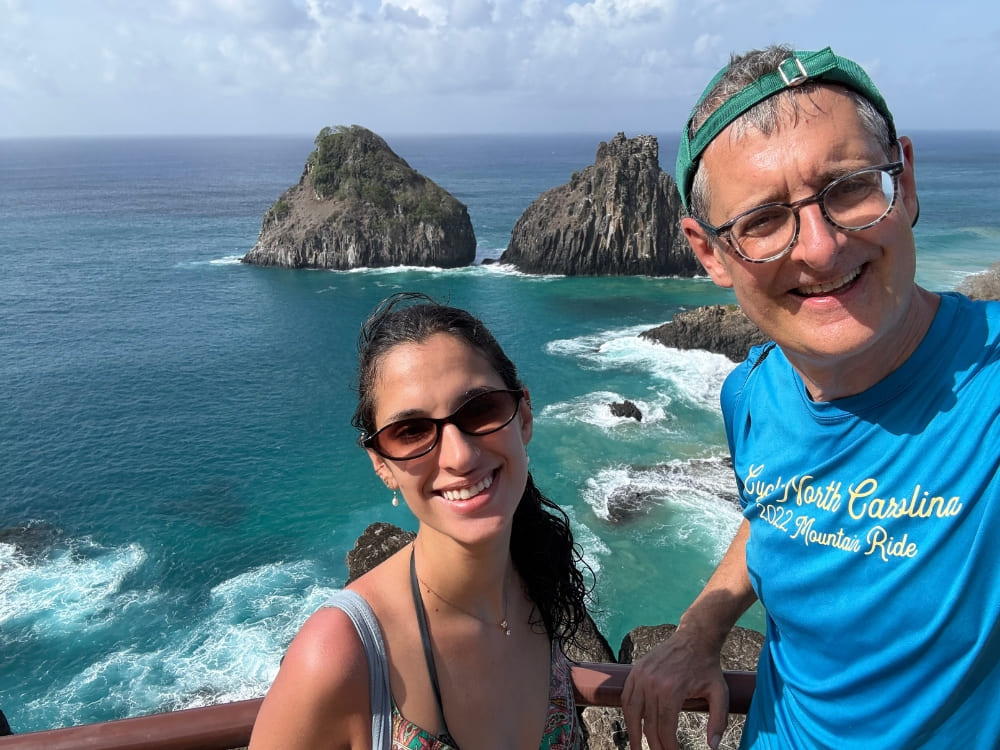
    Father and daughter taking a selfie on a rocky beach with the Morro Dois Irmãos rock formations and the ocean in the background.
    .

    To turn this celebration into a deep and authentic experience, Jean relied on the assistance of PlanetaEXO, an ecotourism platform specializing in trips to Fernando de Noronha, bridging the gap between the family’s wishes and the magic of the archipelago.

    The Magic of a Wild Island

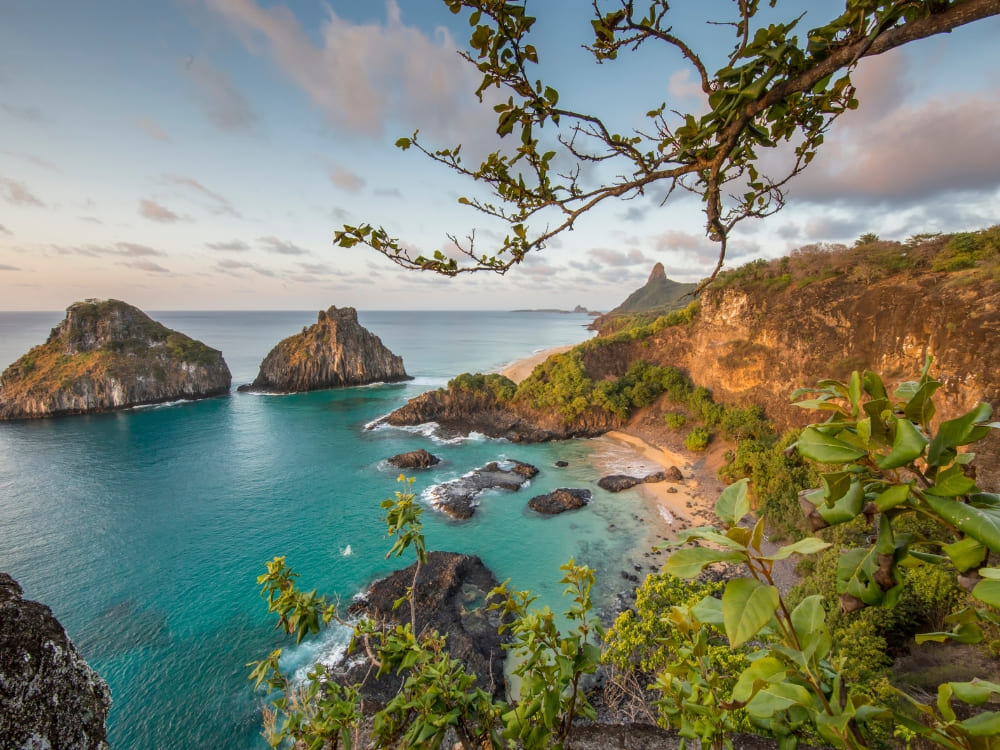
    Upon arriving in Noronha, what first captivated Jean was the impressive state of preservation. “It is a place of wild beauty, very well preserved. What I found most incredible is that there are no buildings on the beachfront; it is nature that truly speaks there.

    Scenic coastal view of Fernando de Noronha featuring turquoise waters, a sandy cove, and the Morro Dois Irmãos rock formations framed by green vegetation.
    .

    Unlike other destinations, the scenery in Fernando de Noronha is dictated by the horizon. Without the distractions of the typical busy city routine, Jean and Mailys could dedicate themselves to what truly mattered: walking the trails and observing the local wildlife—from curious crabs to majestic birds crossing the clear, sunny sky.

    Diving Into Mailys’ World

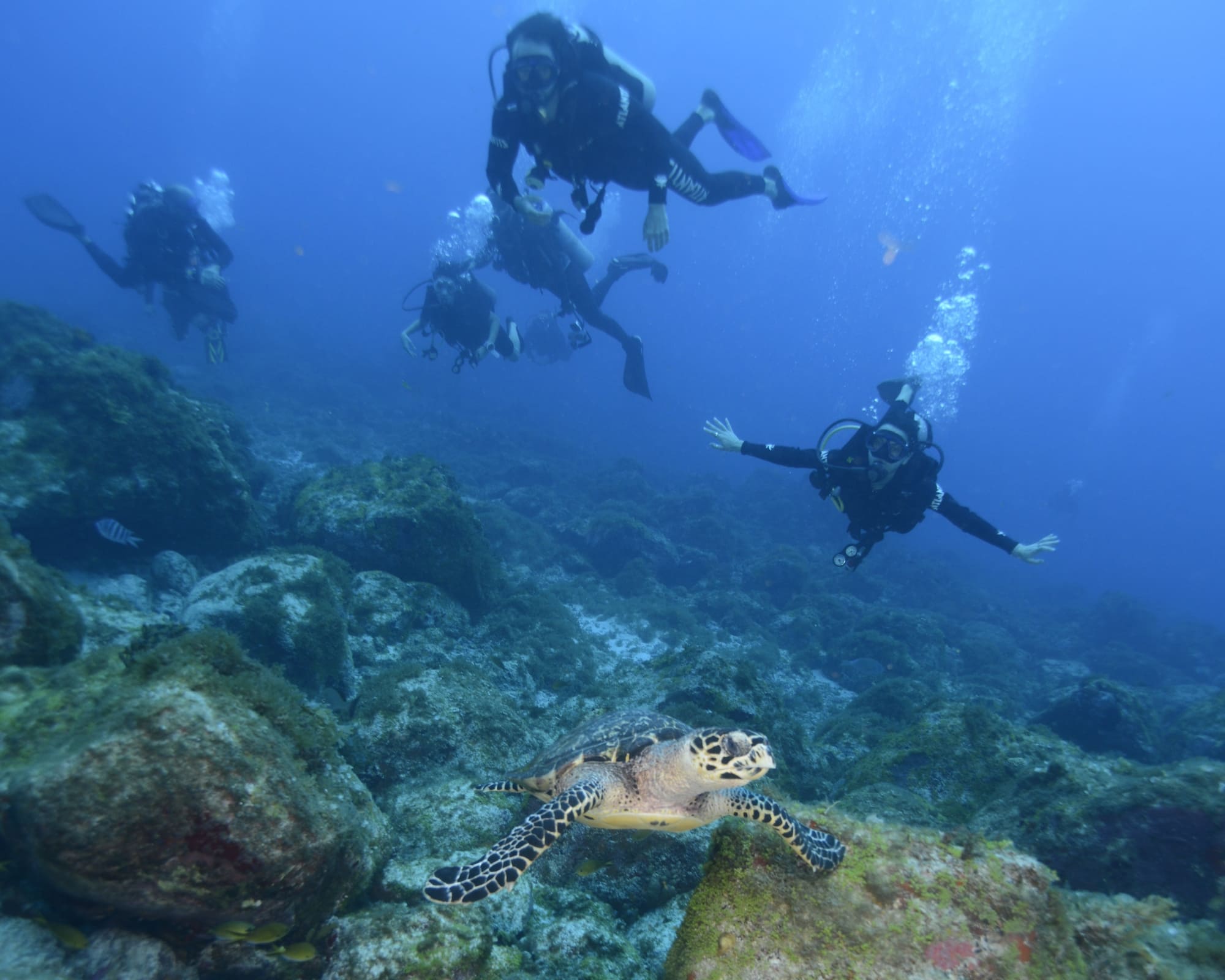
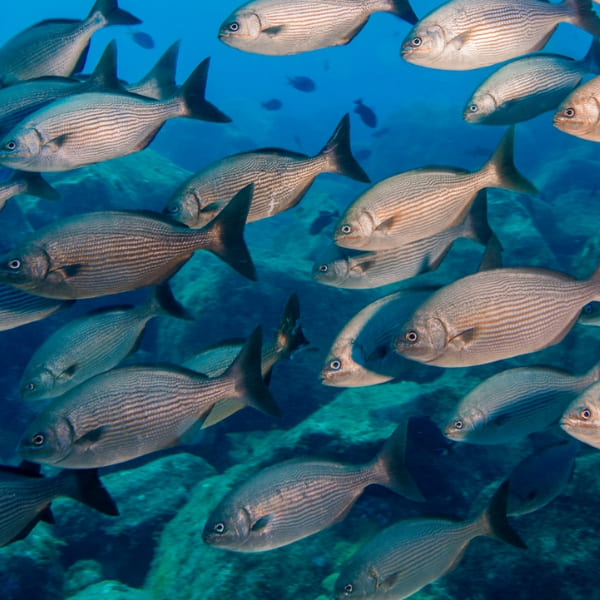
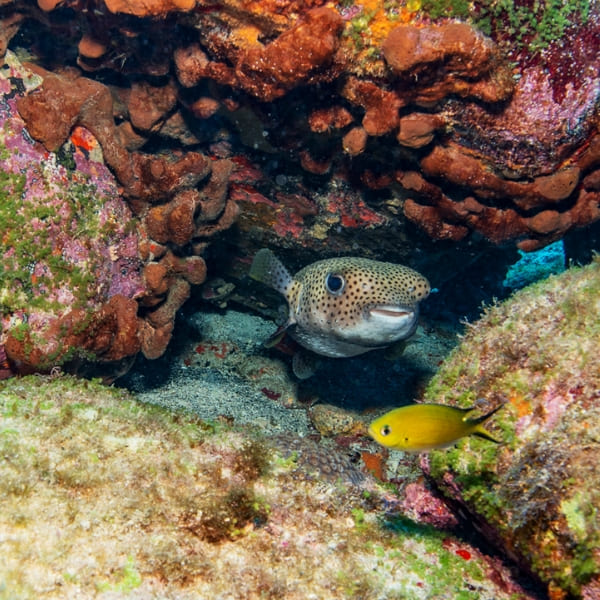
    Given Mailys’ specialization in Marine Biology and her focus on corals and reef fish, the father-daughter dynamic was reversed underwater. It was she who guided Jean through the rich biological diversity of the islands of Noronha.

    “For my daughter, who has already gone diving in Barbados, the Dominican Republic, and the Seychelles, Noronha was one of the most interesting places she has ever seen,” notes Jean.

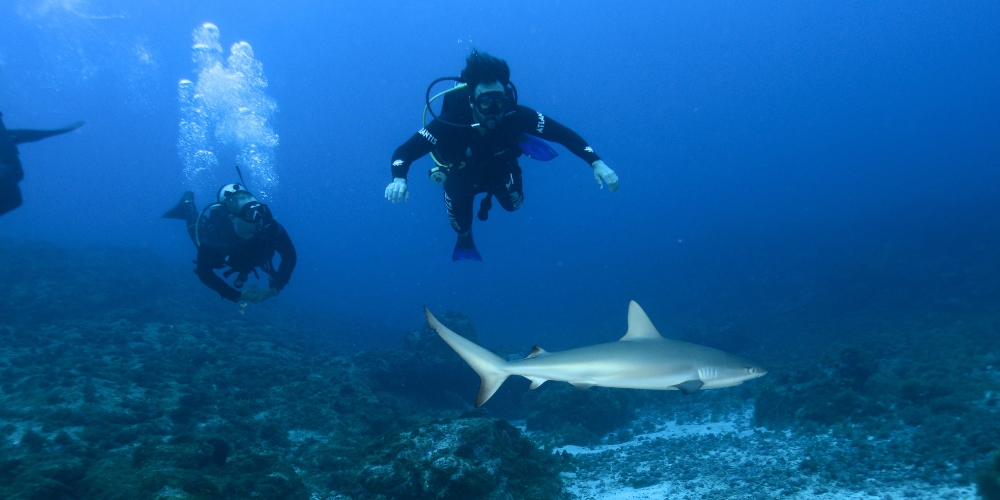
    Together, they explored the deep blue and encountered sharks, turtles, rays, and octopuses. For the father, seeing his daughter’s passion up close was the greatest gift. “The experience allowed for a shared journey and was very positive and relevant to my daughter’s profession. It was a moment of mutual discovery.

    Two scuba divers exploring a rocky seabed while observing a reef shark swimming below them in the clear blue water.
    .

    👉 Read more: What is the best time to dive in Fernando de Noronha?

    Connections That Transcend Tourism

    The most striking element was not just what they saw, but how they lived those moments. One of the highlights was the direct contact with local conservation efforts.

    “Seeing my daughter talking and exchanging experiences with a biologist working on dolphin observation was something very special. It brought professional and human meaning to the trip,” said Jean, impressed by the receptivity of the island’s professionals and the knowledge exchange they had with Mailys.

    He returned to São Paulo with a positive perception of the preservation model adopted in Fernando de Noronha. “They take conservation seriously, limiting plastic and protecting species. It is an example that stays with you.”

    Father and daughter smiling for a selfie at a viewpoint overlooking the turquoise ocean and the iconic Morro Dois Irmãos rock formations.
    .

    👉 Read more: 10 fun facts about Fernando de Noronha

    The Legacy of the Experience

    More than just a diving trip, Jean and Mailys’ journey was an opportunity to celebrate achievements and strengthen bonds.

    Through PlanetaEXO’s curation, they returned home with renewed spirits and the certainty that the ocean will always be the place where they reunite—a perfect frame for a father’s pride and a marine biologist’s bright curiosity against the backdrop of the vast ocean.

  • Finding freedom in the wild: How a Dutch adventurer fell in love with Brazil

    Finding freedom in the wild: How a Dutch adventurer fell in love with Brazil

    Katharina Bongaertz is PlanetaEXO’s top traveler and has proven multiple times that adventure knows no gender or age

    In 2023, Katharina Bongaertz, a psychotherapist from the Netherlands, arrived in São Paulo during Carnival. She had originally planned to spend just one month in Brazil before continuing her five-month leave in Colombia and Peru.

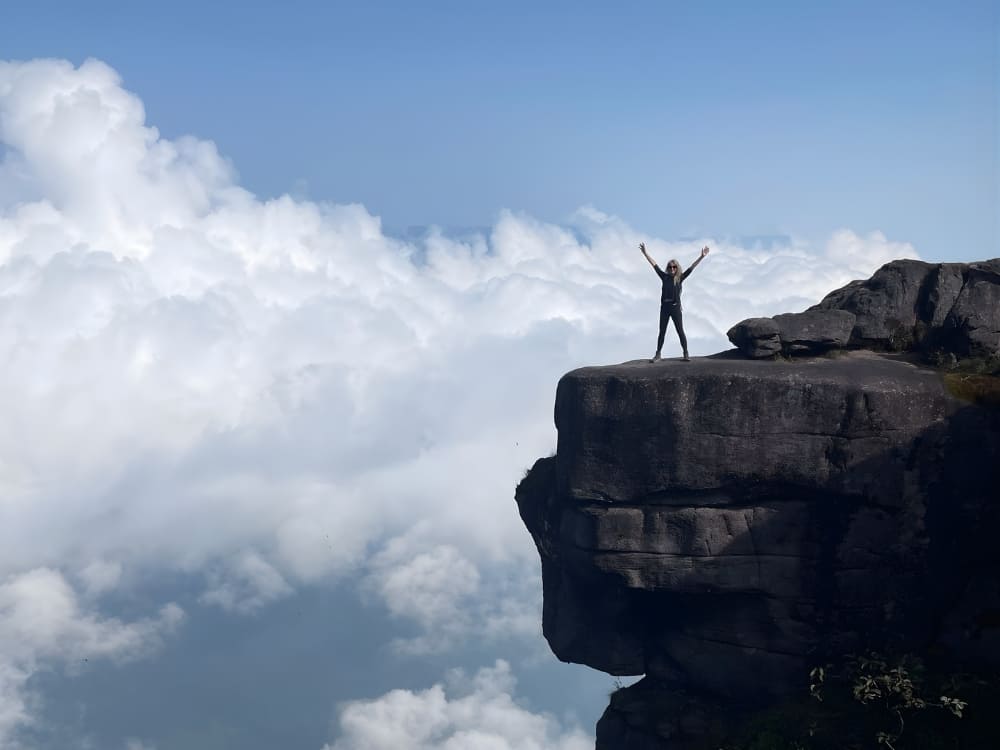
    Woman with raised arms on top of a large rocky cliff at Mount Roraima, celebrating surrounded by dense clouds.
    .

    However, the country’s vibrant culture and breathtaking landscapes completely captivated her. She decided to stay in Brazil for the remaining four months of her trip, sparking a deep love affair with Brazilian nature that has only grown stronger since then.

    Today, at 60 years old, Katharina has embarked on a fair amount of PlanetaEXO’s adventure tours in Brazil, officially becoming the platform’s most frequent traveler. From the towering plateaus of Monte Roraima to the mesmerizing dunes of Lençóis Maranhenses and the deep jungles of the Amazon, she has explored some of the country’s most remote and magnificent destinations.

    Connection with the Brazilian spirit 

    Katharina’s journey into ecotourism began when a cousin recommended she visit Chapada Diamantina, in the state of Bahia. Looking for a way to navigate this less-touristic region, she connected with Lucas Ribeiro from PlanetaEXO, a partnership that has now led to her upcoming seventh trip with the company—this time to the Pantanal to see jaguars!

    Beyond the landscapes, it is the spirit of the locals that keeps her coming back. “I think Brazilian people are really welcoming, kind, and warm,” Katharina shares. “I love the music, and they have, in a way, music in their soul. It has always been a part of all the travels.”

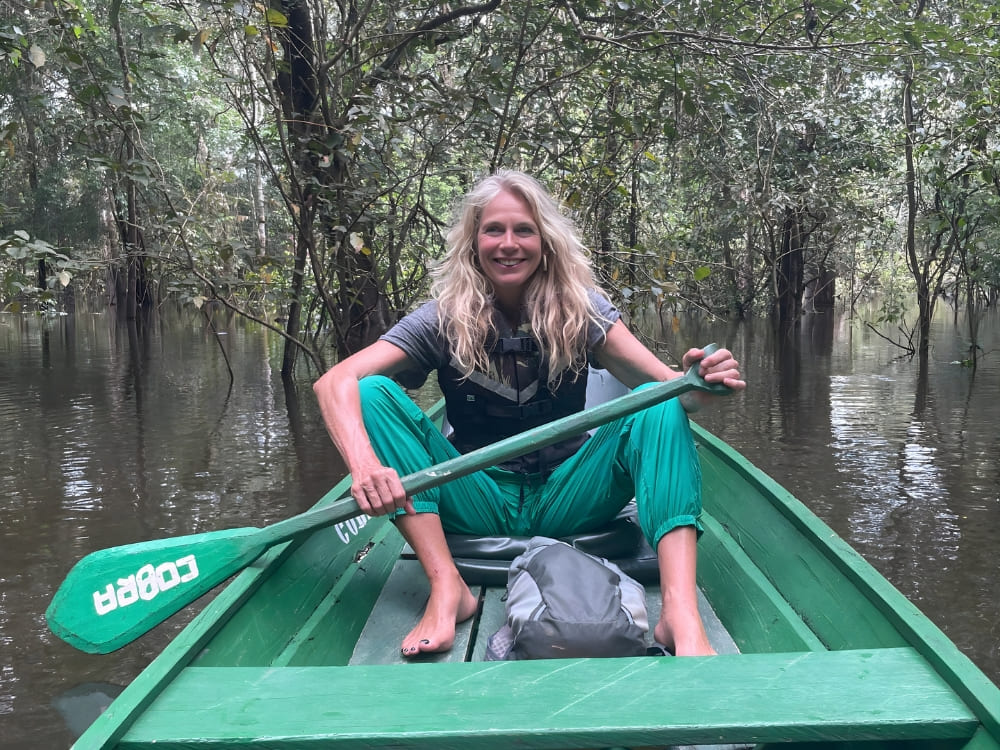
    Smiling blonde Katharina holding a paddle while navigating a green canoe through a flooded forest in the Amazon.
    .

    👉 Read more: Why Brazil’s remote outdoors are becoming a haven for foreign female travelers

    The empowering force of nature

    As a psychotherapist who spends her days in a city talking to patients, Katharina seeks out the wild to find contrast, freedom, and wisdom. She prefers vast, open environments without fences, where she can walk freely and take in the view from mountaintops or plateaus.

    “To be in beautiful wild nature, I feel it as something really special” she reflects. For Katharina, the magic lies in the quiet details. “Listening to nature, like the sounds of the birds, the animals, the trees… it’s something that gives a lot. It’s empowering, and I take it home with me every time.”

    Out of all her incredible adventures in destinations like Lençóis Maranhenses and Monte Roraima, Chapada Diamantina holds the most special place in her heart. “If I could, I’d go every year,” she says with a smile.

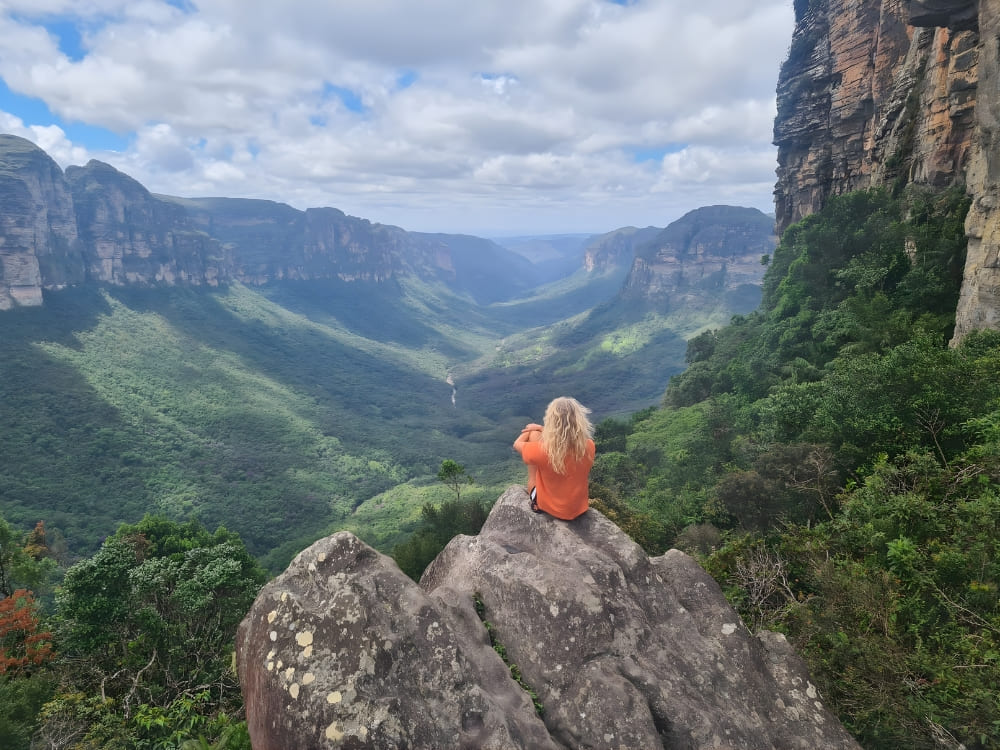
    Woman in an orange jacket sitting on a high rock, admiring the panoramic view of a vast green valley in Chapada Diamantina.
    .

    👉 Read more:

    No age limit for adventure

    Often mistaken for being much younger, Katharina is a living testament that ecotourism is not just for the youth. Having spent her 20s and 30s raising her three children and building a successful career, she feels that this current chapter of her life brings a newfound sense of liberty.

    “I think I’m much more adventurous now than I was back then,” she notes and actively encourages other mature women to step out of their comfort zones. It’s important to challenge yourself to find new borders and pass them. And I mean borders on every level, like finding new horizons and exploring.”

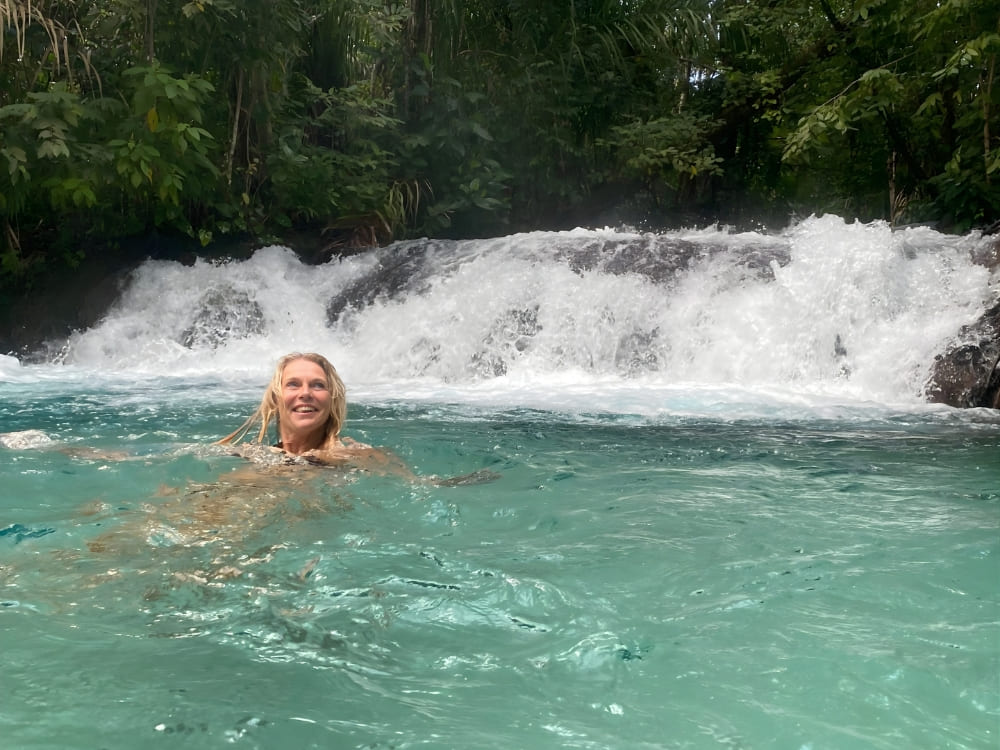
     Smiling woman swimming in crystal-clear blue waters with a large waterfall in the background in the Jalapão region.
    .

    👉 Read more: Women over 50 break stereotypes and prove that adventure knows no age

    While it is important to know your physical limits and find your own walking pace, Katharina proves that the rewards of conquering a tough trail or swimming under a massive waterfall in Jalapão, in the Northeast of Brazil, are absolutely worth it.

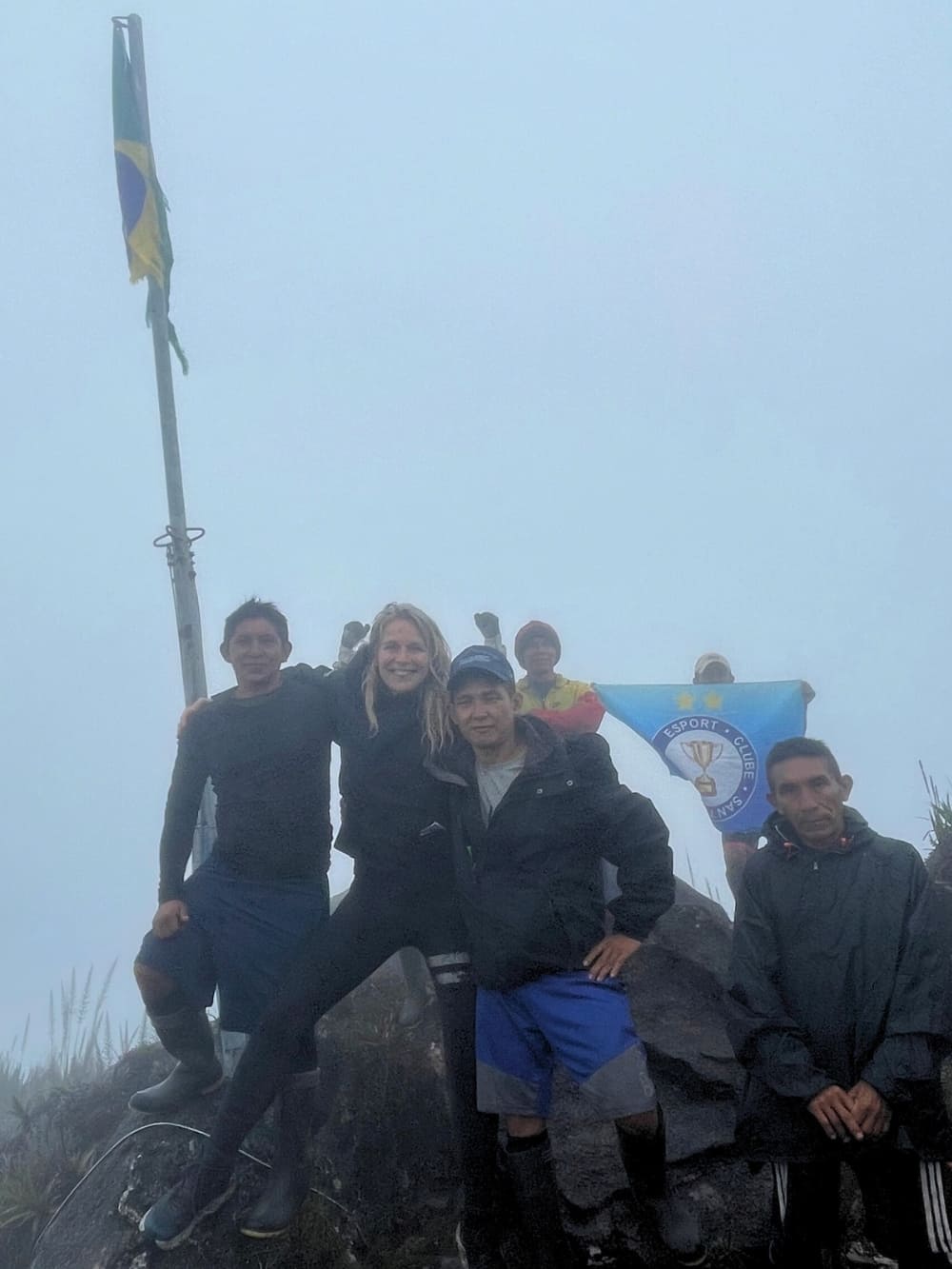
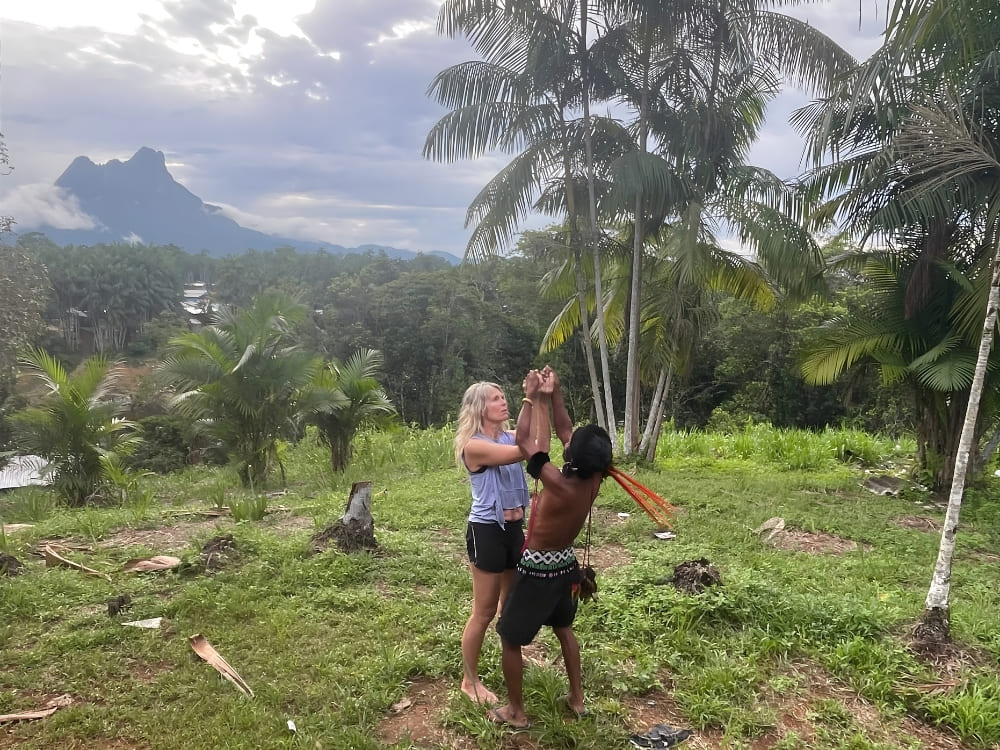
    One of her most remarkable adventures was the ascent of Pico da Neblina, Brazil’s highest peak, hidden in the northwest Amazon. “It was an incredible and deeply special experience, profoundly shaped by the connection with the Yanomami people,” she shares. “Trekking alongside about 30 indigenous guides who carried supplies up the mountain, I spent 10 days immersed in their daily routine, sleeping in hammocks along the way.”

     Katharina interacting in a relaxed way with a Yanomami indigenous guide in a green area, with Pico da Neblina in the background.
    .

    As Katharina prepares for her next adventure into the wilds of the Pantanal, her story serves as a beautiful reminder to us all: the world is vast, the wild is calling, and it is never too late to answer.

    👉 Read more: Women in ecotourism: female presence that makes things happen

    Traveling across Brazil’s wild nature with PlanetaEXO

    Katharina understands the power of connecting with nature and living life to the fullest. With PlanetaEXO, an ecotourism platform specializing in adventure tours in Brazil, she was able to explore multiple destinations safely, responsibly, and authentically.

    From bookings to transfers, our team provides everything you need for your trip while also supporting local communities and following guidelines to ensure environmental conservation. Contact us now!

  • Expanding horizons in the Amazon: A British writer’s journey of love and discovery

    Expanding horizons in the Amazon: A British writer’s journey of love and discovery

    Emma Phillips is a freelance writer from the UK who explored the rainforest with her Brazilian partner and uncovered a universe of wild nature and cultural diversity

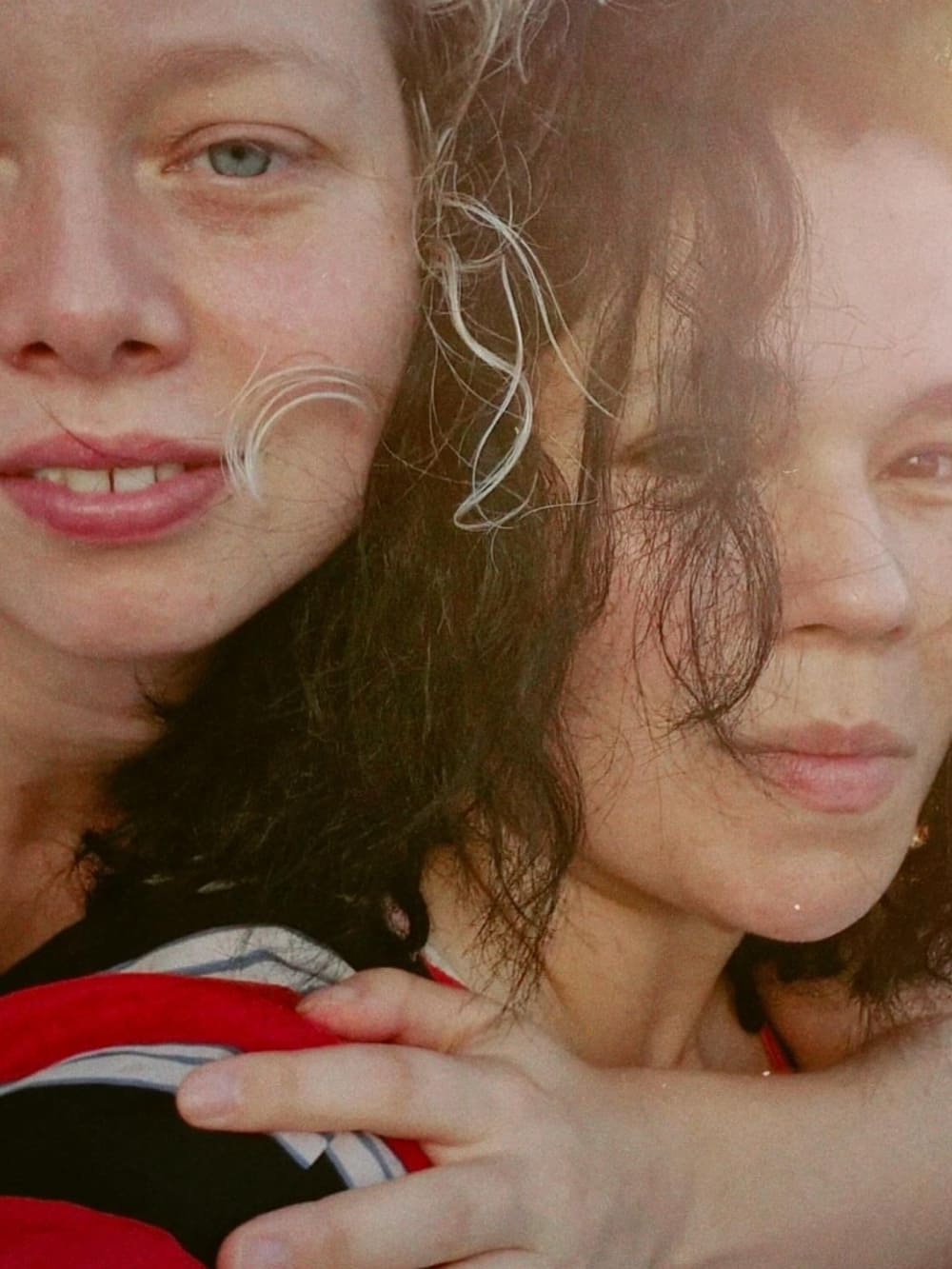
    In December of last year, 30-year-old British freelance writer Emma Phillips lived a transformative experience. After meeting Jamille, a Brazilian academic from Belém do Pará, her world began to expand from the rolling hills of England to the depths of the Amazon Rainforest, creating a beautiful cross-cultural love story that was recently shared in an article for Condé Nast Traveller.

    Traditional river cruise boat navigating the calm waters of the Rio Negro, with green vegetation reflecting on the water.
    Photo: Emma Phillips

    For Jamille, it was a chance to further explore areas of her own region that she didn’t know yet. For me, it allowed me to experience the place she comes from through a personal perspective. My world expanded Emma shared in an interview for Women’s Month.

    Deep connection with local roots

    The trip went far beyond simply observing landscapes; the real difference was the immersion fostered by the local communities, especially educational programs. “It’s all about the people. I was very impressed by the project around the schools, the stunning architecture. Everything was so clever and beautiful,” she highlights.

    Accompanied by a tour guide who transformed the forest into a true classroom using the knowledge of his ancestors, the group experienced the most authentic side of the Amazon. “The entire boat crew and the guides were locals. Seeing tourism being used in an authentic and non-predatory way to improve the lives of communities and preserve the environment was an inspiration.

    Hand holding a freshly caught fish on a line over the dark waters of the river, with a sandy bank and logs in the background.
    Photo: Emma Phillips

    Despite the difference in realities, Emma knows this part of the world quite well. Having worked with Brazilian Indigenous leaders before, she has an understanding of the realities they face and the landscapes they navigate. “Working with their knowledge and cosmology is like unlearning everything that I’ve been taught,” she states, defining the experience as a way to understand the significance of cultural diversity.

    👉 Read more:

    The power of nature and human warmth

    Navigating the Rio Negro brought fascinating contrasts for the family. Emma describes the forest as “encompassing and intense,” while the river offered a sense of “enormous openness and tranquility”—with the great advantage that the acidic dark waters kept the mosquitoes away!
    During the expedition, they were graced by giant otters, caimans, different species of birds, river dolphins, and other Amazon animals. Nature also showed its magnitude when a severe storm on the last night reminded them of the forest’s power and the importance of the crew’s preparation.

    Traveling as a queer woman, Emma confesses there is always an internal anxiety about how her relationship will be received. However, the welcome on the cruise was notable. “At first, the crew tried to understand our dynamic—a British woman and an Amazonian woman together—but as soon as they understood, the atmosphere was one of total respect, and no one made us feel uncomfortable.

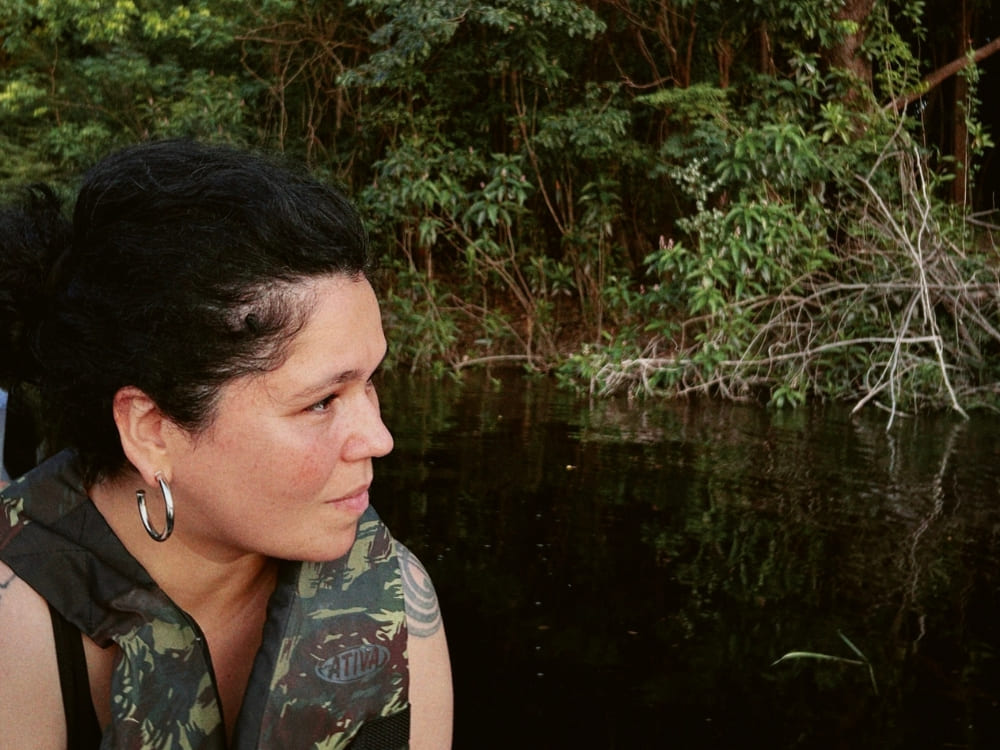
    A dark-haired woman wearing hoop earrings and a camouflage life vest sits in a small boat, looking thoughtfully at the lush riverbank vegetation
    Photo: Emma Phillips

    One of the most touching moments occurred in the boat’s kitchen. “One of the chefs shared that her own daughter was also queer. I think she was pleased to see our dynamic play out in front of her. It was lovely,” she recalls.

    👉 Read more:

    Travel that empowers (and an invitation)

    The journey through the Amazon united families from different continents and reinforced Emma’s belief in the transformative power of exploring the unknown. “Traveling allows us to witness other ways of existing in the world. I believe that travel empowers any woman, any person, as it provides experiences where you have to be constantly decisive, face fears, and assess risks.

    For women who dream of exploring the immensity of the Amazon but still feel some hesitation, Emma’s advice is clear: focus on safety by traveling with support, along with a group or a trusted tour operator.

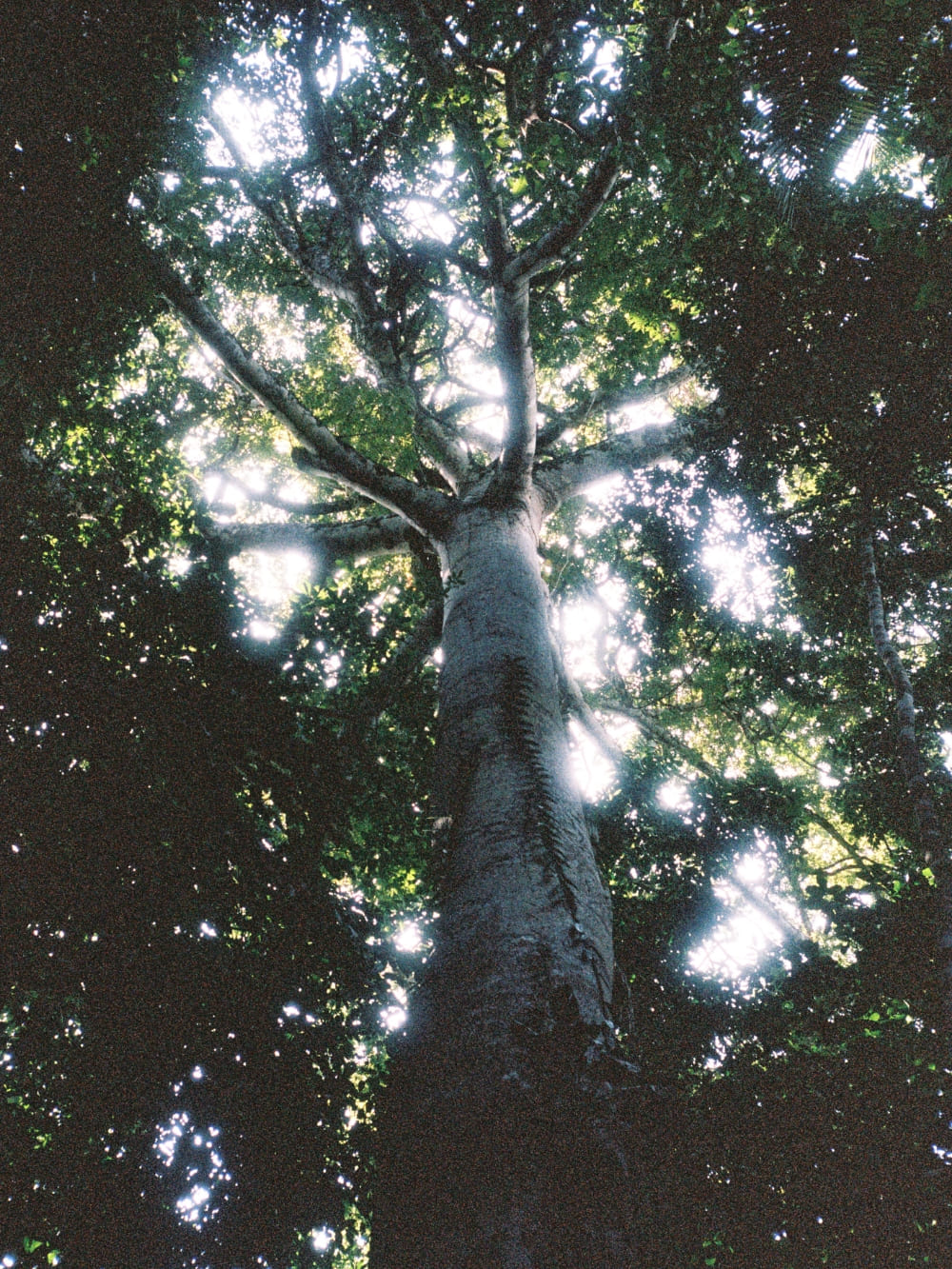
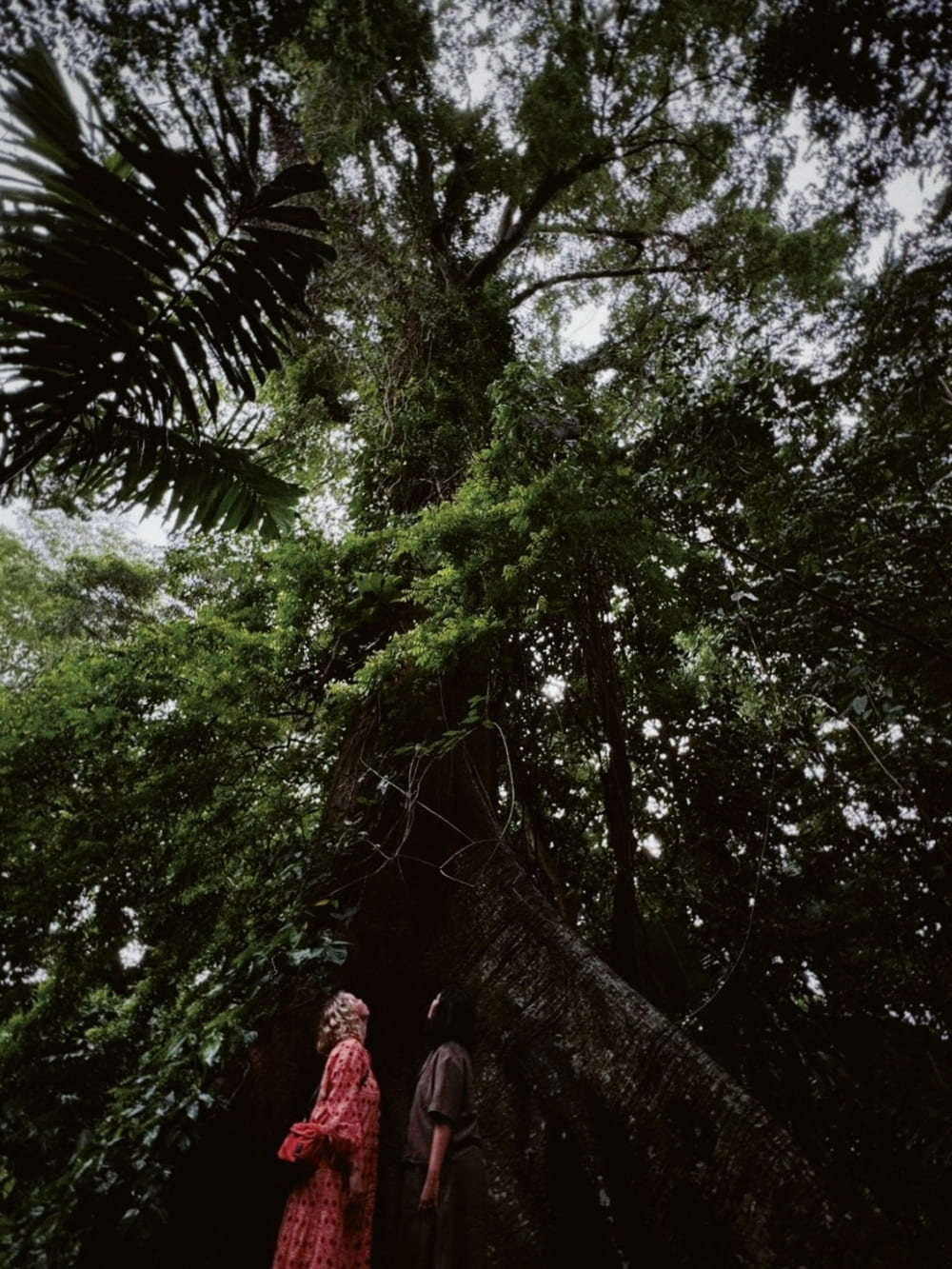
    Two women stand at the base of a massive Amazonian tree, looking up at the imposing trunk and thick green canopy towering above them.
    .

    👉 Read more: Why Brazil’s remote outdoors are becoming a haven for foreign female travelers

    Expanding horizons with PlanetaEXO

    Driven by love and a profound interest in nature and cultural diversity, Emma was able to expand her view of the world. That’s what traveling does—it gifts us with the beautiful knowledge that life knows no borders and that there is much to see out there.

    With PlanetaEXO, an ecotourism platform specializing in adventure tours in Brazil, this journey becomes even richer. By following guidelines that create a positive impact on the environment and local communities, we provide fulfilling, unforgettable experiences. Contact us now!